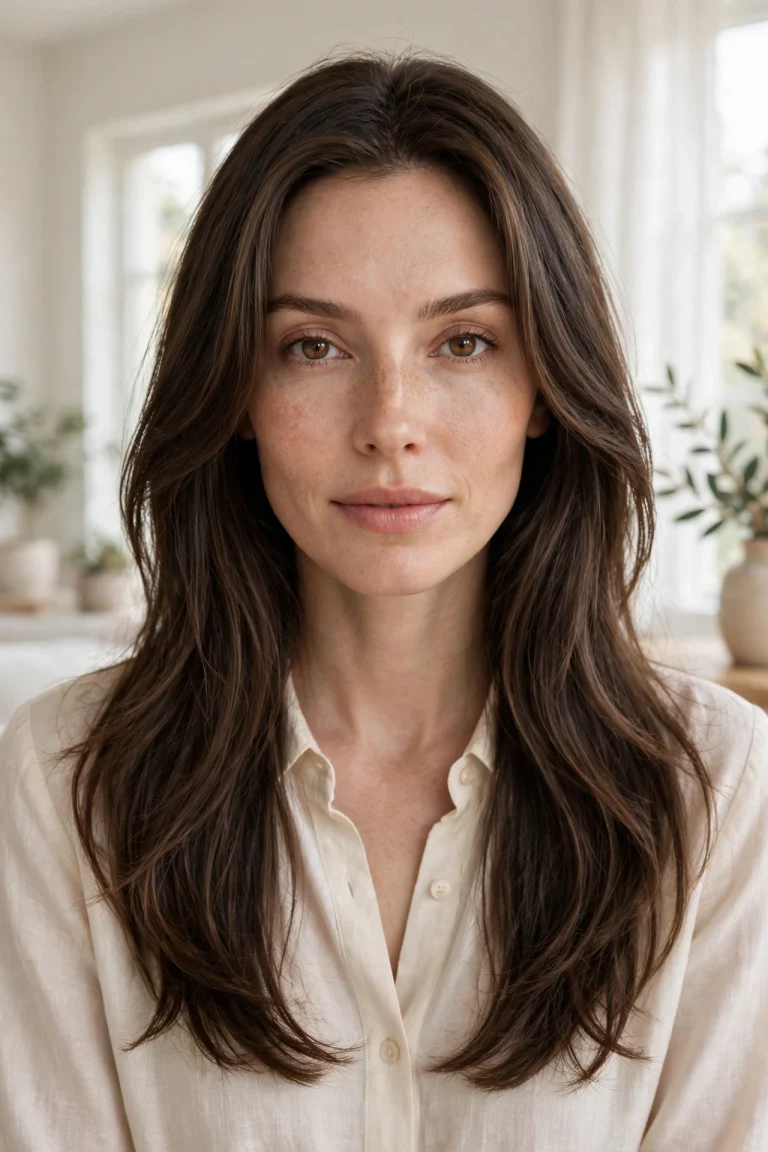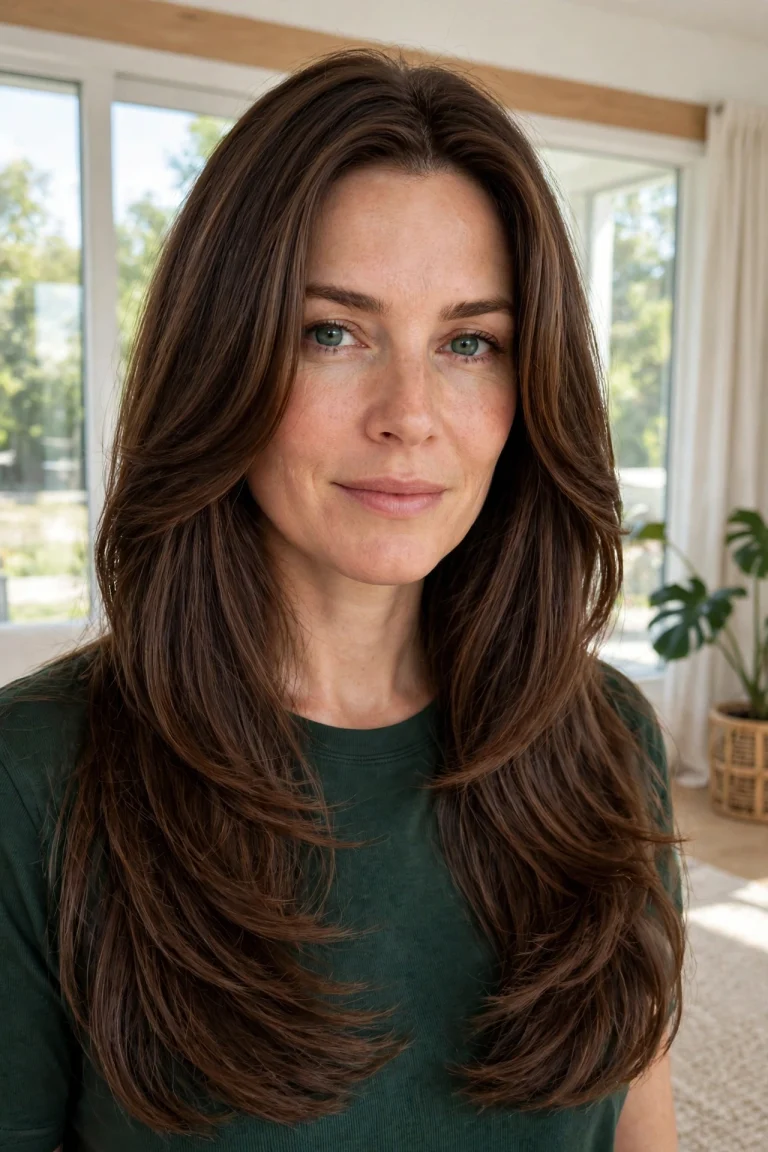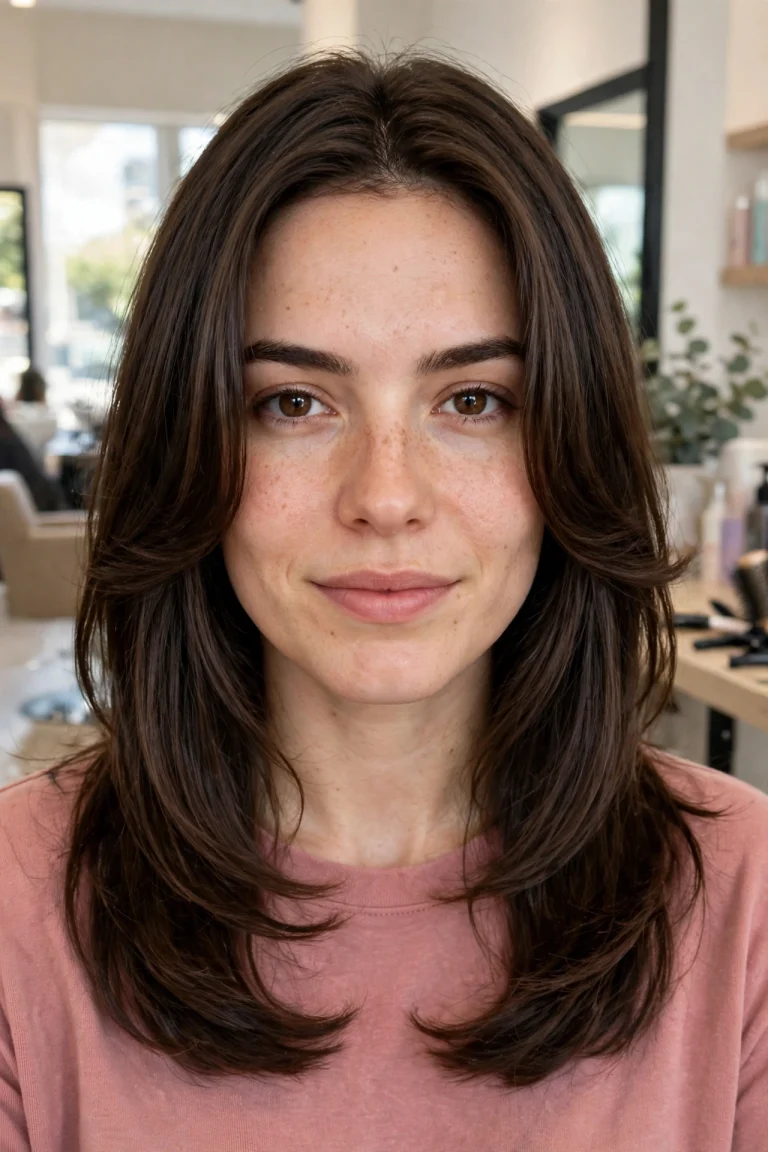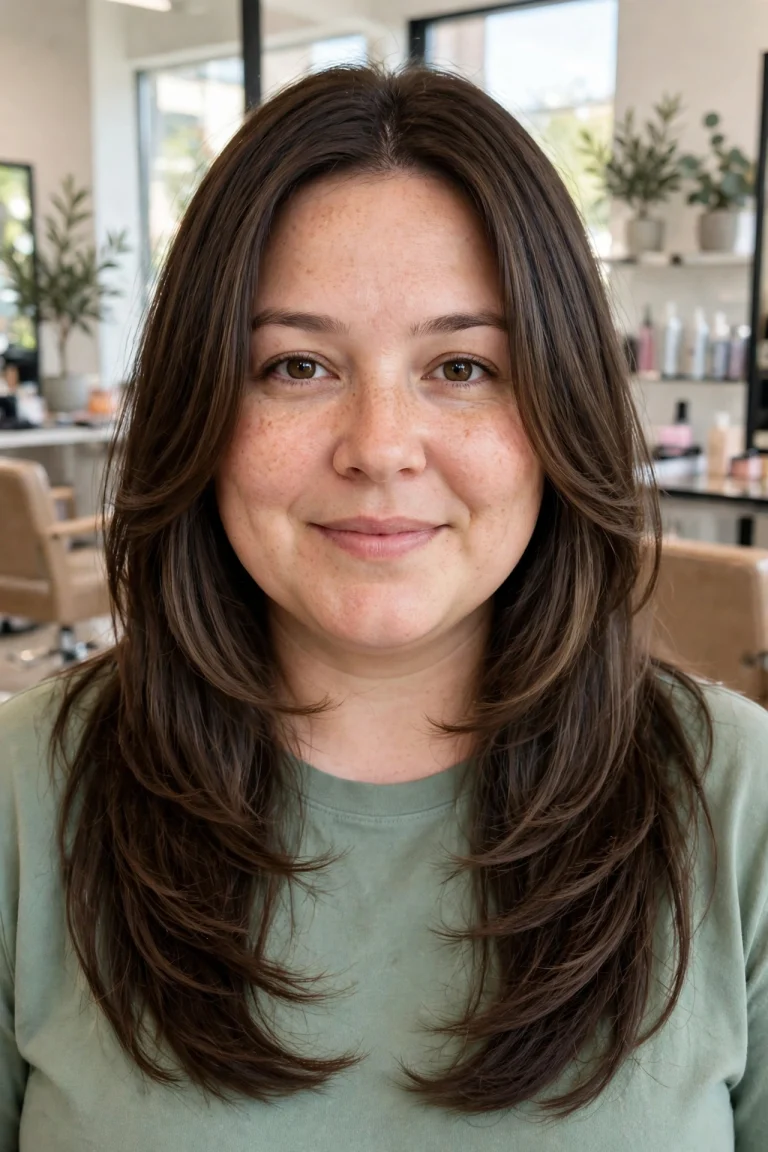
25 Ghost Layer Haircuts for Movement Without Visible Layers
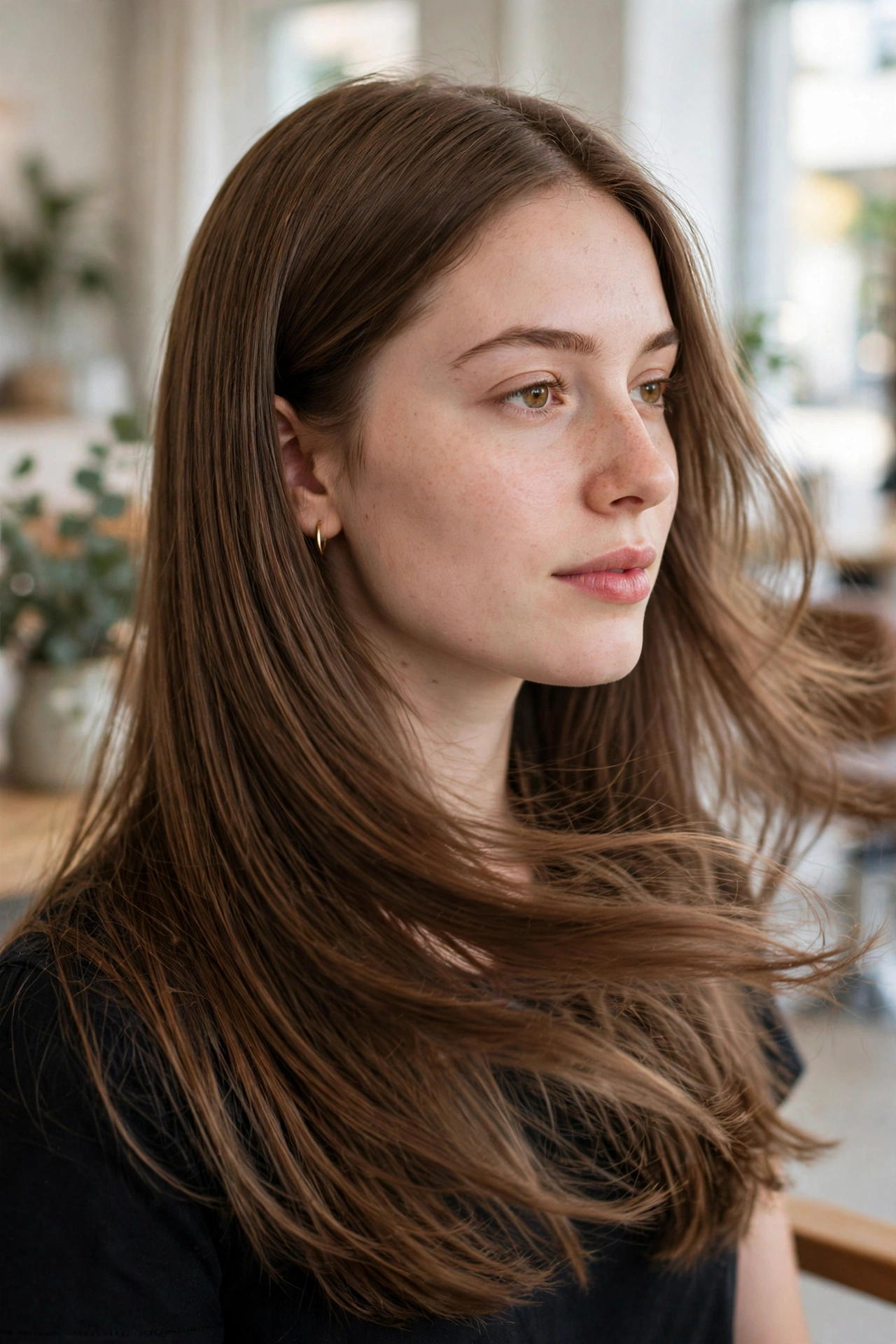
Ghost layers are the haircut world’s best-kept secret: layers that are there and not there at the same time. Cut into the interior of the hair, they remove weight, create movement, and let the hair swing freely, while the surface stays smooth and the outline reads as one length. Nobody looking at your hair will see a layer line, but everyone will notice how it moves. These 25 ideas show how ghost layers adapt to every length, texture, and hair type, all while keeping the surface beautifully seamless.
1. Classic Ghost Layers for Long Hair
The classic version hides short layers deep inside long hair, removing bulk from the interior while the outer surface falls in one unbroken sheet. The stylist works underneath the top section, cutting shorter pieces that support the hair from within rather than showing on the outside. The result is long hair that moves like it has layers and photographs like it has none, which is exactly the point of the technique.
2. Ghost Layers for Shoulder-Length Hair
Shoulder-length hair is where ghost layers solve the most common complaint: the dreaded triangle, where hair sits flat at the roots and flares wide at the ends. Hidden interior layers remove weight from the middle of the hair, so the shape narrows through the ends and swings instead of flipping outward. It is the fastest fix for a lob that has gone bulky, and it keeps the blunt outline intact.
3. Ghost Layers for Thick Hair
Thick hair benefits most from ghost layers, since the interior weight is what makes thick hair sit heavy and resist styling. The stylist removes bulk from underneath in invisible sections, so the hair keeps its full appearance but loses the heaviness that makes it hard to manage. Blow-drying time drops noticeably, and the hair finally moves when you turn your head instead of arriving a second later as one solid block.
4. Ghost Layers for Fine Hair
Fine hair needs ghost layers cut with a lighter hand, since removing too much interior weight can make fine hair look thinner rather than freer. The layers are kept long and few, placed only where the hair needs release, so the surface keeps its density while gaining a little swing. Ask your stylist to keep the interior work minimal and to check the hair dry, because fine hair shows every cut more honestly than thick hair does.
5. Ghost Layers With a Blunt Perimeter
A blunt perimeter with ghost layers inside is the combination that defines the modern long cut: a sharp, thick-looking hemline with invisible movement above it. The ends stay solid and full, while the interior layers let the hair bend and flow instead of hanging like a curtain. It is the best of both worlds, and it suits anyone who loves a blunt finish but hates how stiff blunt hair can feel.
6. Ghost Layers for Straight Hair
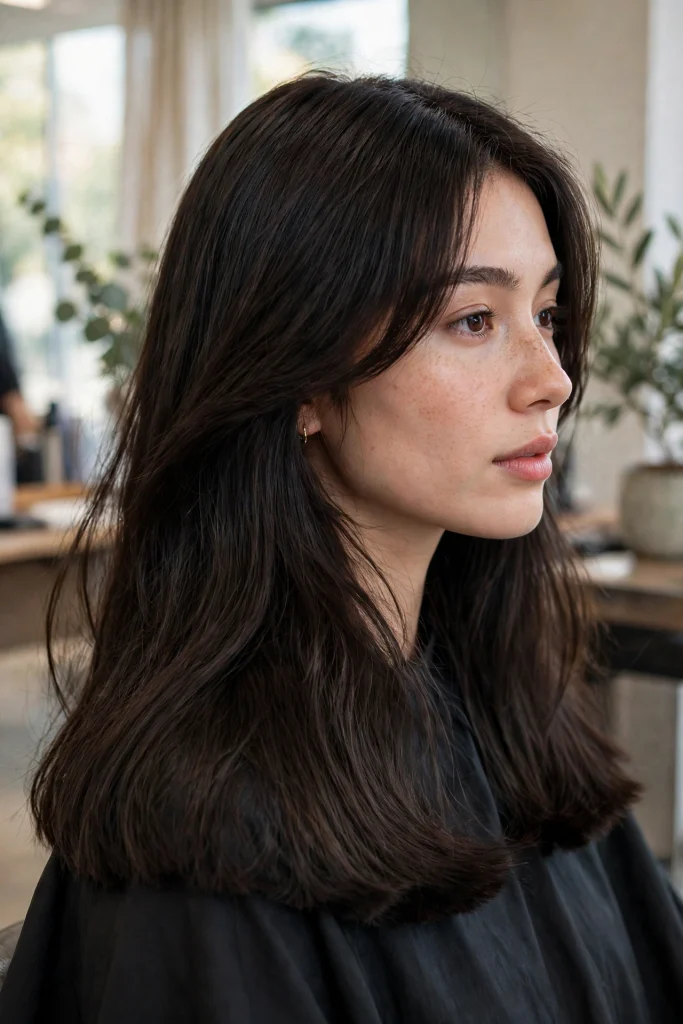
Straight hair shows ghost layers as pure movement, since the surface stays glassy and smooth while the interior work lets the lengths sway and separate. Without visible layer lines, the hair reads as sleek and expensive, yet it never looks flat or lifeless. A round-brush blowout makes the effect even clearer, as the ends turn under in one clean curve while the interior layers give the shape its bounce.
7. Ghost Layers for Wavy Hair
Wavy hair and ghost layers are natural partners, because the interior layers release wave pattern that one-length hair often pulls flat under its own weight. Each hidden layer lets a wave form where it wants to, so the texture comes alive without the hair looking layered or choppy. Scrunch with a light cream and air-dry, and the waves will separate into soft, natural movement on their own.
8. Ghost Layers for Curly Hair
Curly hair takes ghost layers as interior shaping that respects the curl pattern, removing weight from underneath so the curls can spring up instead of being dragged down. The layers are cut curl by curl or on dry hair, so each one lands where the curl actually sits and no layer line appears on the surface. The result is a rounder, bouncier shape with the length intact, and the curls look lighter and more defined.
9. Ghost Layers With Face-Framing Pieces
A few visible face-framing pieces combined with ghost layers through the back give you the softness around the face without committing to a fully layered cut. The front pieces start at the cheekbones or jaw and blend invisibly into the interior work behind them. It is the gentle way to try the ghost layer idea, since the only layers anyone can actually see are the ones framing your face.
10. Ghost Layers for a One-Length Look
The one-length look with ghost layers is the purest expression of the technique: hair that appears to be cut all one length, with every bit of its movement coming from hidden interior work. The outline is perfectly level, the surface is perfectly smooth, and yet the hair swings, flips, and falls back into place like layered hair. It is the cut for anyone who has ever said they want layers but does not want to see them.
11. Ghost Layers for Growing Out Layers
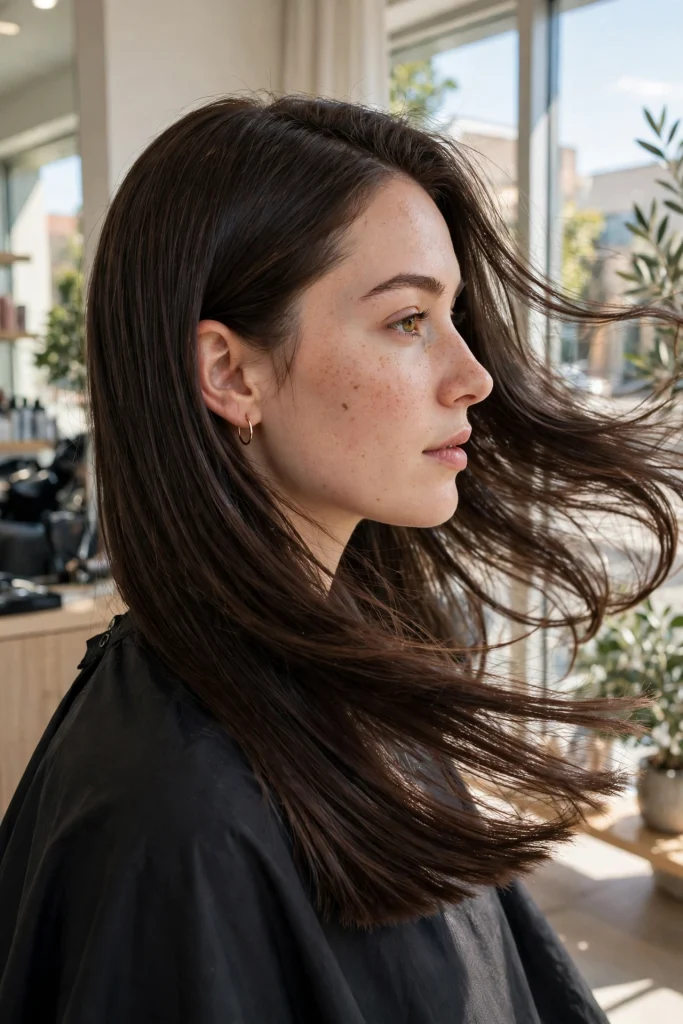
Ghost layers are the kindest route out of grown-out visible layers, since the interior technique can blend the old layer lines away without cutting length. The stylist softens the hard edges of the old layers from underneath, letting them dissolve into the interior while the surface grows smooth. Within one or two appointments, the visible steps disappear, and the hair reads as one length with natural movement.
12. Ghost Layers With Long Layers on Top
Combining a few long surface layers with ghost layers underneath gives the hair visible softness at the crown and invisible freedom through the lengths. The surface layers are kept long and subtle, starting below the shoulders, while the ghost work handles the weight and movement deeper inside. It is the version for anyone who wants a hint of visible layering without the full layered look.
13. Ghost Layers for a Middle Part
A middle part shows ghost layers at their most symmetrical, with the interior movement falling evenly on both sides and the surface staying smooth and balanced. The part keeps the shape centered, and the hidden layers let each side swing independently instead of moving as one heavy sheet. It is the most polished way to wear the cut, and it suits anyone who likes a clean, intentional silhouette.
14. Ghost Layers for a Deep Side Part
A deep side part with ghost layers gives the hair drama, since the heavy side carries the interior movement and the light side stays sleek and tucked. The hidden layers let the heavy side fall with weight and swing, while the surface stays smooth enough to look deliberate rather than messy. Sweep the hair over with a light serum, and the shape holds its drama all day without any visible layering.
15. Ghost Layers for Low-Maintenance Hair
Ghost layers are one of the lowest-maintenance cuts available, because there are no visible layer lines to grow out awkwardly and no shape that collapses between appointments. The hair simply gets a little heavier and a little less mobile as it grows, and the next cut restores the movement without any drama. It is the cut for anyone who wants to visit the salon twice a year and still have hair that moves beautifully.
16. Ghost Layers With a Root Lift
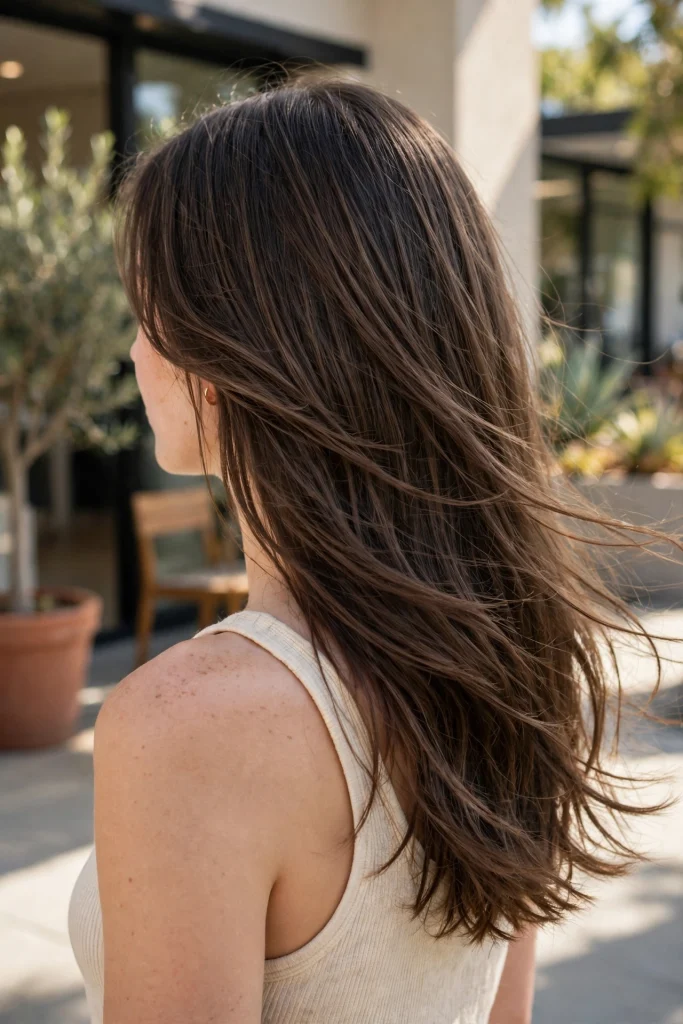
A root lift pairs naturally with ghost layers, since the interior work already frees the hair from its own weight and a little lift at the crown completes the effect. Ask for the roots to be dried with a round brush or with the head flipped forward, so the crown stands away from the scalp and the interior layers have room to move. The combination gives flat hair genuine, lasting volume without any backcombing or teasing.
17. Ghost Layers for Wedding Guest Hair
Ghost layers style up beautifully for a wedding, since the interior movement holds curl and volume through a long day while the surface stays smooth enough to look polished. Set the hair in large, soft curls and the hidden layers will keep each curl separate and bouncy, with no visible steps breaking up the finish. The hair photographs as one glossy length with beautiful movement, which is exactly what wedding guest hair should do.
18. Ghost Layers With Balayage
Balayage and ghost layers work on the same principle: dimension and movement that look natural because nothing shows its technique. The hand-painted lightness lands on the surface while the ghost layers move underneath, so the color and the cut enhance each other without either one announcing itself. Keep the color soft and the layers hidden, and the hair reads as effortlessly dimensional from every angle.
19. Ghost Layers for a Blowout Finish
A blowout is the finish that shows ghost layers off best, since the round brush reveals the interior movement while keeping the surface sleek. Dry the hair in sections, rolling the ends under and letting each section cool before you move on, and the interior layers will give the shape its bounce. The finish looks like a salon blowout on hair that has no visible layers at all, which always earns compliments.
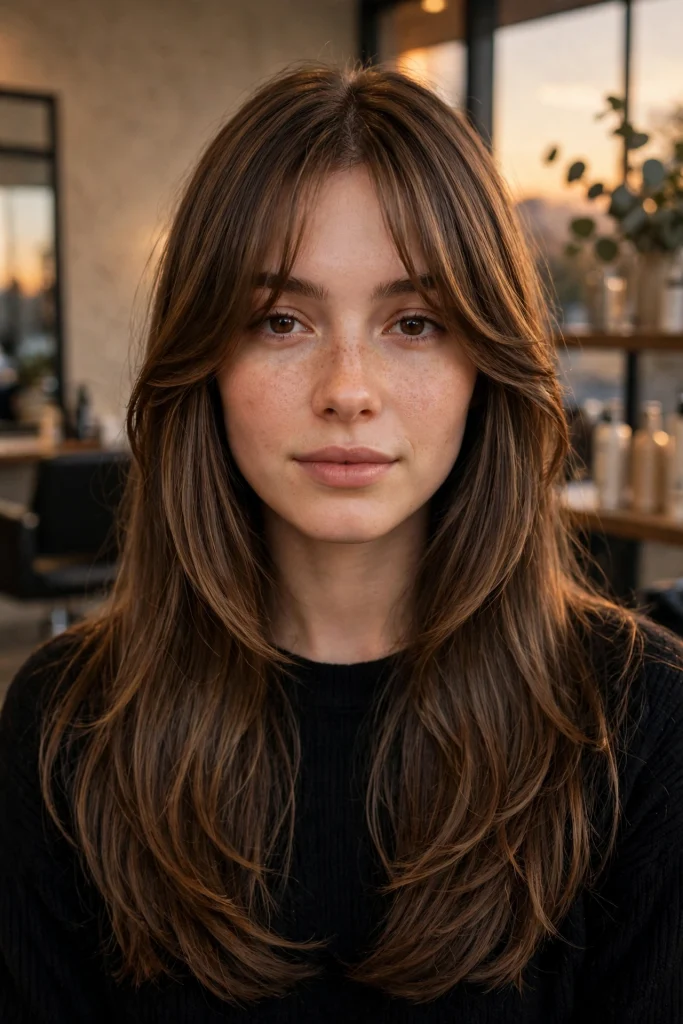
20. Ghost Layers With Curtain Bangs
Curtain bangs with ghost layers give the front of the hair soft, visible framing while the back stays seamless and one-length. The bangs part in the middle and sweep into the sides, blending into the invisible interior work so there is no hard line where the fringe ends and the rest begins. It is the most face-flattering version of the cut, and the bangs grow out gracefully because the interior layers absorb the transition.
21. Ghost Layers for Air-Dried Texture
An air-dried ghost layer cut is the low-effort ideal, since the interior layers let natural texture form without any heat styling at all. Apply a light mousse or cream, scrunch gently, and leave the hair alone until it is fully dry, and the waves or curls will separate naturally. The surface stays smooth where it should, and the movement appears exactly where the interior layers released it.
22. Ghost Layers for Thick, Coarse Hair
Thick, coarse hair needs ghost layers cut with confidence, since the interior weight is what makes coarse hair resist every style and sit in one rigid shape. The stylist removes substantial weight from underneath in long, invisible sections, so the hair becomes pliable enough to style while keeping its full, healthy appearance. The difference is immediate: hair that fought every brushstroke suddenly bends, swings, and holds a shape.
23. Ghost Layers With a Slicked-Back Style
A slicked-back style with ghost layers keeps the front controlled and sleek while the lengths behind retain their hidden movement. Smooth the front sections back with a light gel or cream, and let the interior layers do their work through the back, so the style reads as polished from the front and full of life from behind. It is a useful trick for second-day hair, when the front needs control but the lengths still want to move.
24. Ghost Layers for a Ponytail That Swings
A ponytail made from ghost-layered hair swings differently from a one-length ponytail, because the interior layers let the tail move in sections rather than as one stiff rope. The ponytail looks fuller and softer, with the ends feathering naturally instead of ending in a blunt block. Pull a few face-framing pieces loose, and the whole style reads as effortless rather than scraped back.
25. Ghost Layers as a First Step Into Layering
If you have always been afraid of layers, ghost layers are the safest first step, since nothing about the cut will look layered when you leave the salon. You get the movement, the lightness, and the swing, with none of the visible steps or choppy ends that make layer-shy clients nervous. After a few months of living with the movement, most people are ready to add a few visible face-framing pieces, and the ghost layers make that next step easy.
Styling Tips
- Ask your stylist to show you the interior work by lifting the top section, so you can see the hidden layers before the surface falls back into place.
- Blow-dry with a large round brush, rolling the ends under, since the brush reveals the interior movement while keeping the surface sleek.
- Use a light volumizing mousse at the roots, because the ghost layers need a little lift at the crown to show their full effect.
- Avoid heavy waxes and thick creams, which weigh down the interior layers and cancel out the movement they were cut to create.
- Let the hair air-dry whenever you can, since natural texture shows off ghost layers better than any heat-styled finish.
- Trim every ten to twelve weeks to keep the interior layers working, since grown-out ghost layers slowly lose their release as the hair gets heavier.
- Tell your stylist if you wear your hair up often, because the interior layer lengths affect how the hair behaves in a ponytail or bun.
Frequently Asked Questions
Q: What is the difference between ghost layers and regular layers? A: Regular layers are cut on the surface and are meant to be seen, with visible steps and graduation from short to long. Ghost layers are cut into the interior of the hair, underneath the top section, so the surface stays smooth and the outline reads as one length. The difference is visibility: regular layers show their technique, while ghost layers hide it and let only the movement show.
Q: Will ghost layers make my hair look thinner? A: No, when they are cut correctly. Ghost layers remove weight from the interior, not length from the surface, so the hair keeps its full appearance and outline. On very fine hair the interior work should be minimal, since too much removal can make fine hair look sparse, but on medium and thick hair the hair actually looks fuller because it moves instead of sitting flat.
Q: Do ghost layers work on curly hair? A: Yes, and they are one of the best techniques for curls, because they remove the interior weight that drags curls down and stretches them out. The layers must be cut curl by curl or on dry hair so each one lands where the curl naturally sits. Done that way, the curls spring up, the shape stays round, and no layer line appears on the surface.
Q: How often do ghost layers need trimming? A: Every ten to twelve weeks is ideal, since the interior layers gradually lose their effect as the hair grows heavier. The grow-out is graceful, because there are no visible layer lines to go awkward, so you can stretch the interval if needed. A trim that refreshes only the interior work is often enough, and it leaves the length and outline untouched.
Q: Can I get ghost layers if I have never had layers before? A: Yes, ghost layers are the ideal first layered cut, because nothing about the result looks layered. You get movement, lightness, and swing with a surface that reads as one length, which makes the change feel safe. If you love the movement, you can add visible face-framing pieces at the next appointment, and the ghost layers will make that transition smooth.