25 French Pin Hairstyles for a Polished Twist
A French pin is a single stick that does the work of a dozen bobby pins. It slides through a twist, locks it in place, and looks like jewellery while it does it. These 25 French pin styles range from a two-minute twist to a polished evening updo, and they all share the same quiet elegance.
1. Classic French Twist with a Tortoiseshell Pin
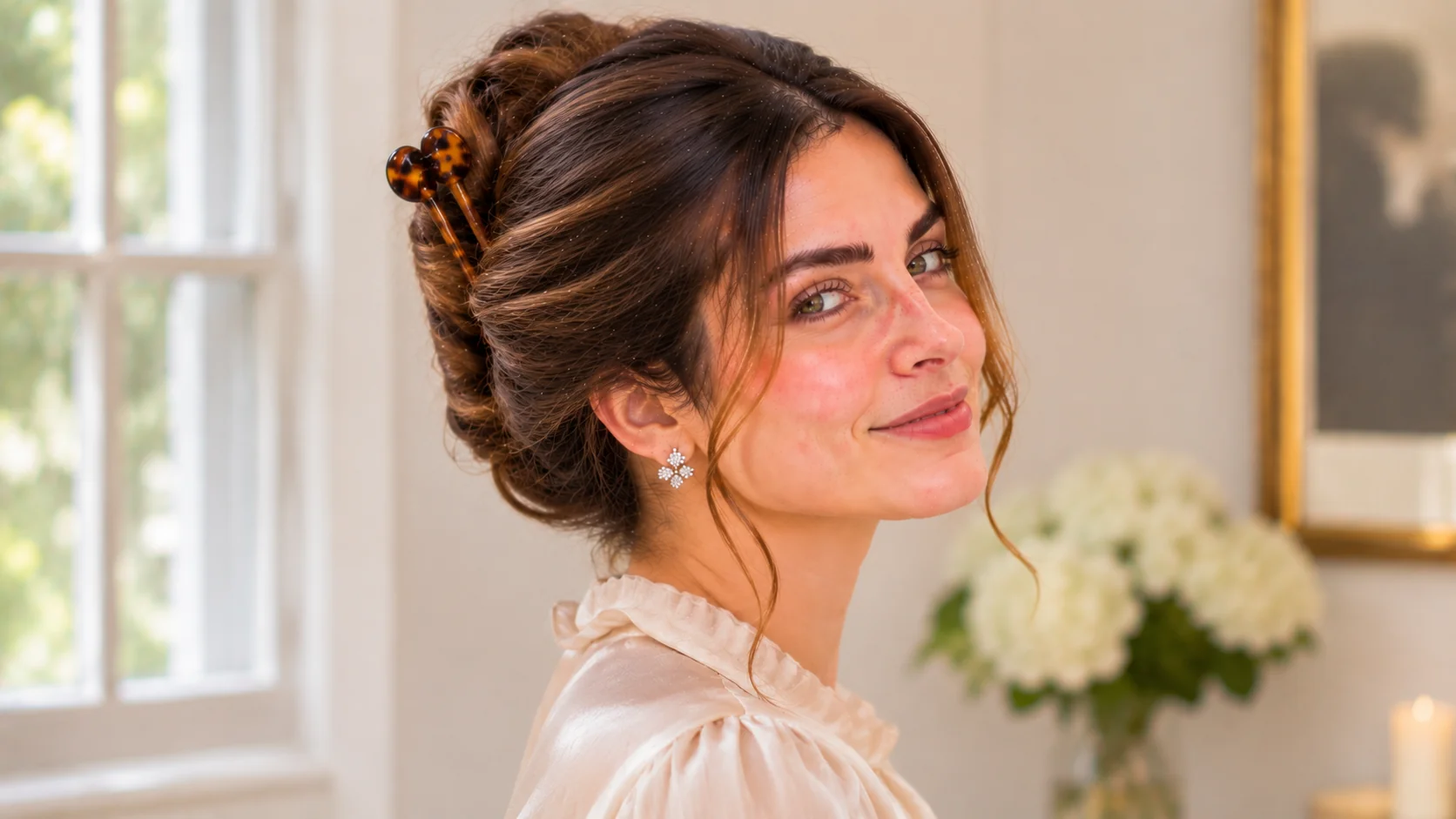
Roll your hair up from the nape into a French twist and slide a tortoiseshell pin through it diagonally. The pin holds the twist without any other pins, and the tortoiseshell adds warmth against the hair. Medium and long hair work best, and the style suits straight and slightly wavy hair equally.
2. French Pin Low Bun
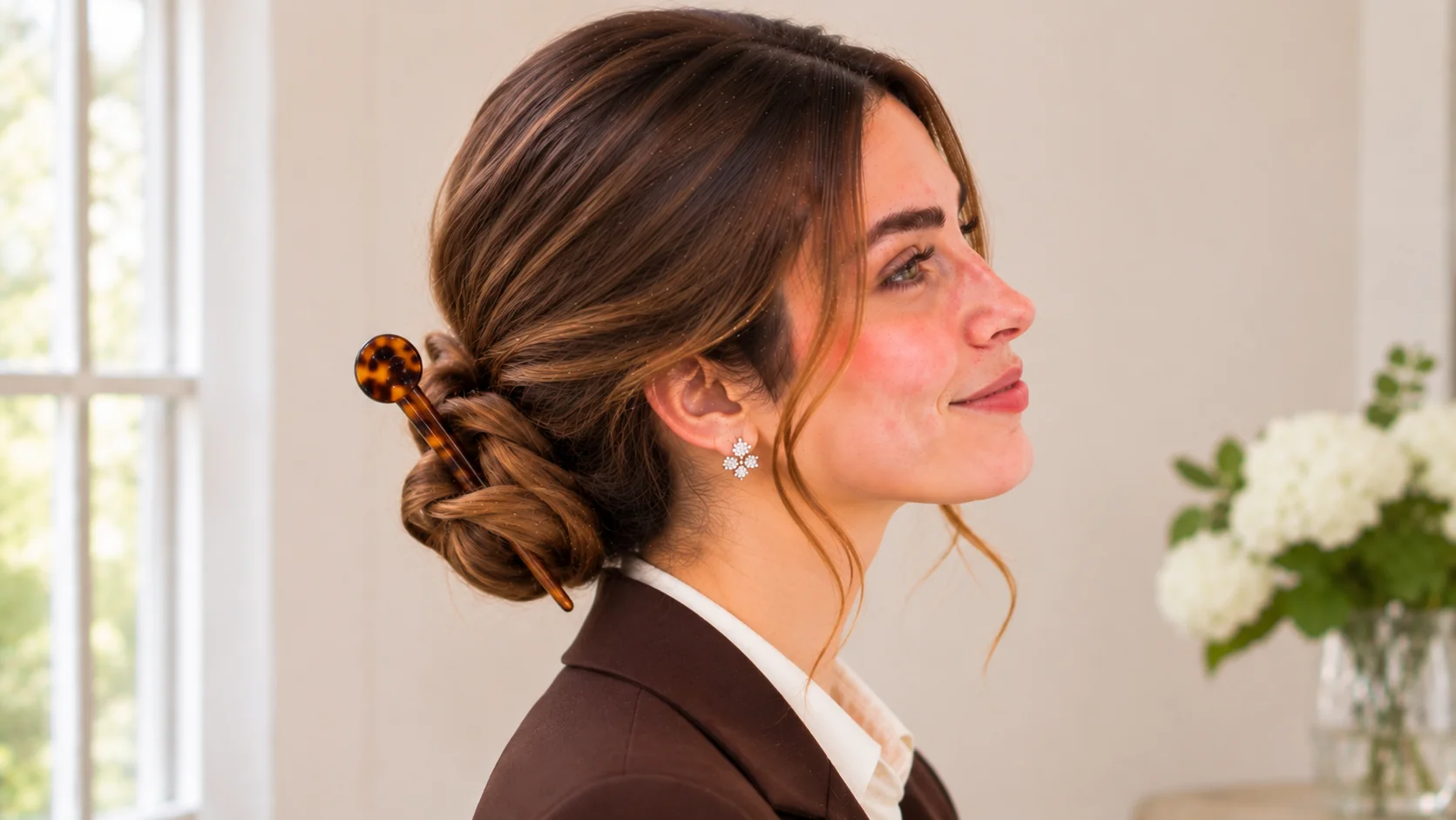
Gather your hair into a low bun at the nape and secure it with a French pin pushed through the centre. The pin holds the bun flat against the head, which is what makes it look polished rather than casual. Thick hair needs a longer pin, while fine hair can use a shorter one.
3. French Pin Half-Up Twist
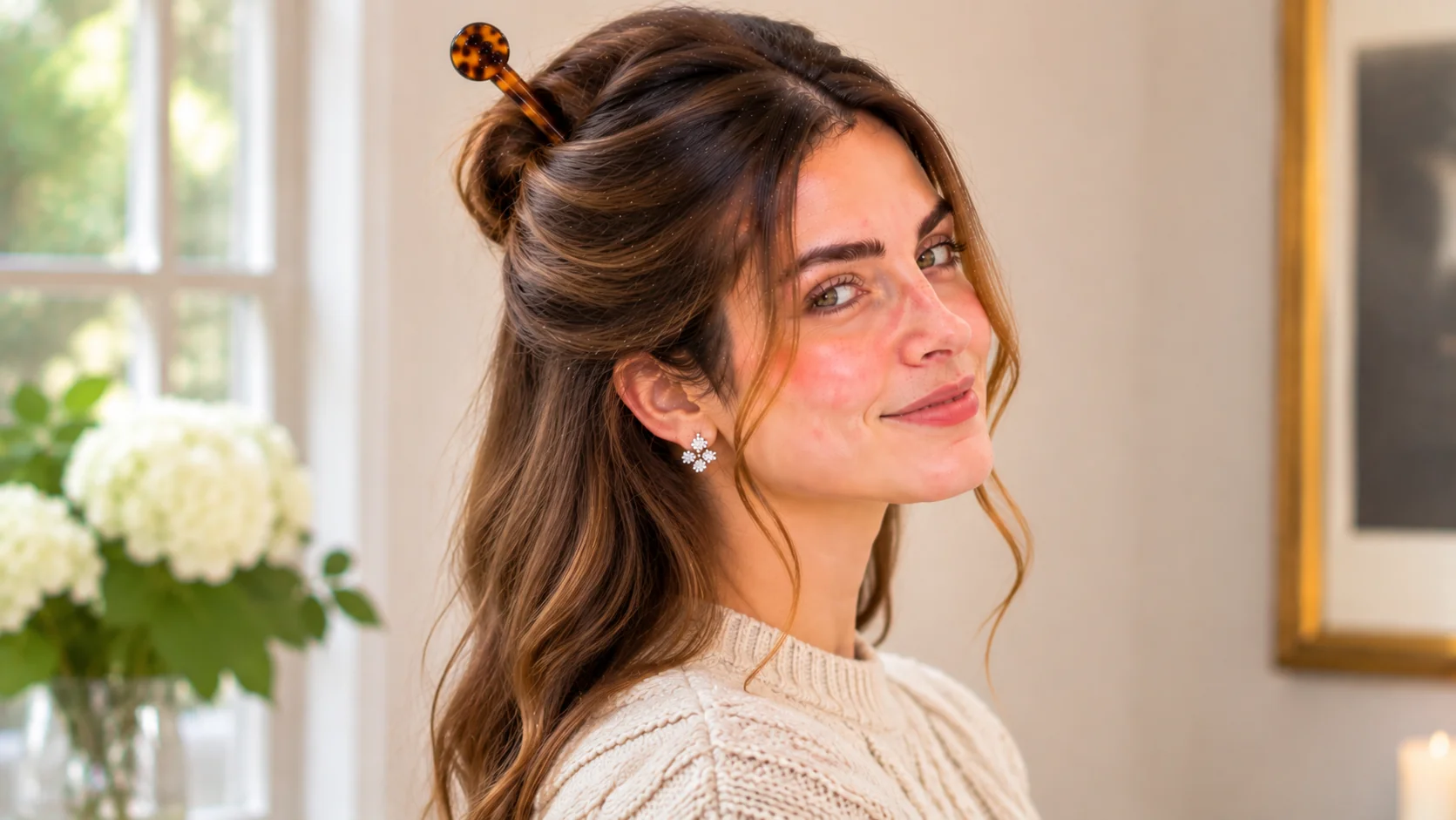
Gather the top half of your hair, twist it once, and pin it at the crown with a French pin. The rest of the hair stays down, so you get the lift of an updo without committing to one. It suits wavy and curly hair especially well, since the pin holds the texture without flattening it.
4. French Pin Messy Bun
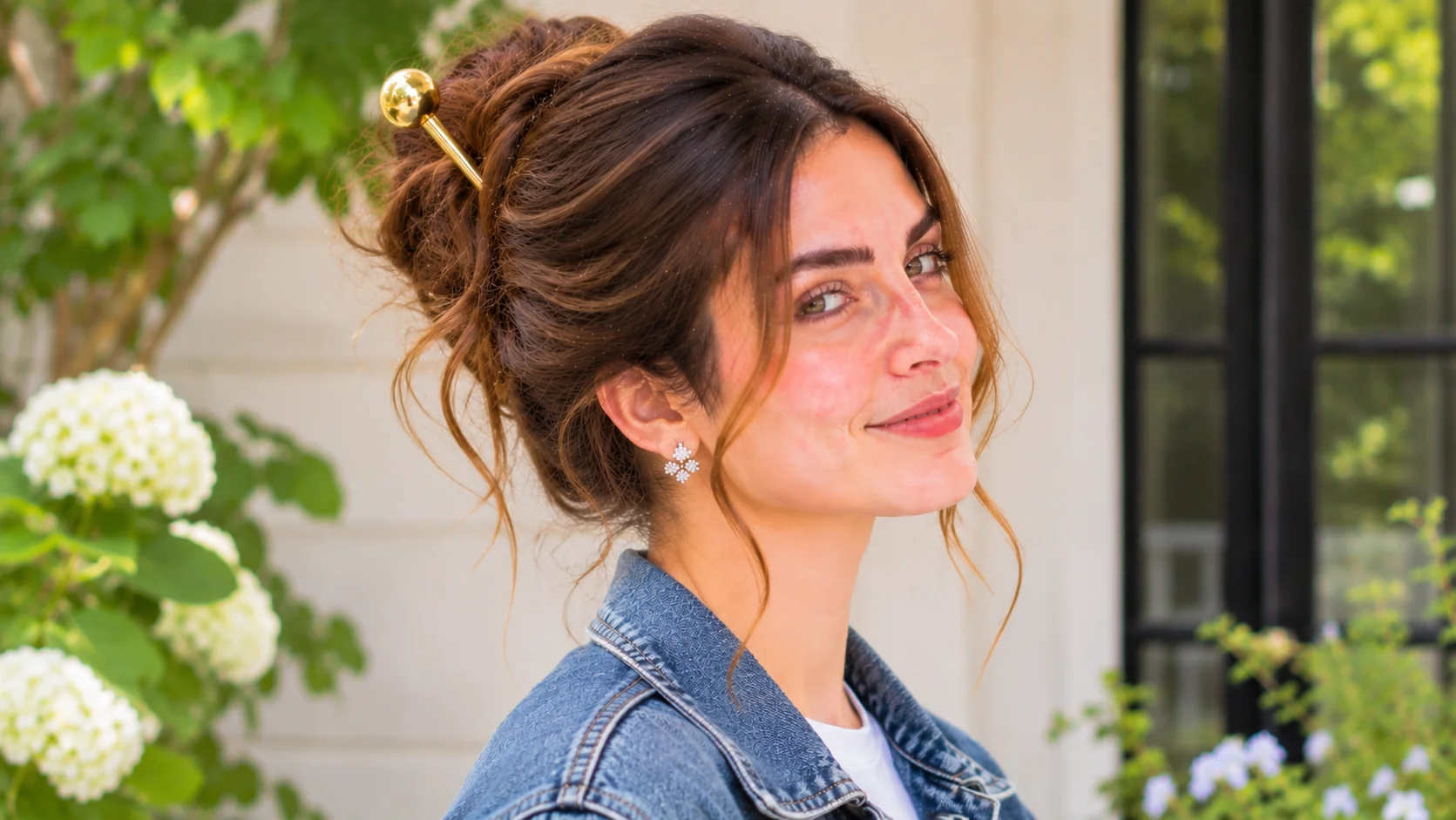
Pile your hair into a loose bun and slide a French pin through it horizontally. The pin makes the messiness look deliberate, which is the difference between a styled bun and a thrown-up one. Second-day hair holds this best, and a gold pin adds a warm detail that suits the relaxed shape.
5. French Pin High Bun
Twist your hair into a high bun and secure it with a French pin pushed through the base. The pin holds the bun without an elastic, so there is no dent when you take it down. Long hair carries this best, and a pin with a decorative end turns the bun into a statement.
6. French Pin with Curtain Bangs
Wear your hair down with curtain bangs, and pin the top section back with a small French pin. The pin holds the bangs open so they frame the face without falling into the eyes. Fine hair benefits most, since the pin adds a detail where the hair is lightest, and it does not flatten the bangs the way a clip can.
7. French Pin Twisted Ponytail
Gather your hair into a low ponytail, twist it once, and pin it with a French pin at the nape. The twist adds texture to a plain ponytail, and the pin holds it without an elastic. It suits thick hair best, and a tortoiseshell pin keeps the look understated.
8. French Pin Chignon with Loose Tendrils
Roll your hair into a low chignon, leave two tendrils loose at the front, and secure the chignon with a French pin. The tendrils keep the look soft, and the pin gives the chignon a clean finish. This is an easy style for dinners and events, and it suits oval and heart-shaped faces because the tendrils frame the face.
9. French Pin Side Twist
Twist one side of your hair back and pin it with a French pin just above the ear. The twist keeps the front layers out of your face, and the pin adds a detail exactly where the eye lands. It suits straight and wavy hair, and it is a good choice when you want to look styled with almost no effort.
10. French Pin Sleek Low Bun
Smooth your hair into a tight low bun with a shine serum and secure it with a French pin. The contrast between the sleek hair and the smooth pin is what makes this look work, so keep the bun very neat. It suits straight hair best and is a strong choice for formal evenings and work.
11. French Pin Top Knot
Twist your hair into a high top knot and pin it with a French pin pushed through the base. The pin holds the knot without an elastic, and the style keeps everything off the neck. Curly hair works well here, since the pin adds a smooth detail against the texture.
12. French Pin with Loose Waves
Wear your hair in loose waves and pin the top section back with a French pin. The pin holds the top back so the waves frame the face, and the waves underneath stay soft. It suits medium and long hair, and a gold pin adds warmth that suits the waves.
13. French Pin Braided Updo
Braid your hair and coil the braid into a low bun, securing it with a French pin. The pin holds the braid without pins, and the braid gives the bun texture and grip. Medium and long hair both work, and a pin with a pearl end adds a soft detail that suits the braid.
14. French Pin on Short Hair
Short hair can use a French pin too: gather the top section back and pin it with a small pin at the crown. Keep the pin short, about four inches, so it does not overwhelm the hair. It works best on a bob, where the pin holds the front layers back and shows off the face.
15. French Pin Double Twist
Twist two sections, one on each side, and pin them together at the back with a French pin. The two twists frame the face and the pin holds them neatly. It works well on wavy and curly hair, where the twists keep the front tidy while the rest stays free.
16. French Pin with a Deep Side Part
Part your hair deeply to one side, smooth it down, and pin the heavier side back with a French pin. The pin fills the space where the hair is thinnest and draws attention to the part line. It suits straight and slightly wavy hair, and a tortoiseshell pin disappears into dark hair while still holding the shape.
17. French Pin Vintage Twist
Roll your hair into a soft, slightly undone French twist and secure it with a French pin. The twist feels elegant without looking stiff when it is kept soft, and the pin adds a classic detail. It works best on medium to long hair and holds well with the pin pushed through at a diagonal angle.
18. French Pin with a Fishtail Braid
Weave a fishtail braid down the back and coil it into a low bun, securing it with a French pin. The pin holds the braid flat and turns it into an updo, and it is faster than pinning. Long hair shows the fishtail pattern best, and a gold pin keeps the focus on the braid.
19. French Pin Low Ponytail
Gather your hair into a low ponytail and pin it with a French pin at the nape, skipping the elastic entirely. The pin holds the ponytail without a dent, and the style looks softer than a ponytail tied with an elastic. It suits thick hair best, since the pin needs enough hair to grip.
20. French Pin with a Bubble Ponytail
Add elastics down a ponytail and puff each section into bubbles, then pin the top with a French pin. The pin anchors the bubbles and gives the playful shape a polished finish. Long hair shows the bubbles best, and a decorative pin balances the volume of the ponytail.
21. French Pin on a Slicked-Back Style
Comb your hair straight back with a strong-hold gel and pin it with a French pin at the crown. The pin adds a focal point to the slicked-back look and holds the hair without an elastic. This suits oval and heart-shaped faces particularly well, since the pulled-back hair shows off the face.
22. French Pin with a Textured Pixie
Work a little styling wax through a pixie cut to piece out the ends, then slide a small French pin above one ear to hold back the front section. The pin is slim enough to read as jewellery, and it adds a detail to a short cut without overwhelming it. Keep it short so it does not stick out.
23. French Pin Gibson Tuck
Roll your hair into itself at the nape for a Gibson tuck and secure it with a French pin pushed through the roll. The pin holds the tuck without pins, and the style looks timeless and elegant. It suits medium to long hair, and a pin with a decorative end adds a finishing touch.
24. French Pin with a Braided Crown
Braid around the head like a crown and pin the ends with a French pin where they meet. The pin covers the join neatly and holds the braid in place. Medium and long hair both work, and a pearl-ended pin adds a soft detail that suits the crown.
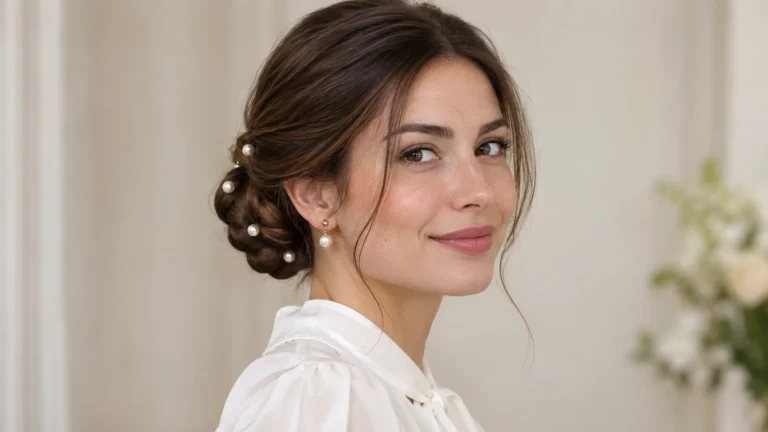
25. Pearl French Pin Evening Updo
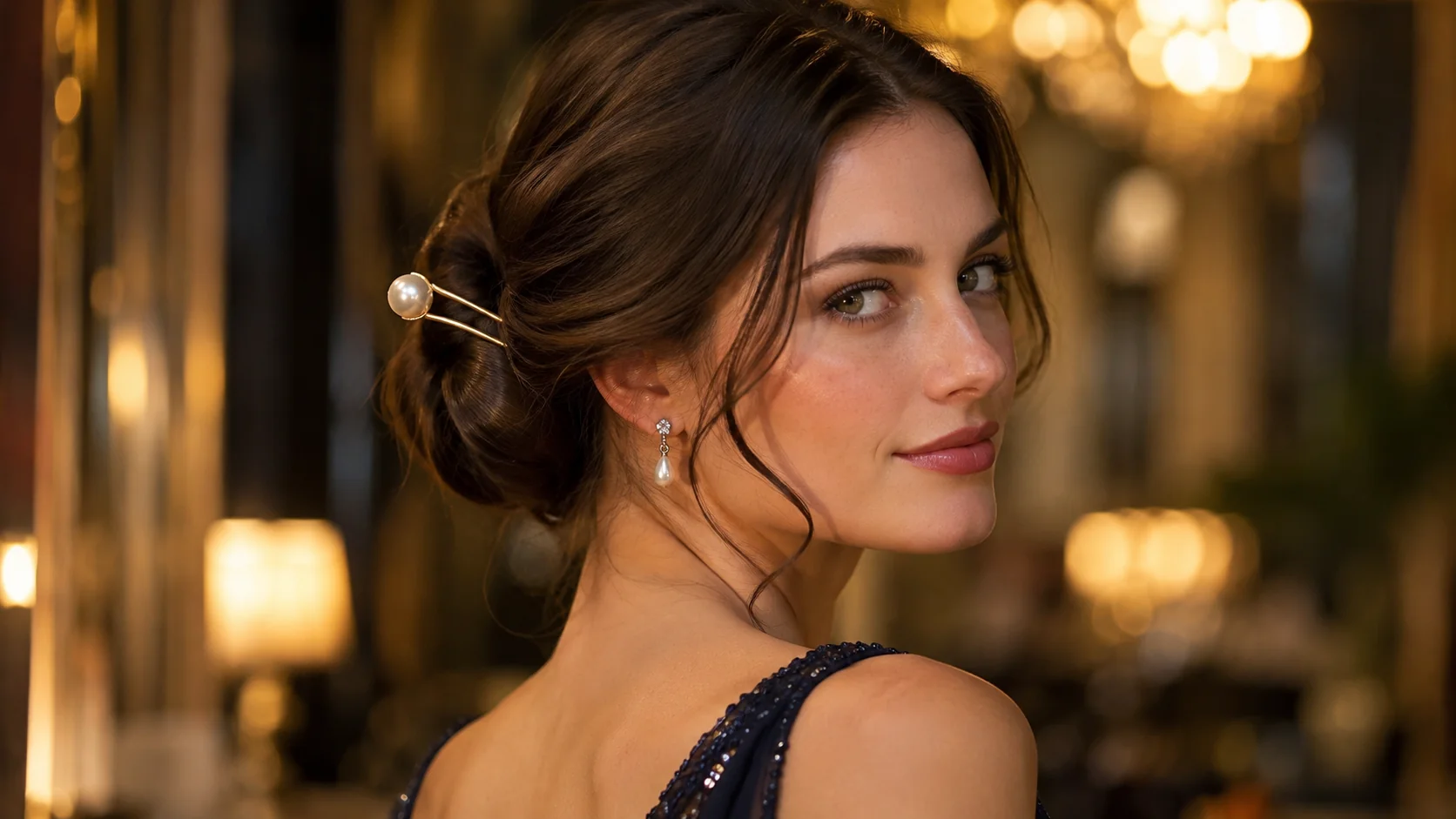
Twist your hair into a low updo and secure it with a French pin that has a pearl on the end. The pearl is the jewellery and the hairstyle in one, so keep the rest of the style simple and let the pin do the talking. It suits evening events and weddings, and it works on any length that reaches a twist.
Styling Tips
- Match the pin length to your hair: short pins for fine hair and short styles, medium pins for half-up styles, long pins for thick hair and full updos.
- Push the pin through at a diagonal angle, not straight across, so it catches more hair and holds better.
- Twist the hair before pinning, rather than pinning it flat, so the pin has a compact bundle to grip.
- Tortoiseshell pins suit every hair colour and look more polished than plain black for most styles.
- If the pin slides out, the section is too thin or too clean: add texture spray and take a slightly thicker section.
- A French pin holds better on second-day hair than on freshly washed hair, since the natural texture gives it grip.
- Keep a spare pin in your bag: it weighs nothing and can rescue a hairstyle that has gone flat.
- To remove a pin, pull it straight out along the same angle it went in, so it does not snag.
Frequently Asked Questions
Will a French pin hold thick hair all day?
Yes, if the pin is long enough and strong enough. Look for pins made of metal or sturdy acetate, and twist the hair before pinning so the pin has a compact bundle to grip. If a pin keeps sliding out, the section is too thick for it, so split the hair into two twists.
Do French pins damage hair?
They are one of the gentlest tools because they distribute pressure along a single point and do not pull at the roots. Avoid pins with rough edges, and always pull the pin out along the same angle it went in so it does not snag.
Can I wear a French pin to work?
Yes. A neat French twist or low bun held with a tortoiseshell pin reads polished and professional. Save the decorative, pearl-ended pins for evenings and events.
Why does my French pin keep falling out?
It usually means the hair is too clean or the section is too thin. Add a little texture spray or dry shampoo before pinning, twist the hair first, and push the pin through at a diagonal so it catches hair on both sides.
Are French pins suitable for curly hair?
They work very well on curly hair, because they hold a section back without flattening the curl pattern the way an elastic does. Use a longer pin and gather the curls loosely so the pin sits on top of them rather than crushing them.