25 Protective Styles Ideas for Winter Hair Care

Winter is hard on natural hair: cold wind outside, dry heated air inside, and constant friction from hats, scarves, and coats. Protective styles answer all three by keeping the hair contained, covered, and moisturised. These ideas are chosen for hat compatibility, moisture retention, and low winter maintenance.
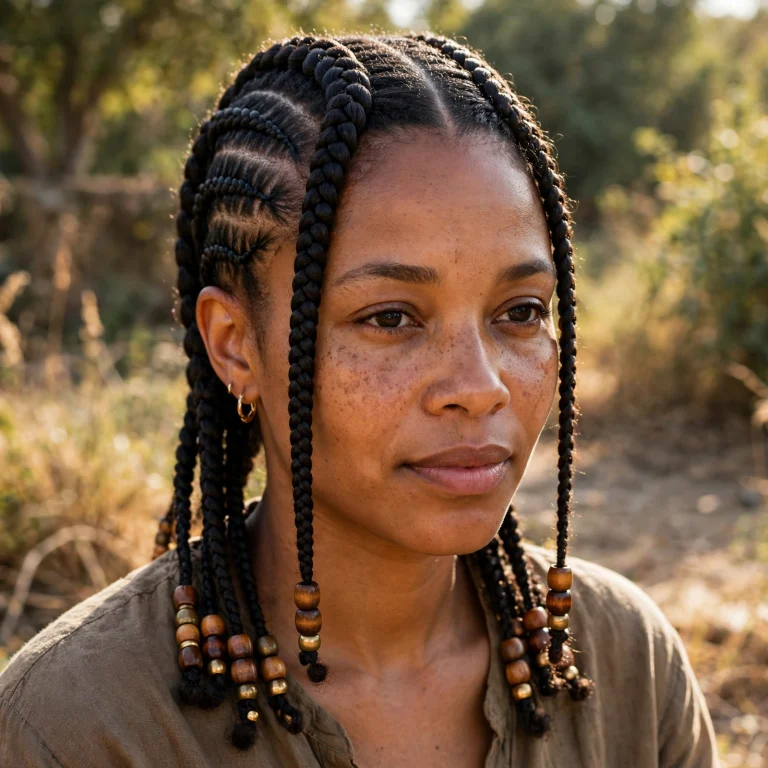
1. Box Braids Under a Winter Hat
Box braids sit comfortably under a winter hat, keeping the hair covered and protected from the cold. Winter air and indoor heating both steal moisture, so this style’s full coverage is a real defence. Layer a satin-lined hat over this style to cut friction from wool and other rough fabrics.
2. Knotless Braids with a Moisture-Sealing Routine
Knotless braids paired with a regular sealing routine lock moisture in through the driest months. Because the hair is contained, it is protected from wind, hat friction, and cold-weather breakage. Seal the lengths with a slightly richer cream or butter in winter than you would in summer.
3. Long Twists Tucked into a Coat-Friendly Bun
Long twists tucked into a bun sit above the coat collar, avoiding the friction of heavy winter clothing. This style works well under hats and scarves, keeping the hair safe without being squashed flat. Mist the scalp and braids with water before sealing, since moisture needs to go in before it can be locked down.
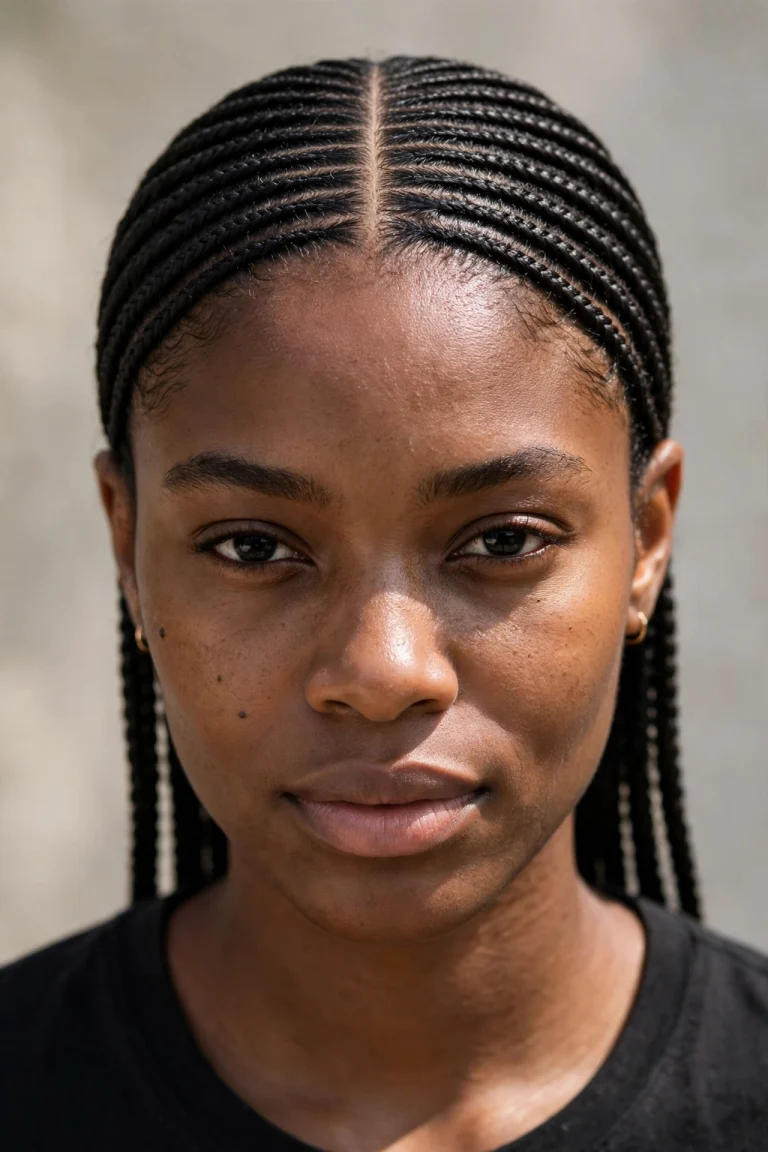
4. Cornrows with a Satin-Lined Hat Fit
Flat cornrows fit neatly under a satin-lined hat, cutting friction while keeping the head warm. Fewer wash days in winter mean less exposure to cold water and harsh drying, which helps retention. At night, a satin bonnet under your usual bedding keeps the style smooth through cold nights.
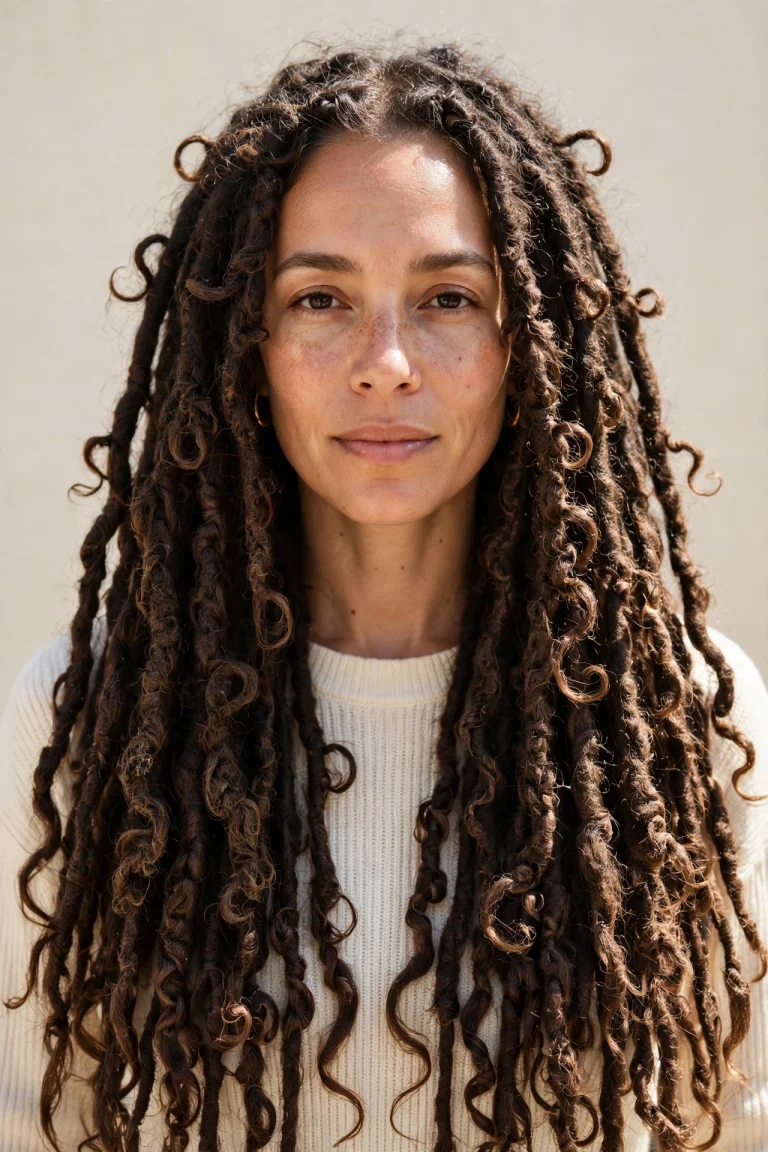
5. Faux Locs for Cold-Weather Length Protection
Faux locs cover the full length, shielding it from wind and cold for weeks at a time. The covered ends are shielded from rubbing against coats and scarves, a common winter cause of split ends. Avoid going outside with wet braids in freezing weather; let them dry fully indoors first.
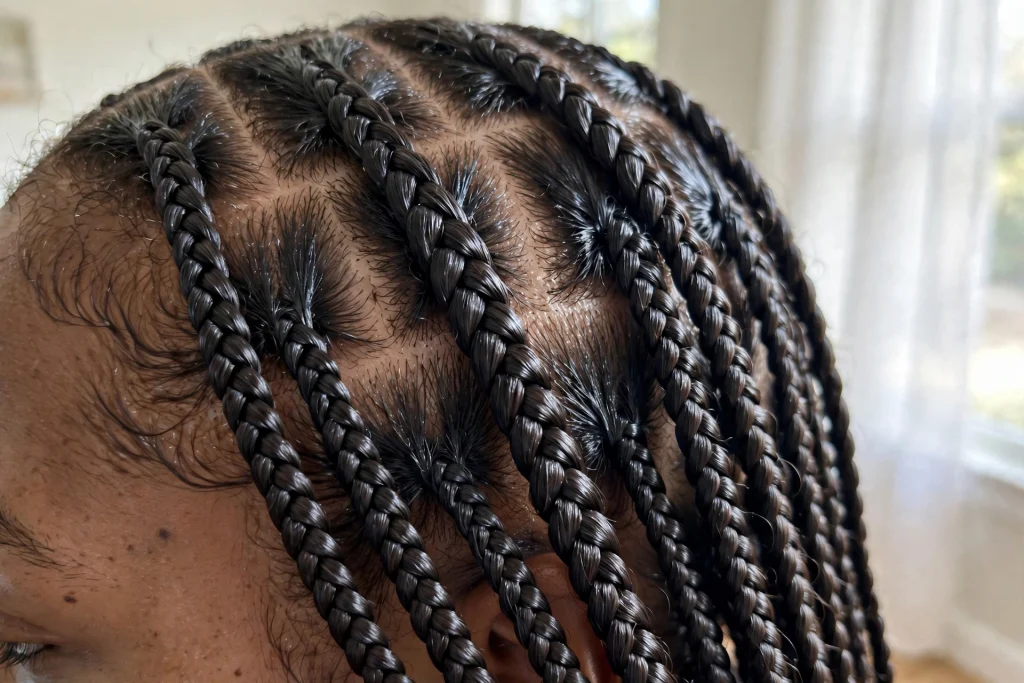
6. Crochet Braids with a Fully Covered Base
A fully covered crochet base means no section of natural hair faces winter air directly. A moisture-first routine pairs perfectly with this style, since the scalp stays easy to reach. Space out washes a little more in winter, using scalp rinses to stay fresh between them.
7. Flat Twists with a Low Winter Bun
Flat twists gathered into a low bun keep the hair contained and easy to tuck under a hat. Winter air and indoor heating both steal moisture, so this style’s full coverage is a real defence. Layer a satin-lined hat over this style to cut friction from wool and other rough fabrics.
8. Mini Twists with a Rich Sealing Routine
Mini twists with a rich sealing routine hold moisture well through cold, dry weeks. Because the hair is contained, it is protected from wind, hat friction, and cold-weather breakage. Seal the lengths with a slightly richer cream or butter in winter than you would in summer.
9. Braided Low Bun for Scarf Season
A low braided bun sits below scarf lines, avoiding tangles with winter wraps. This style works well under hats and scarves, keeping the hair safe without being squashed flat. Mist the scalp and braids with water before sealing, since moisture needs to go in before it can be locked down.
10. Jumbo Twists for Quick Winter Wash Days
Jumbo twists make winter wash days faster, so wet hair spends less time in the cold. Fewer wash days in winter mean less exposure to cold water and harsh drying, which helps retention. At night, a satin bonnet under your usual bedding keeps the style smooth through cold nights.
11. Braids with a Leave-In Moisture Routine
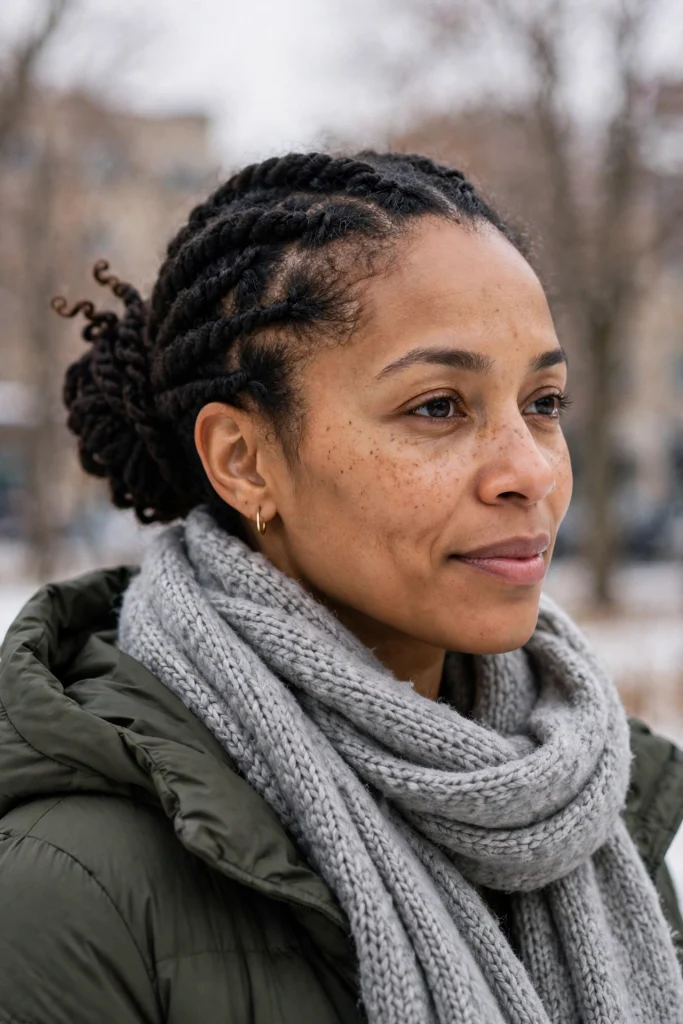
Braids paired with a leave-in moisture routine stay soft even when the air is dry. The covered ends are shielded from rubbing against coats and scarves, a common winter cause of split ends. Avoid going outside with wet braids in freezing weather; let them dry fully indoors first.
12. Circular Cornrow Updo for Windy Days
A circular cornrow updo keeps every strand pinned down on the windiest winter days. A moisture-first routine pairs perfectly with this style, since the scalp stays easy to reach. Space out washes a little more in winter, using scalp rinses to stay fresh between them.
13. Braided Ponytail Tucked Inside a Coat
A braided ponytail tucked inside a coat stays warm and protected instead of whipping in the wind. Winter air and indoor heating both steal moisture, so this style’s full coverage is a real defence. Layer a satin-lined hat over this style to cut friction from wool and other rough fabrics.
14. Protective Updo for Dry Indoor Heating
A contained protective updo limits exposure to dry heated indoor air, which is surprisingly harsh on hair. Because the hair is contained, it is protected from wind, hat friction, and cold-weather breakage. Seal the lengths with a slightly richer cream or butter in winter than you would in summer.
15. Twists with a Nightly Satin Wrap Routine
Twists with a nightly satin wrap routine stay smooth through long winter nights. This style works well under hats and scarves, keeping the hair safe without being squashed flat. Mist the scalp and braids with water before sealing, since moisture needs to go in before it can be locked down.
16. Box Braids with Sealed Ends Against the Cold
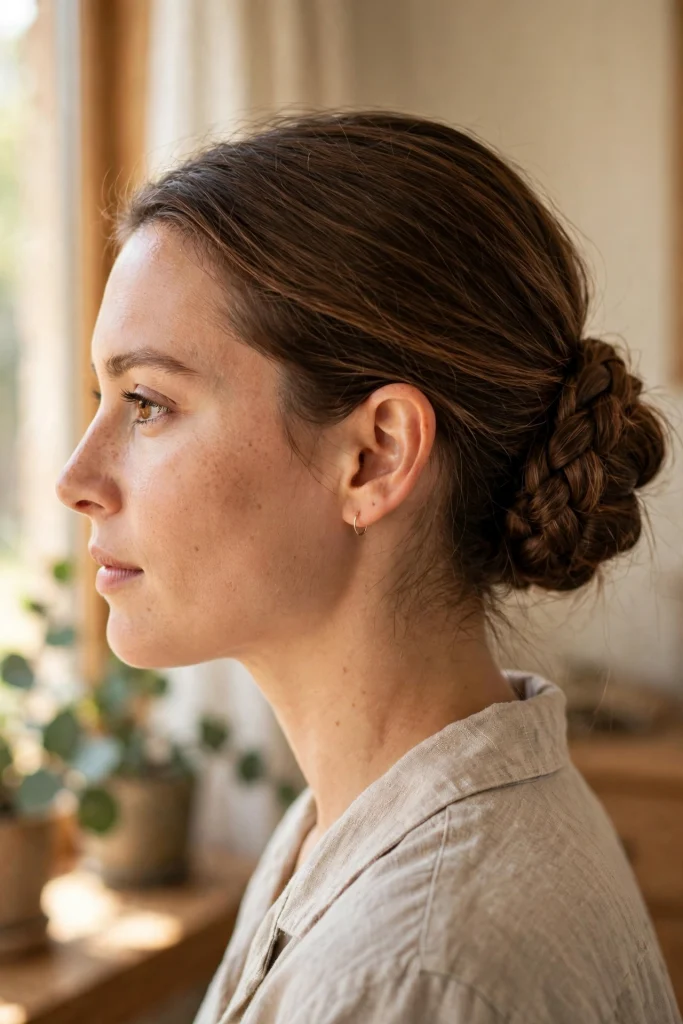
Box braids with sealed ends stop cold-weather splitting before it starts. Fewer wash days in winter mean less exposure to cold water and harsh drying, which helps retention. At night, a satin bonnet under your usual bedding keeps the style smooth through cold nights.
17. Low Braided Chignon for Hat Days
A low chignon sits neatly under hats, giving a polished winter shape with full protection. The covered ends are shielded from rubbing against coats and scarves, a common winter cause of split ends. Avoid going outside with wet braids in freezing weather; let them dry fully indoors first.
18. Two-Strand Twists with a Hot-Oil Finish
Two-strand twists finished with a warm oil treatment get an extra moisture boost for winter. A moisture-first routine pairs perfectly with this style, since the scalp stays easy to reach. Space out washes a little more in winter, using scalp rinses to stay fresh between them.
19. Cornrow Base for Winter Wig Rotation
A flat cornrow base supports winter wig rotation, letting you change looks while your hair rests. Winter air and indoor heating both steal moisture, so this style’s full coverage is a real defence. Layer a satin-lined hat over this style to cut friction from wool and other rough fabrics.
20. Chunky Braids for Fewer Wash Days
Chunky braids need fewer wash days, which suits winter when frequent washing is less appealing. Because the hair is contained, it is protected from wind, hat friction, and cold-weather breakage. Seal the lengths with a slightly richer cream or butter in winter than you would in summer.

21. Braids with a Scalp-Care Winter Routine
Braids paired with a dedicated scalp-care routine prevent the dryness and flaking winter often brings. This style works well under hats and scarves, keeping the hair safe without being squashed flat. Mist the scalp and braids with water before sealing, since moisture needs to go in before it can be locked down.
22. Long Braids Pinned Up Against the Wind
Long braids pinned up stay out of the wind, avoiding the tangling and breakage gusts cause. Fewer wash days in winter mean less exposure to cold water and harsh drying, which helps retention. At night, a satin bonnet under your usual bedding keeps the style smooth through cold nights.
23. Soft Locs with a Moisture-First Winter Routine
Soft locs with a moisture-first routine stay supple through the coldest months. The covered ends are shielded from rubbing against coats and scarves, a common winter cause of split ends. Avoid going outside with wet braids in freezing weather; let them dry fully indoors first.
24. Braided Bob for Easy Hat Wear
A braided bob fits easily under any hat, making it a practical winter protective style. A moisture-first routine pairs perfectly with this style, since the scalp stays easy to reach. Space out washes a little more in winter, using scalp rinses to stay fresh between them.
25. Protective Halo Updo for Frosty Mornings
A halo updo keeps every strand contained on frosty mornings when loose hair would suffer. Winter air and indoor heating both steal moisture, so this style’s full coverage is a real defence. Layer a satin-lined hat over this style to cut friction from wool and other rough fabrics.
Styling Tips
Use a satin-lined hat or a satin scarf under winter hats to cut friction. Seal moisture in with a cream or butter after misting with water. Keep wash days spaced out and dry braids fully indoors before going out. Tuck long braids up or inside coats on windy days. Care for the scalp with light oils to prevent winter dryness. Sleep in a satin bonnet to protect the style through cold nights. Give hair a rest week between winter installs to assess its condition.
FAQ
Why does hair break more in winter?
Cold air, dry indoor heating, and friction from hats and scarves all strip moisture and stress the hair shaft. Protective styles reduce exposure to all three, which is why they are so valuable in winter.
Should I wash my hair less in winter?
Slightly less frequent full washes work well, with scalp rinses in between. The key is keeping the scalp clean without repeatedly exposing the hair to cold water and long drying times.
Can I wear a wool hat over braids?
Yes, but wear a satin scarf or choose a satin-lined hat underneath. Wool friction is a major cause of frizz and breakage on braided hair.
How do I keep braids moisturised in winter?
Mist with water, then seal with a cream or oil. In winter, a slightly richer sealing product than your summer one usually works better.
Is it safe to go outside with wet braids in winter?
Avoid it in freezing weather, as wet hair can become brittle in extreme cold. Dry braids fully indoors before heading out.