20 Protective Styles Ideas for Transitioning Hair
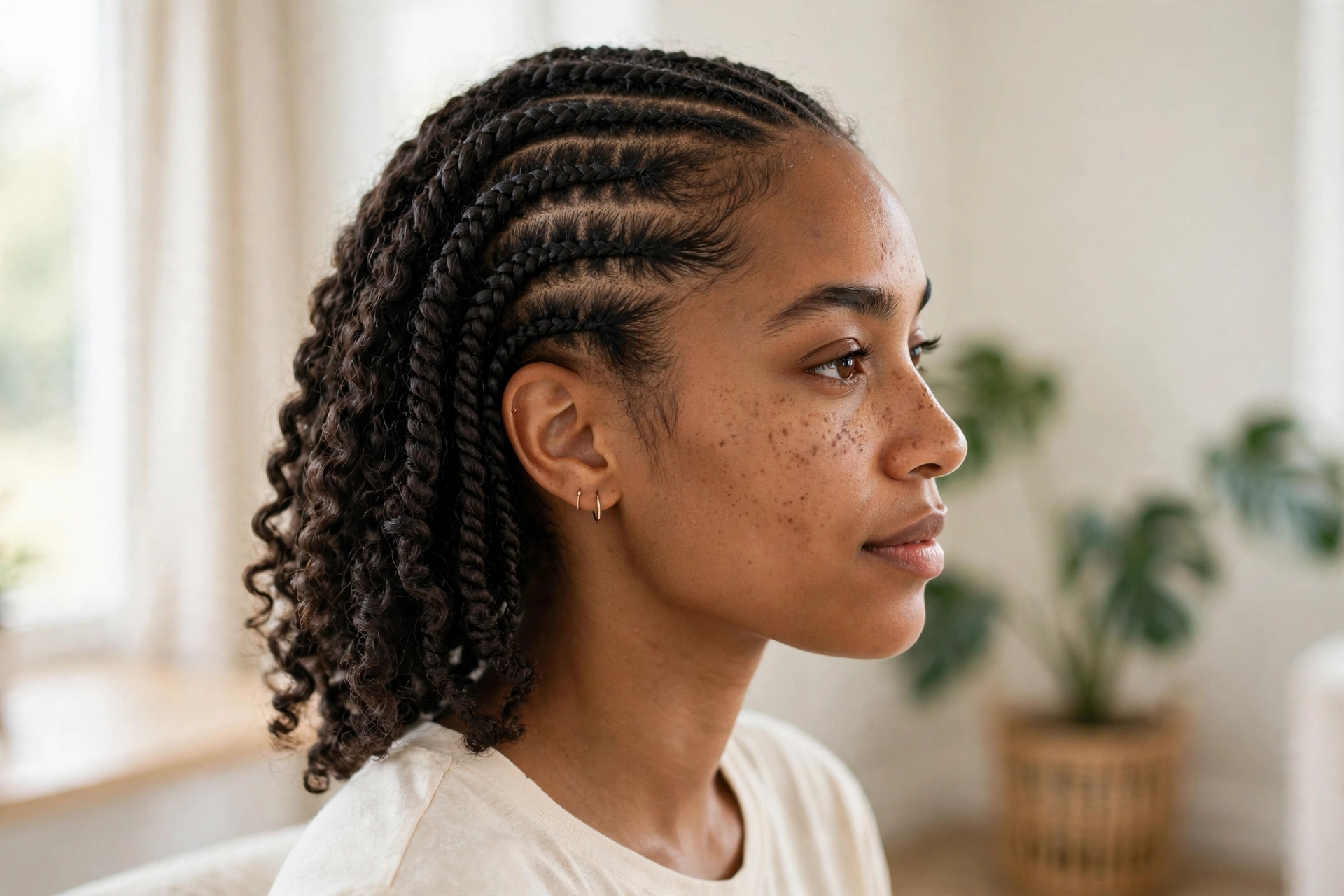
Transitioning means growing out one texture while caring for another, and the line where they meet is the most fragile part of your hair. Protective styles help by blending the two textures, hiding the demarcation line, and cutting out the heat and handling that cause breakage. These ideas are chosen for gentle tension and easy blending.
1. Flat Twists that Blend Two Textures
Flat twists smooth both textures into one pattern, blending new growth with older lengths seamlessly. Transitioning hair is at its most fragile where two textures meet, so this style protects that exact weak point. Moisturise both textures generously, since the older, processed lengths usually need more than the new growth.
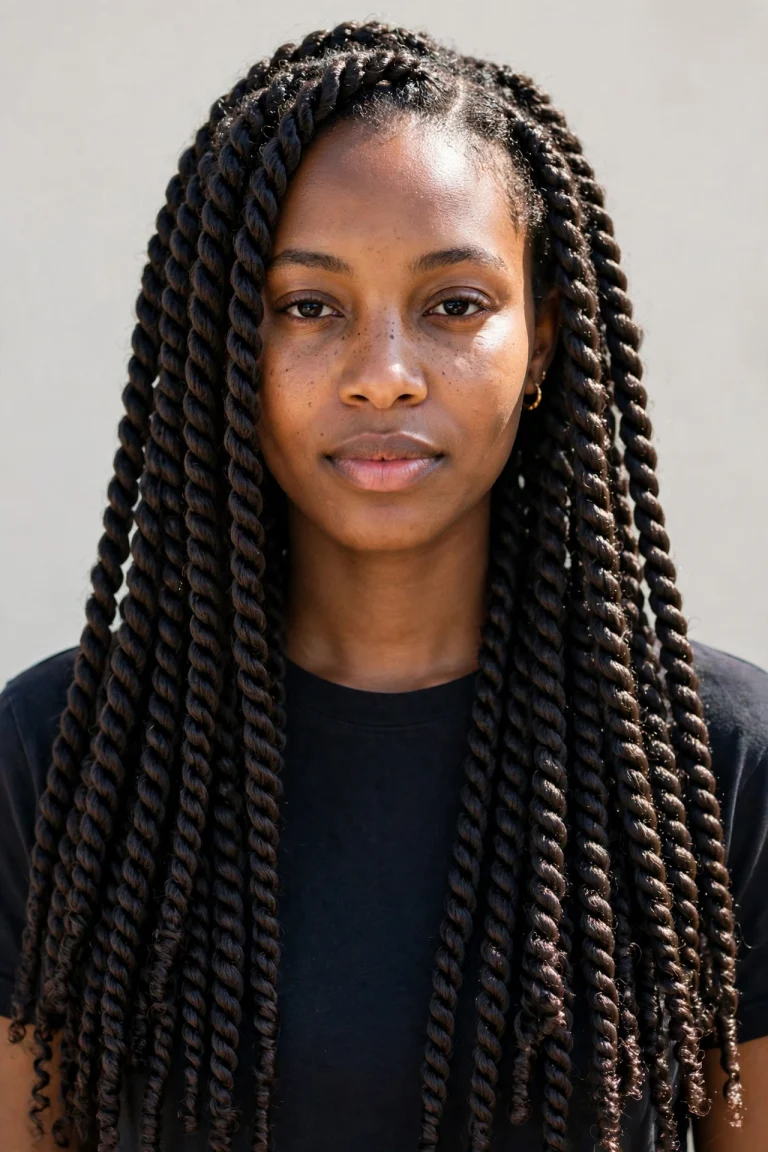
2. Two-Strand Twists for the Demarcation Line
Two-strand twists wrap both textures together, protecting the fragile line where they meet. By blending the textures together, this style hides the line of demarcation instead of exposing it. Detangle only when the hair is damp and conditioned, working gently from the ends upward.
3. Twist Set for Blending New Growth
A twist set on damp, conditioned hair blends new growth into the lengths for a uniform texture. Gentle tension is essential here, since transitioning hair breaks more easily than fully natural or relaxed hair. Avoid tight styles and heavy extensions during transition; the demarcation line cannot take extra stress.
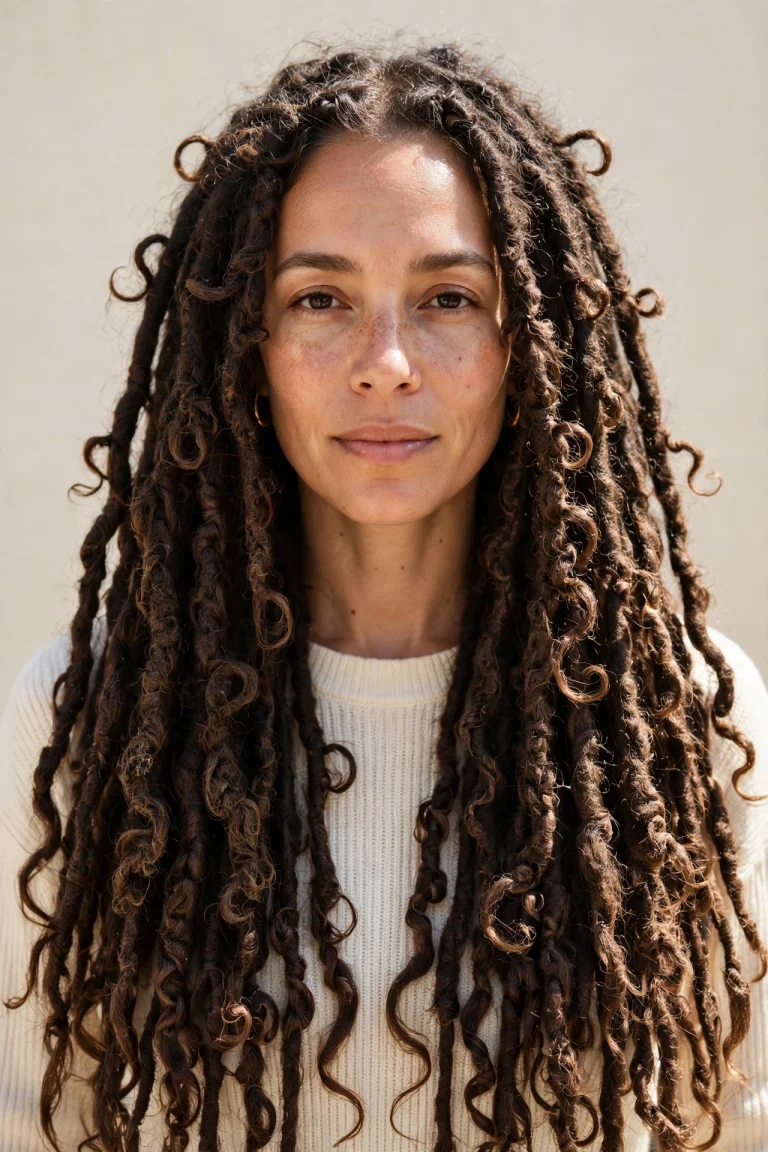
4. Mini Twists to Hide the Texture Change
Mini twists hide the texture change completely, giving a consistent look while the hair transitions. This style reduces the temptation to reach for heat, which is the biggest risk during a transition. Sleep in a satin bonnet to reduce friction on the fragile meeting point of the two textures.
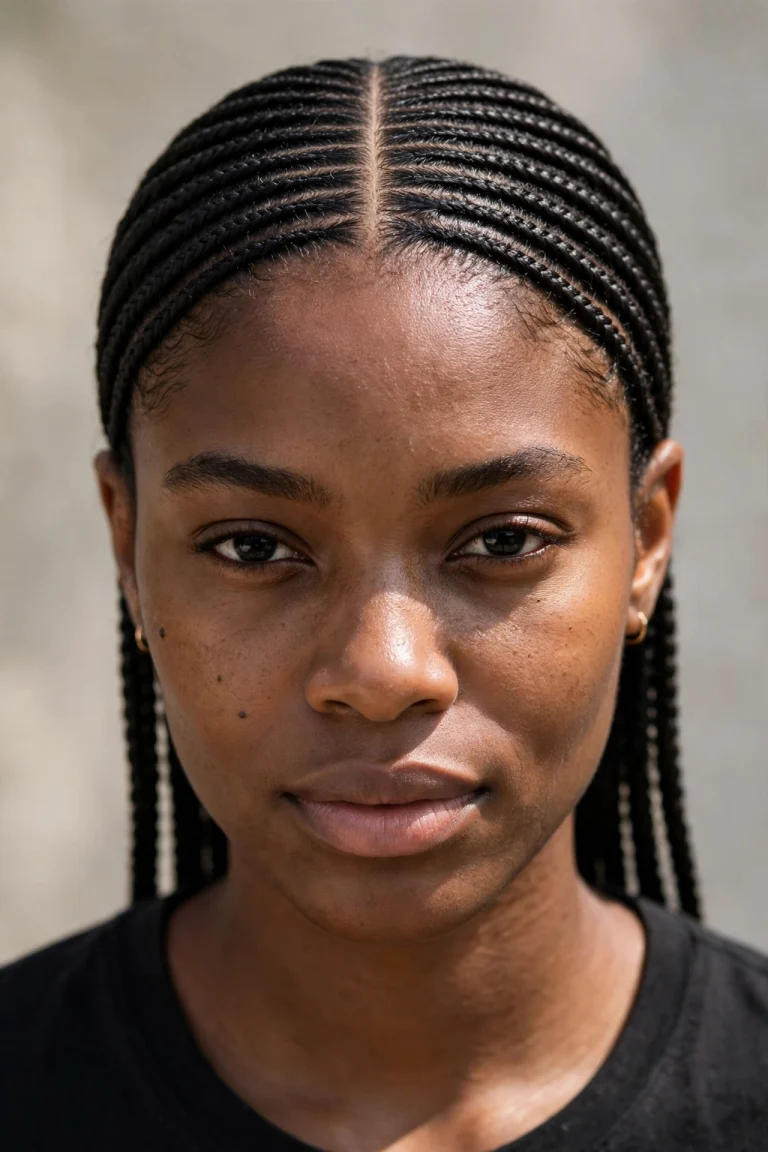
5. Cornrows that Smooth the Line of Demarcation
Cornrows braid both textures flat together, smoothing the demarcation line out of sight. Because the hair is contained, both textures stay moisturised and handled as little as possible. Trim the older lengths gradually if you are growing them out, rather than all at once.
6. Box Braids with Gentle Tension on Fragile Hair
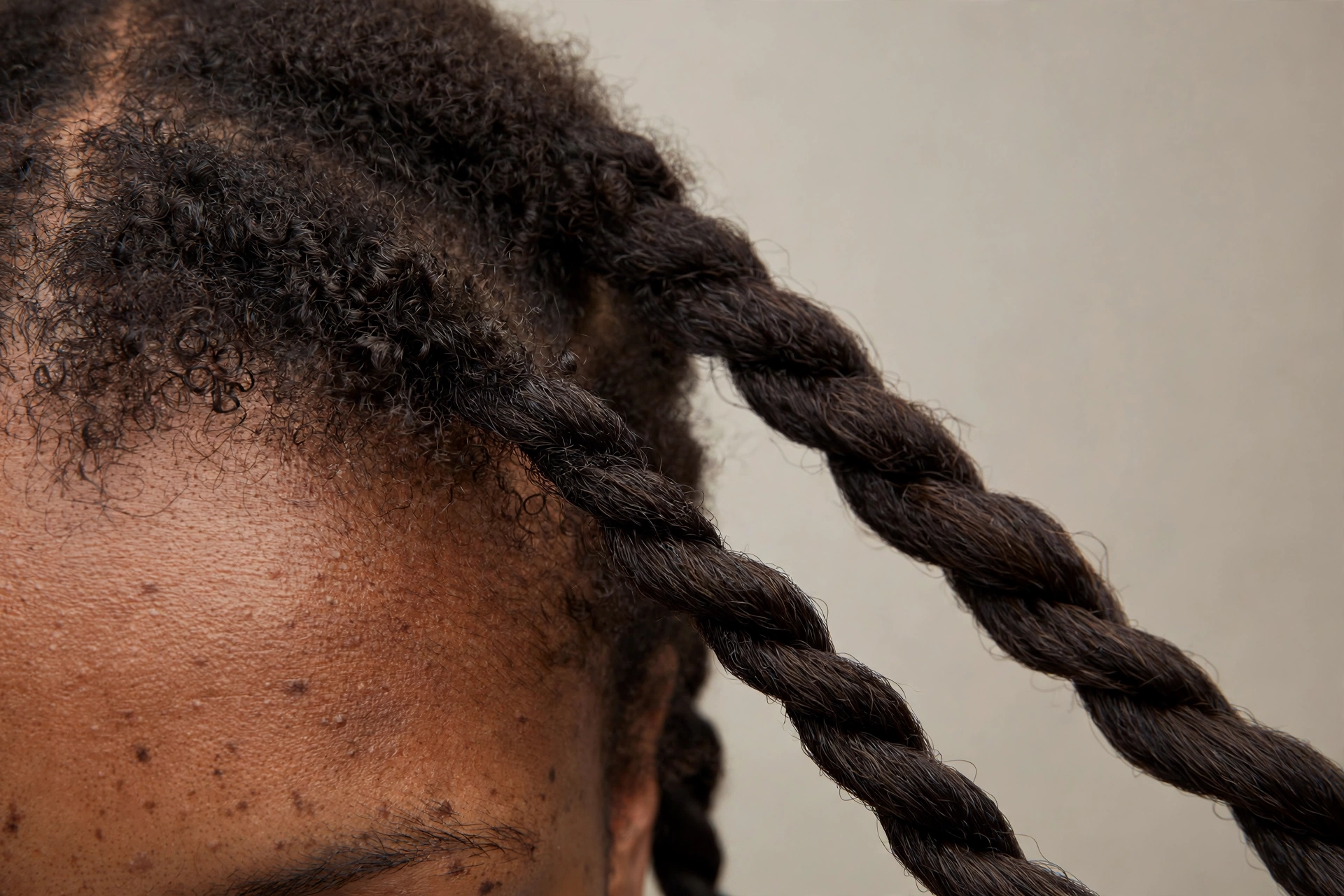
Box braids installed with gentle tension protect transitioning hair without stressing the weak point. It buys time gracefully, letting new growth accumulate while the older lengths stay protected. Be patient with the process; a good protective style makes the awkward middle stage far easier.
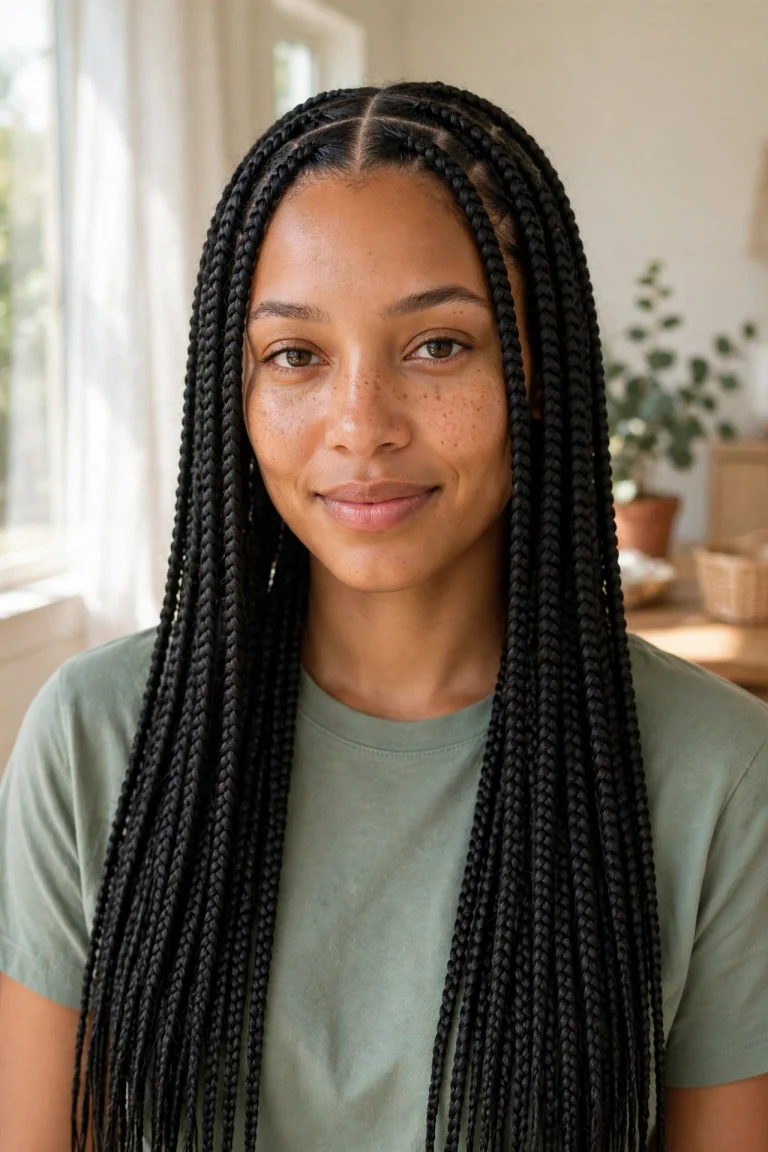
7. Knotless Braids for Tender Transitioning Hair
Knotless braids are especially kind to transitioning hair, since they start softly at the root. Transitioning hair is at its most fragile where two textures meet, so this style protects that exact weak point. Moisturise both textures generously, since the older, processed lengths usually need more than the new growth.
8. Crochet Braids Over Transitioning Hair
Crochet braids over a cornrowed base let transitioning hair rest completely underneath. By blending the textures together, this style hides the line of demarcation instead of exposing it. Detangle only when the hair is damp and conditioned, working gently from the ends upward.
9. Flat Twist Updo for Growing-Out Lengths
A flat twist updo gathers growing-out lengths into a contained shape with no loose ends. Gentle tension is essential here, since transitioning hair breaks more easily than fully natural or relaxed hair. Avoid tight styles and heavy extensions during transition; the demarcation line cannot take extra stress.
10. Twists with a Low Bun for Fragile Ends
Twists gathered into a low bun protect fragile transitioning ends from friction and snagging. This style reduces the temptation to reach for heat, which is the biggest risk during a transition. Sleep in a satin bonnet to reduce friction on the fragile meeting point of the two textures.

11. Braided Halo Updo for Uneven Lengths
A halo updo wraps uneven transitioning lengths into one neat, circular shape. Because the hair is contained, both textures stay moisturised and handled as little as possible. Trim the older lengths gradually if you are growing them out, rather than all at once.
12. Chunky Twists for Easy Detangling
Chunky twists make detangling easier at take-down, since there are fewer sections to work through. It buys time gracefully, letting new growth accumulate while the older lengths stay protected. Be patient with the process; a good protective style makes the awkward middle stage far easier.
13. Feed-In Cornrows for a Smooth Blend
Feed-in cornrows blend the two textures gradually from the hairline, giving a smooth finish. Transitioning hair is at its most fragile where two textures meet, so this style protects that exact weak point. Moisturise both textures generously, since the older, processed lengths usually need more than the new growth.
14. Protective Bob Braids for the Chop Countdown
Bob-length protective braids are a comfortable stage on the way to a final big chop, if that is your plan. By blending the textures together, this style hides the line of demarcation instead of exposing it. Detangle only when the hair is damp and conditioned, working gently from the ends upward.
15. Long Twists that Protect Weaker Mid-Lengths
Long twists cover the weaker mid-lengths of transitioning hair, where breakage most often happens. Gentle tension is essential here, since transitioning hair breaks more easily than fully natural or relaxed hair. Avoid tight styles and heavy extensions during transition; the demarcation line cannot take extra stress.
16. Braided Low Ponytail for Mixed Textures
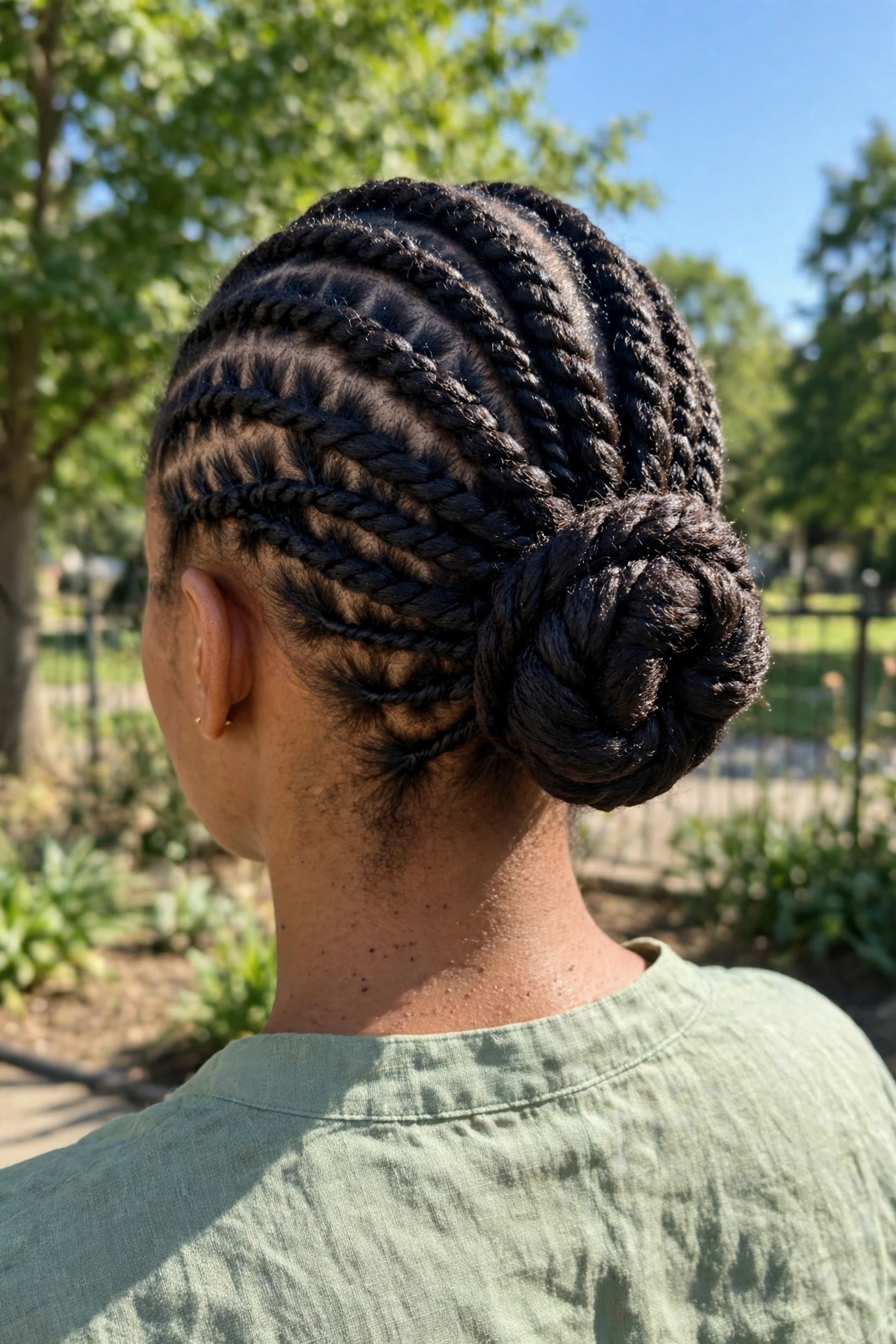
A braided low ponytail gathers mixed textures into one tidy, protected shape. This style reduces the temptation to reach for heat, which is the biggest risk during a transition. Sleep in a satin bonnet to reduce friction on the fragile meeting point of the two textures.
17. Halo Twists for a Gentle Grow-Out
Halo twists circle the head gently, giving a soft grow-out shape with no tight pulling. Because the hair is contained, both textures stay moisturised and handled as little as possible. Trim the older lengths gradually if you are growing them out, rather than all at once.
18. Passion Twists with a Soft, Forgiving Hold
Passion twists use soft, textured hair that forgives uneven transitioning lengths beautifully. It buys time gracefully, letting new growth accumulate while the older lengths stay protected. Be patient with the process; a good protective style makes the awkward middle stage far easier.
19. Cornrow Bun for Low-Stress Transitioning
A cornrow bun is a low-stress transitioning style, with everything braided flat and gathered away. Transitioning hair is at its most fragile where two textures meet, so this style protects that exact weak point. Moisturise both textures generously, since the older, processed lengths usually need more than the new growth.
20. Twists with a Moisture-Rich Transition Routine
Twists paired with a moisture-rich routine keep both textures supple through the whole transition. By blending the textures together, this style hides the line of demarcation instead of exposing it. Detangle only when the hair is damp and conditioned, working gently from the ends upward.

Styling Tips
Use gentle tension always; transitioning hair cannot tolerate tight braiding. Moisturise both textures, giving extra care to the older, drier lengths. Detangle only on damp, conditioned hair, working from the ends upward. Skip heat styling during the transition; protective styles replace it. Sleep in a satin bonnet to protect the fragile demarcation line. Trim gradually if growing out processed lengths, rather than cutting everything at once. Give yourself rest weeks between installs to assess the hair’s condition.
FAQ
What is transitioning hair?
Transitioning means growing out your natural texture while the previously processed lengths are still attached. The hair has two textures at once, and the line where they meet is fragile.
Why is the demarcation line so fragile?
It is where two textures with different strengths meet, so it breaks more easily under tension, heat, or rough handling. Protective styles shield it from all three.
How long does transitioning take?
It depends on your goal length, but most transitions last many months. Protective styles make that period easier by hiding the texture difference and reducing breakage.
Should I big chop or transition slowly?
Both work. A big chop removes processed hair at once, while a slow transition keeps length and trims gradually. Protective styles suit the slow route especially well.
Can I use heat during my transition?
It is best avoided, since heat stresses the demarcation line. If you do use heat, keep it infrequent, use protection, and keep temperatures low.