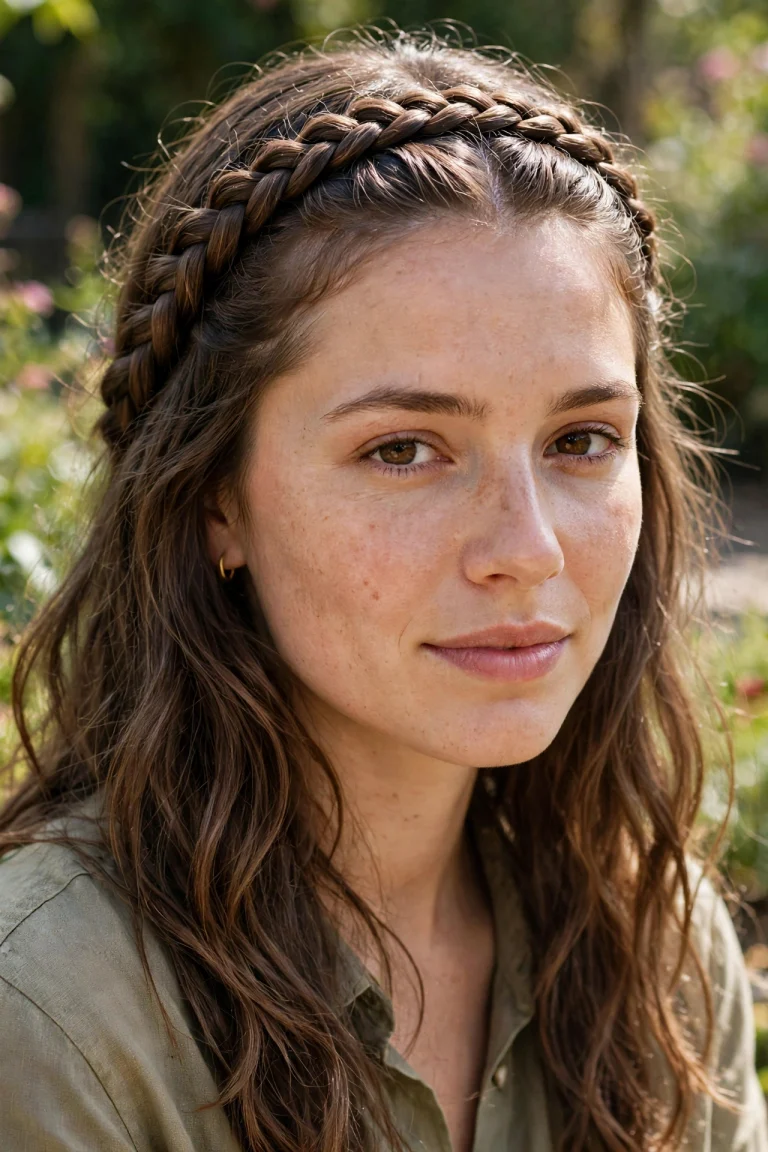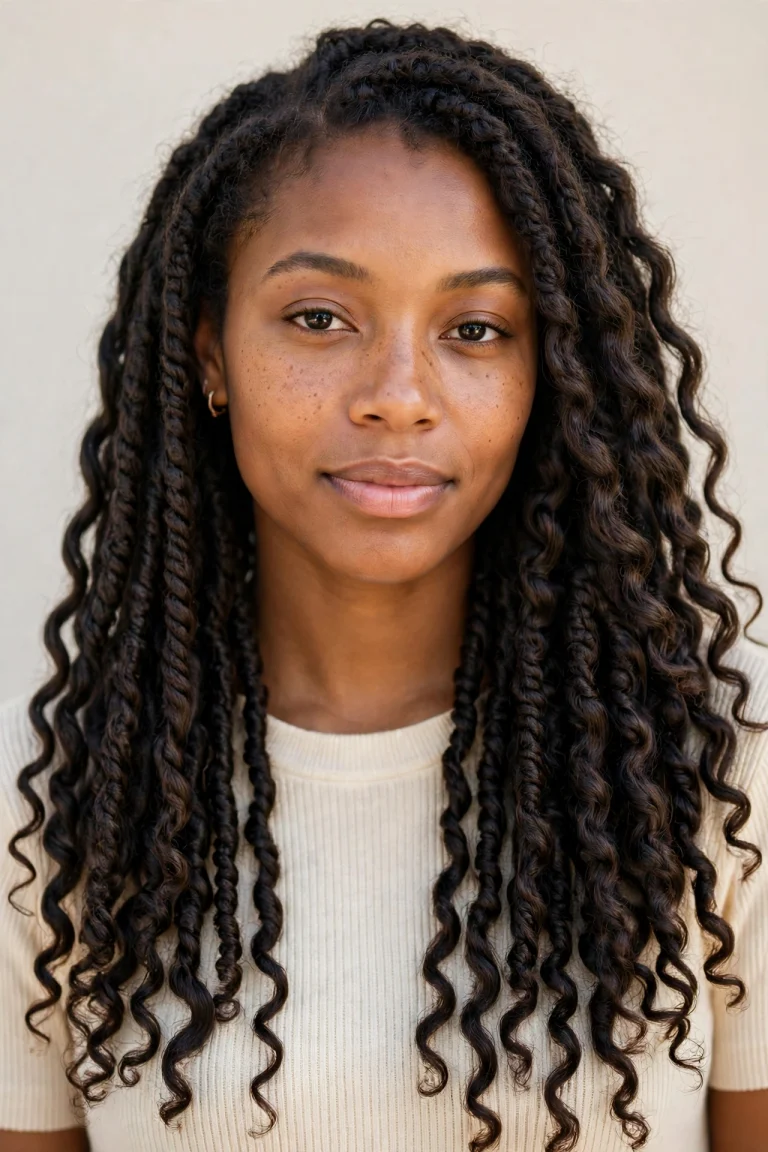
25 French Braid Hairstyles for Everyday Wear
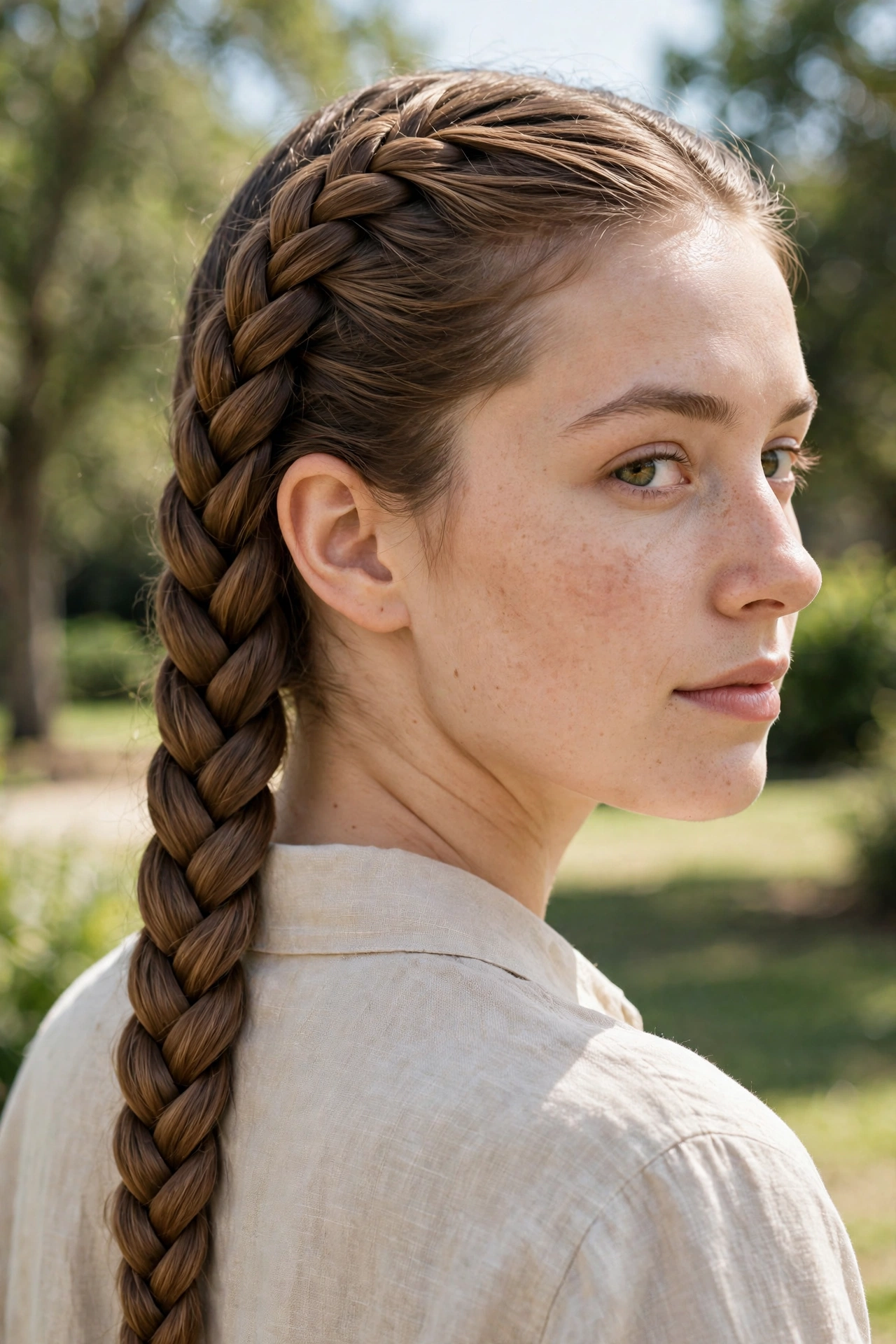
The French braid is the everyday braid every other braid is measured against: three strands woven inward, flat against the head, picking up small sections of hair as the braid travels down. It is a temporary style, worn for a day and taken out at night, not a protective install and not a style meant to stay in for weeks. What makes it an everyday classic is how neatly it holds the hair back while still showing the braid itself, flat, even, and close to the scalp. These 25 ideas show the French braid at work across lengths, parts, and daily routines, always as a braid you wear for the day and undo at night.
1. Classic Single French Braid Down the Back
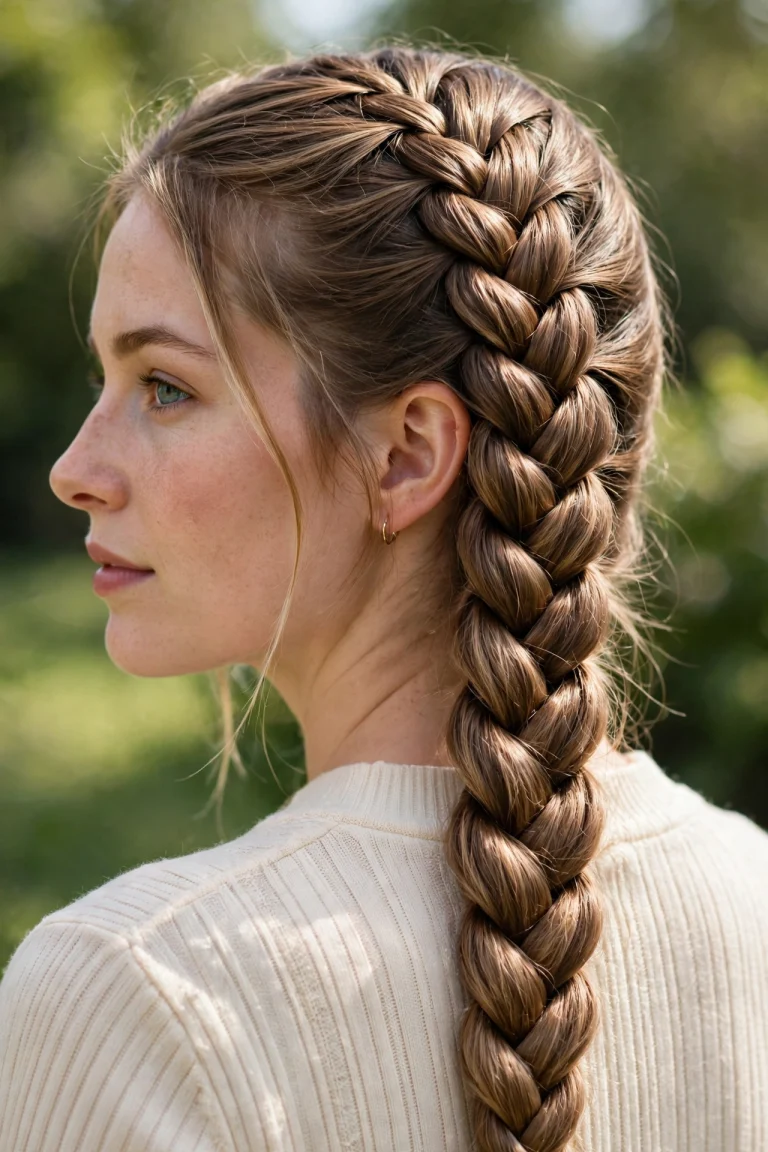
The classic single French braid starts at the hairline, picks up hair evenly on both sides as it travels down the center, and finishes in a three-strand plait tied at the ends. The flat, inward weave sits close to the scalp, so the style stays neat through a full day of work, errands, and commuting. It is the foundation French braid, and it suits anyone who wants one reliable braid that always looks finished.
2. French Braid With a Deep Side Part
A deep side part gives the French braid direction, with the braid starting off-center and traveling diagonally down the back. The part adds a polished, intentional line at the front, and the diagonal path keeps the braid from sitting too symmetrically. It is the version for anyone who wants a French braid that looks styled rather than simply practical.
3. Double French Braids for School and Sport
Double French braids split the hair down the middle and braid each side flat against the head, keeping every strand contained. The twin braids stay put through practice, class, and workouts, and they come out at night into soft waves. They are the most practical French braid pair, and they work on every hair length that can reach a tie.
4. French Braid Into a Low Bun
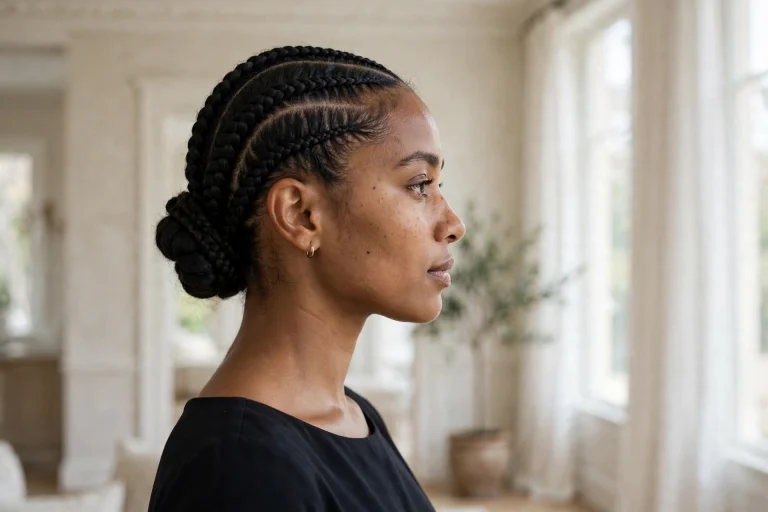
A French braid into a low bun braids the hair down the back and then coils the finished plait into a neat bun at the nape. The braid gives the bun texture and grip, so the style holds without a dozen pins, and the bun keeps the ends tucked away for the day. It is the most polished French braid finish, and it suits office days and formal afternoons alike.
5. French Braid With a Middle Part
A middle part gives the French braid perfect symmetry at the front, with the braid starting dead center and traveling straight down. The center part keeps the look balanced and open, and it shows off the evenness of the weave at its best. It is the most classic way to wear a single French braid, and it photographs beautifully from straight on.
6. French Braid Ponytail Finish
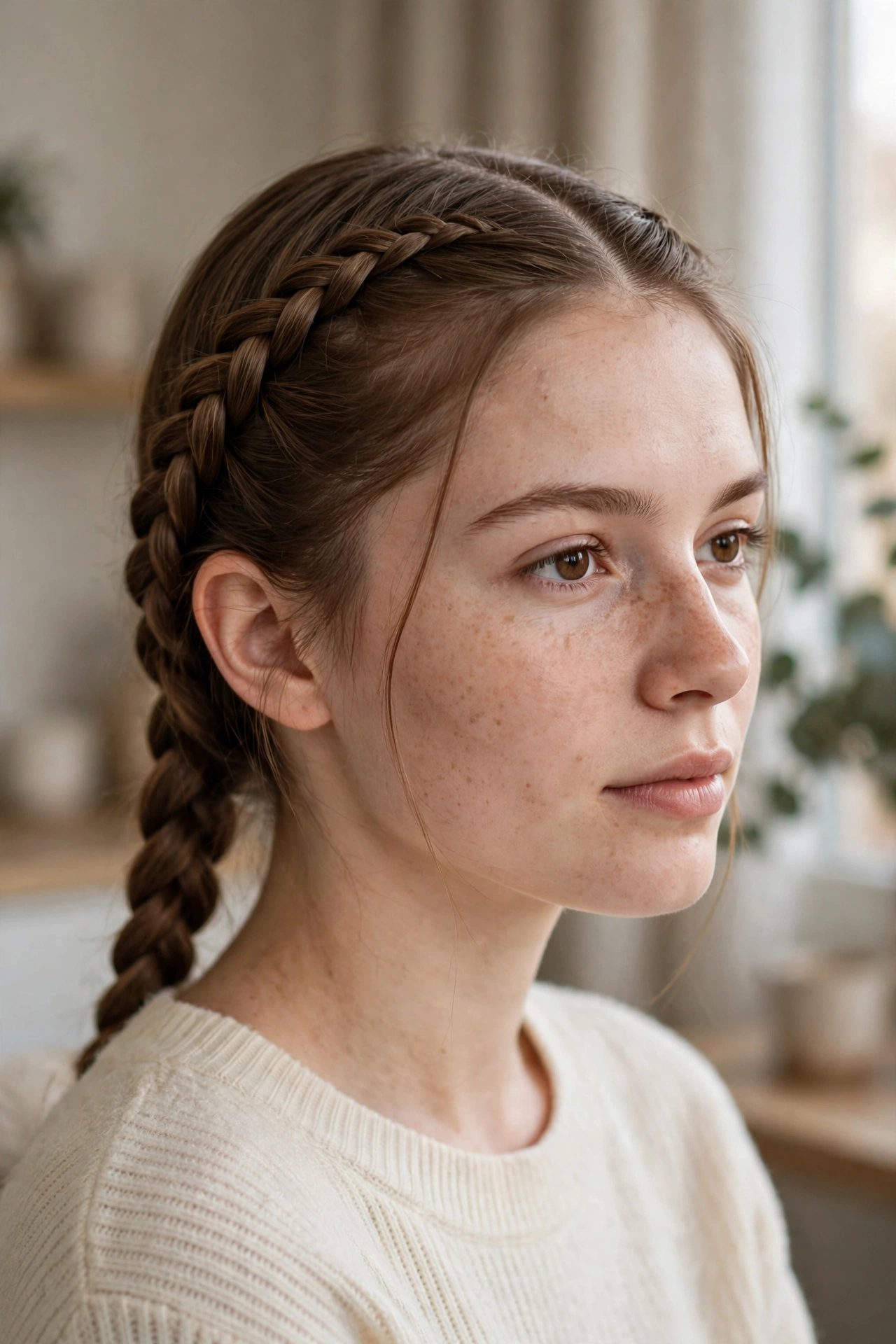
A French braid ponytail braids the top and crown flat against the head, then gathers the remaining hair into a ponytail instead of finishing the plait. The braided crown adds interest and grip, while the ponytail keeps the lengths swinging free. It is the version for anyone who loves the French braid look but wants their length loose.
7. Half-Up French Braid
A half-up French braid braids only the top sections of hair, starting at the temples and meeting at the back of the crown, while the rest falls loose below. The braided section keeps hair out of the face, and the loose lengths keep the style soft and relaxed. It is the easiest French braid to learn, and it suits days when a full braid feels like too much.
8. French Braid With a Ribbon Woven In
A ribbon woven into a French braid adds a stripe of color that travels the full length of the plait, tied in at the top and braided along with one strand. The ribbon shows most clearly in the flat, inward weave, where each crossover reveals a flash of color. It is the most charming French braid accent, and it suits celebrations, school days, and photographs.
9. Loose Pancaked French Braid
A pancaked French braid is gently pulled apart after braiding, with each crossover loosened a little to widen the plait and soften the finish. The loosened braid looks fuller and more romantic than a tight one, while the flat weave still keeps the shape neat. It is the version for anyone whose French braids look too severe pulled tight.
10. French Braid Pigtails
French braid pigtails split the hair into two low braids, each woven flat down the side and tied at the ends. The pigtails keep the hair fully contained and balanced, and they suit casual days, festivals, and workouts. They are the most playful French braid style, and they come out at night into even, matching waves.
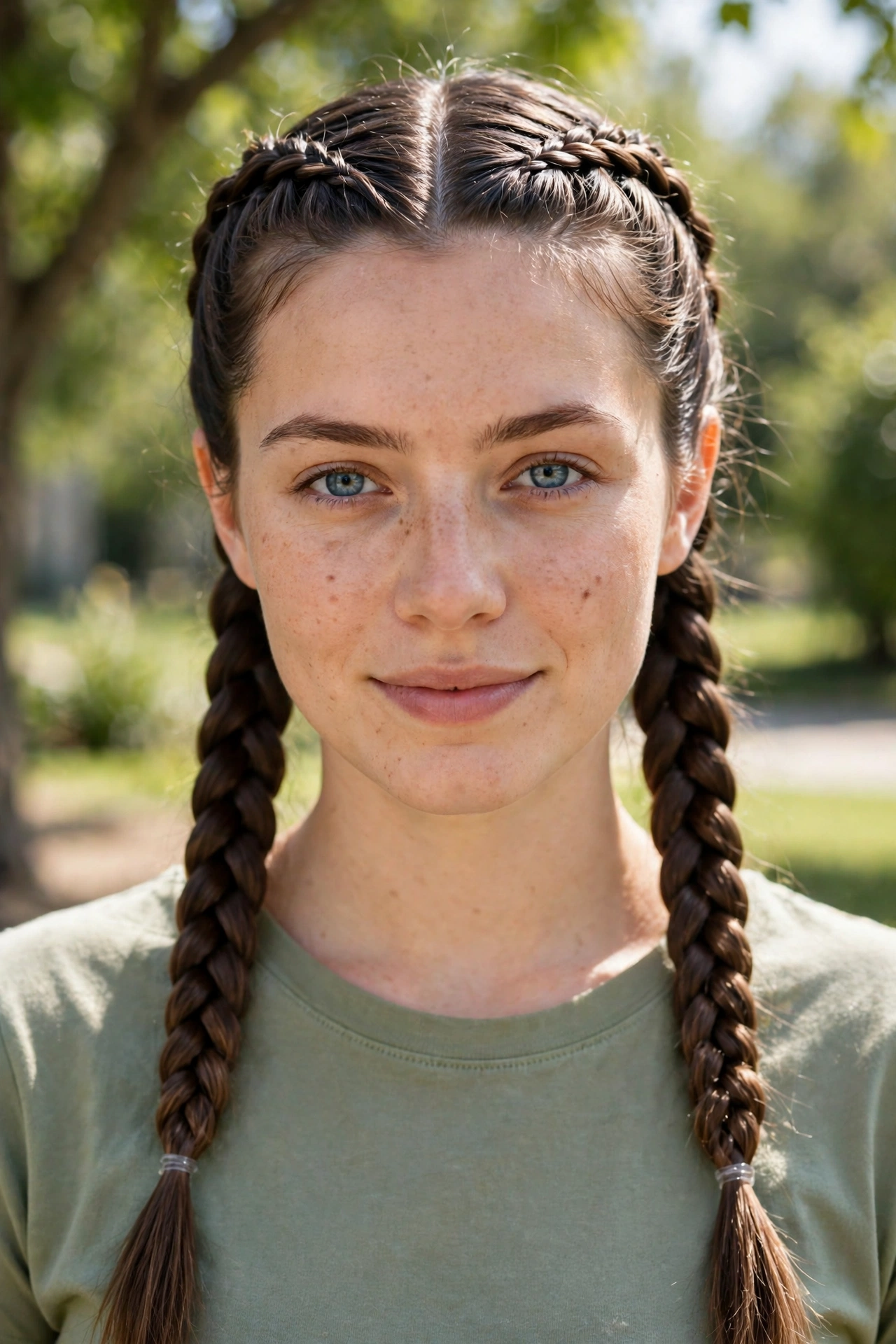
11. French Braid Into a Side Ponytail
A French braid into a side ponytail starts at one temple, travels diagonally across the head, and gathers into a ponytail over one shoulder. The diagonal path gives the style movement and asymmetry, and the side ponytail shows off the braid from the front. It is the version for anyone who wants their French braid visible, not hidden down the back.
12. French Braid With a Zigzag Part
A zigzag part gives a French braid a playful edge, with the part drawn in a zigzag line at the crown before the braid begins. The part adds visual interest where the braid starts, and the plait itself stays neat and flat below it. It is the most fun French braid variation, and it suits anyone who likes a small, visible detail.
13. French Braid for Short Hair
A French braid on short hair uses small, tight pickups and a short plait, since there is less length to weave. The braid still sits flat and neat, and it keeps short layers out of the face all day. It is the trickiest French braid to learn, but once the pickups are small enough, even chin-length hair braids cleanly.
14. French Braid for Long Hair
A French braid on long hair shows the weave at its longest, with the plait traveling the full length of the back in an even, flat line. The extra length gives the braid drama and weight, and the finished plait swings as one piece. It is the version for anyone who wants their French braid to be the whole style.
15. French Braid With Face-Framing Pieces
Face-framing pieces soften a French braid by leaving two small sections loose at the temples while the rest is braided back. The loose pieces frame the face and keep the style from looking too severe, while the braid keeps the bulk of the hair contained. It is the version for anyone who finds a fully braided-back style too stark.
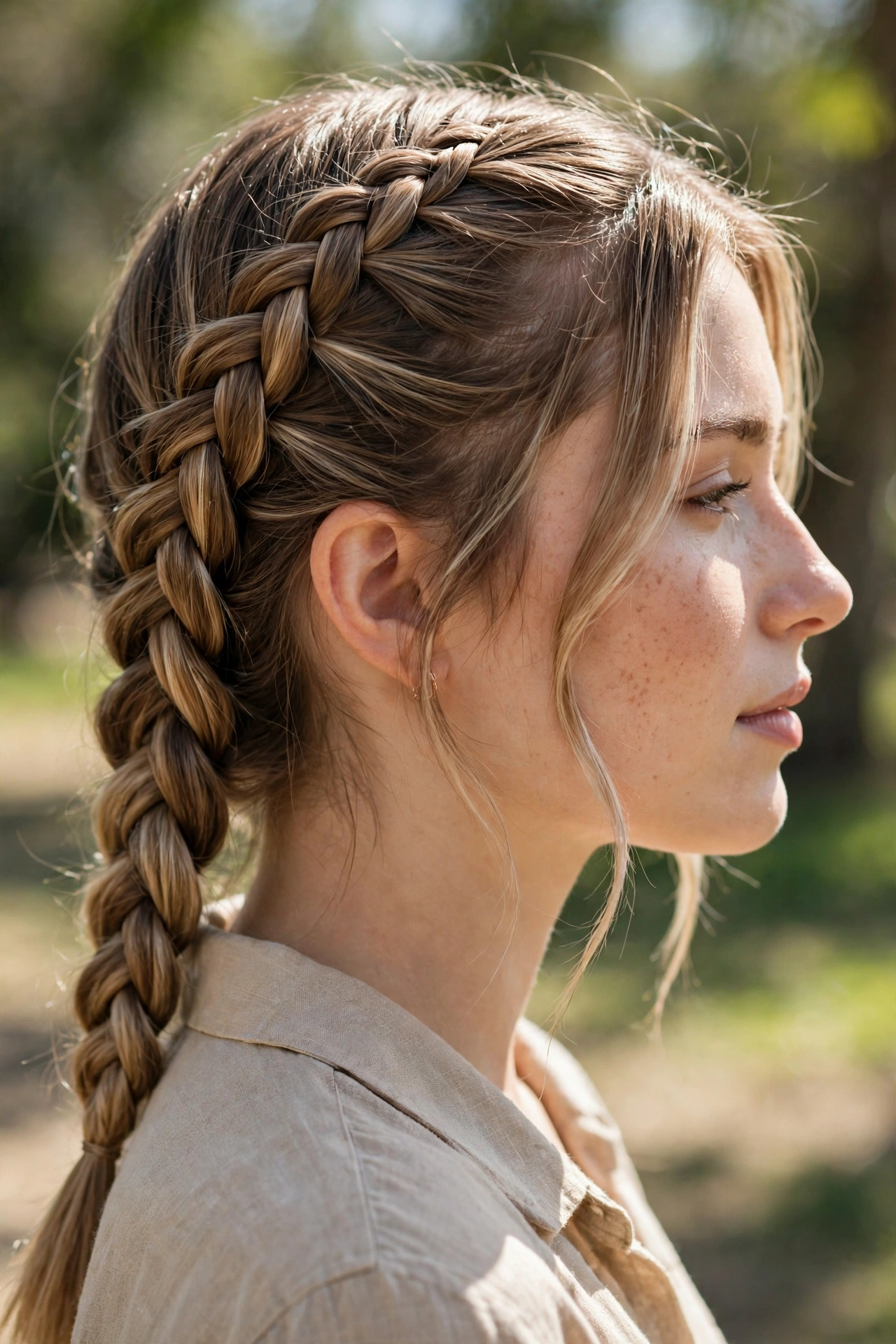
16. French Braid for Fine Hair
A French braid on fine hair needs a gentle touch, with the sections kept even and the weave pulled snug but never yanked, so the braid looks full rather than sparse. Pancaking the finished plait slightly adds width, and a little texture spray before braiding gives the fine strands grip. The flat weave suits fine hair well, since it shows the pattern without needing bulk.
17. French Braid for Thick Hair
A French braid on thick hair uses larger pickups and a firmer weave, since the bulk needs controlling to sit flat. The braid holds thick hair securely all day, and the finished plait has a satisfying weight and width. It is the version that proves a French braid can tame the thickest hair without a single bobby pin.
18. French Braid With Curly Ends Left Out
A French braid with curly ends left out braids the top and mid-lengths flat, then stops the plait early so the natural curls fall free below. The contrast between the neat, flat braid and the loose curls is striking, and the style shows off both texture and control. It is the version for anyone with curly hair who wants a braid without hiding the curls.
19. French Braid for a Formal Evening
A formal French braid keeps the weave neat and even, with the plait finished into a low bun or a tucked end for a polished silhouette. The flat braid reads as elegant and intentional under evening light, and the style holds its shape through a long event. It is the version for anyone who wants a braid that looks red-carpet ready without extensions.
20. French Braid With Gold Cuffs
Gold cuffs threaded onto a finished French braid add a decorative accent, with the metal catching the light against the flat weave. The cuffs are placed along the plait at intervals, and they turn an everyday braid into a statement. It is the most glamorous French braid finish, and it suits celebrations and photographs especially well.
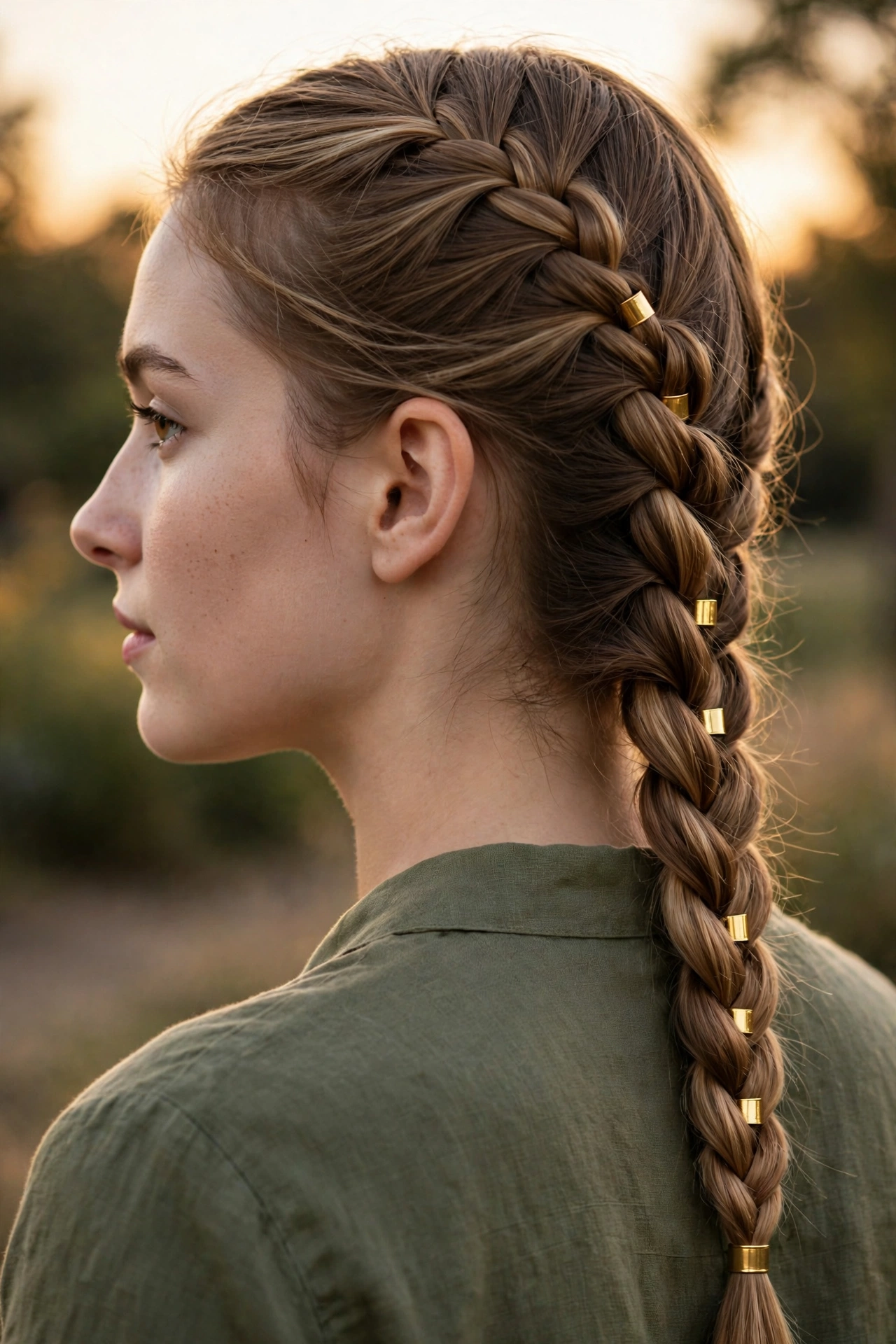
21. French Braid for Gym Days
A gym-day French braid keeps every strand flat against the head and out of the face, so nothing slips loose mid-workout. The braid is woven snugly from the hairline and tied securely, and it comes out at night into waves. It is the most functional French braid, and it survives runs, classes, and training sessions intact.
22. French Braid With a Scarf Accent
A scarf accent finishes a French braid by tying a small silk scarf around the base of the plait, with the ends left to trail. The scarf adds color and movement, and it covers the elastic for a cleaner finish. It is the most stylish French braid accessory, and it suits weekends, travel days, and outdoor events.
23. French Braid With a Middle Part and Low Pigtails
A middle part with low pigtails splits the hair evenly and braids each side flat, finishing in two low plaits at the nape. The symmetry is clean and classic, and the low placement keeps the style relaxed rather than sporty. It is the version for anyone who wants twin braids that read as grown-up and neat.
24. French Braid for Bangs Growing Out
A French braid is the kindest way to grow out bangs, since the front sections are picked up into the weave from the very first crossover. The growing fringe disappears into the braid, and the style keeps the awkward stage invisible all day. It is the most useful French braid of all, and it turns months of growing out into easy braid days.
25. French Braid as a Daily Routine
A daily French braid routine turns the braid into a habit, with the same clean weave every morning and a quick undo every night. The routine protects the hair from tangling during the day, and the nightly waves are a bonus second style. It is the smartest long-term habit for anyone who braids daily, and it keeps the hair neat with almost no thinking.
Styling Tips
- Start the braid at the hairline with three even sections, so the weave stays balanced from the first crossover.
- Pick up small, even sections on each side, since uneven pickups make the braid wander off center.
- Keep the weave flat and inward, crossing the side strands under the middle strand, which is what makes a French braid lie flat.
- Braid on slightly damp or textured hair for grip, since freshly washed, slippery hair slides out of the weave.
- Secure the ends with a snag-free elastic, and never sleep in the braid if the scalp feels tight.
- Pancake the finished plait gently by tugging the edges, which widens the braid without undoing it.
- Take the braid out at night and brush through gently, since French braids are day styles, not multi-day installs.
Frequently Asked Questions
Q: How is a French braid different from a Dutch braid? A: A French braid weaves the side strands under the middle strand, so the plait sits flat and inward against the head. A Dutch braid weaves the side strands over the middle strand, so the plait sits raised and three-dimensional on top of the hair. The starting position is the same, and only the direction of the crossover changes, which is why the two braids are so often confused.
Q: How long does a French braid take? A: A single French braid usually takes five to ten minutes once the technique is learned, with double braids taking closer to fifteen. Short or slippery hair takes longer, since the pickups need more care. The time drops quickly with practice, and most people braid faster than they expect after the first week.
Q: Can a French braid work on short hair? A: Yes, with small pickups and a snug weave, even chin-length hair can be French braided. The plait will be short and the ends may need a small elastic and a pin or two, but the flat weave still holds. Layers that are too short to reach the braid can be left out as face-framing pieces.
Q: Should a French braid be tight or loose? A: Snug at the scalp and relaxed through the lengths is the everyday balance: tight enough to hold all day, loose enough to be comfortable. A braid that hurts or pulls at the hairline is too tight and should be redone more gently. Pancaking the finished plait gives fullness without needing to braid loosely from the start.
Q: Is a French braid a protective style? A: No, not in the install sense: a French braid is a temporary day style, worn for hours and taken out at night, and it does not protect the ends for days or weeks the way an install does. It does keep the hair contained and tangle-free for the day, which is a real everyday benefit. For multi-day protection, a proper protective install is a different style entirely.