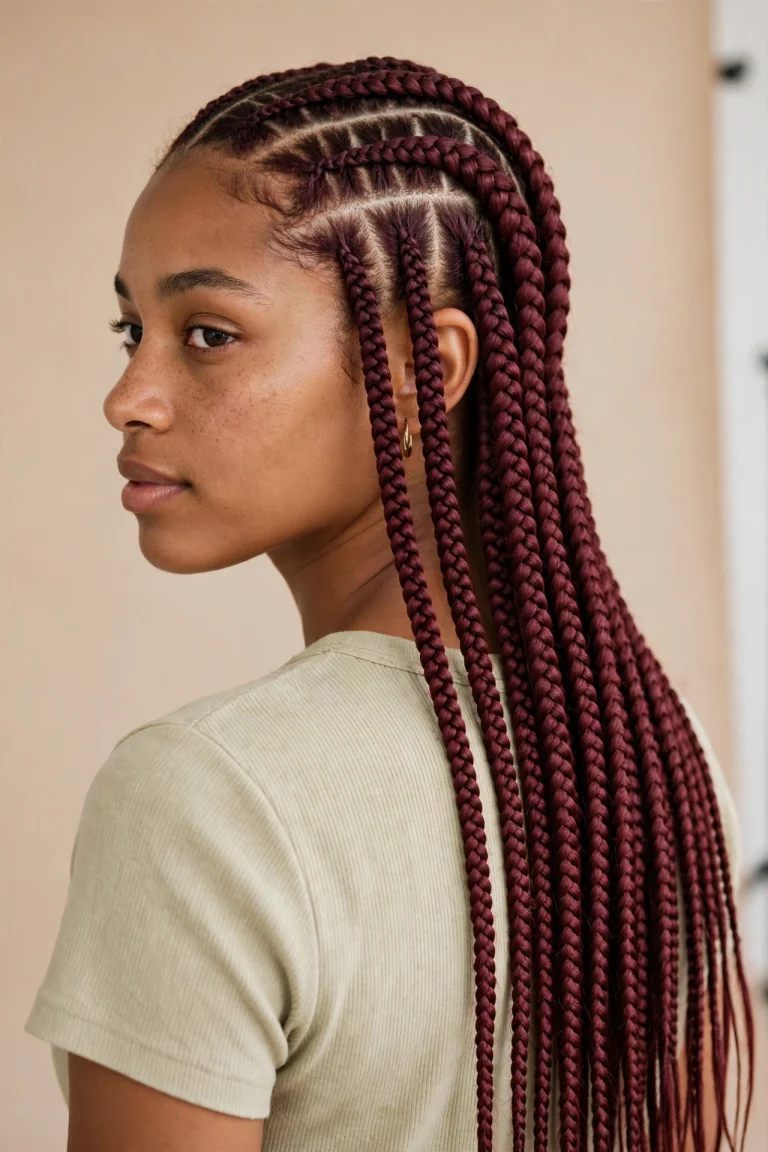
20 Knotless Braids Ideas for a Natural Hairline Look
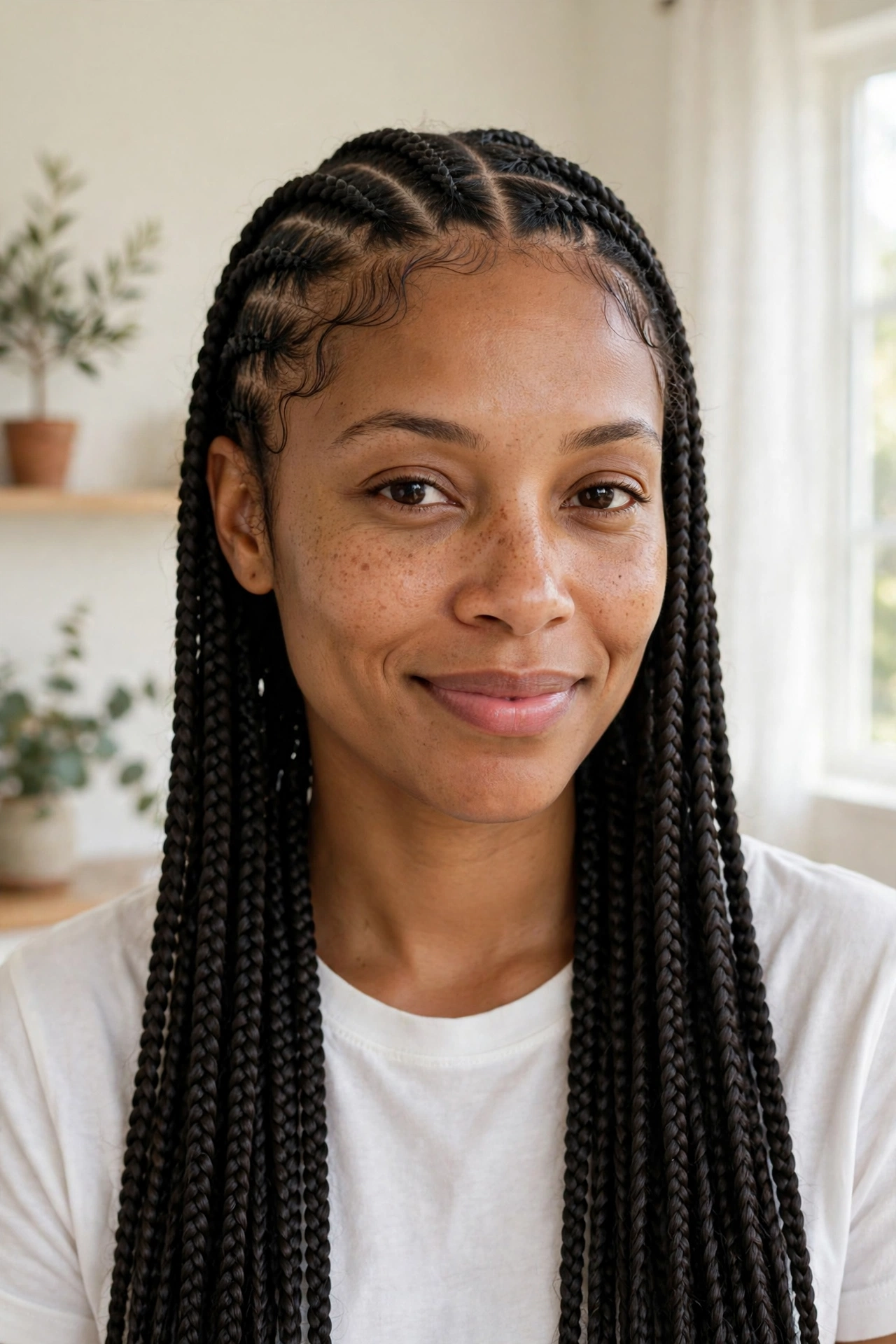
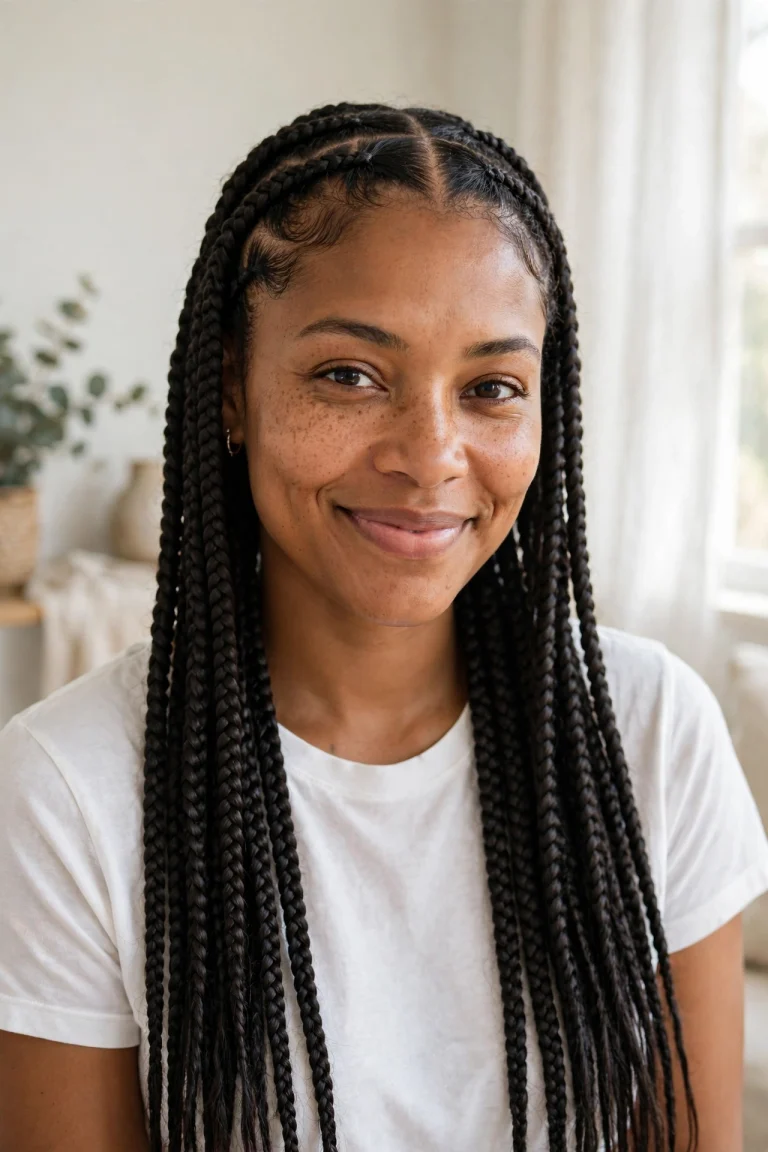
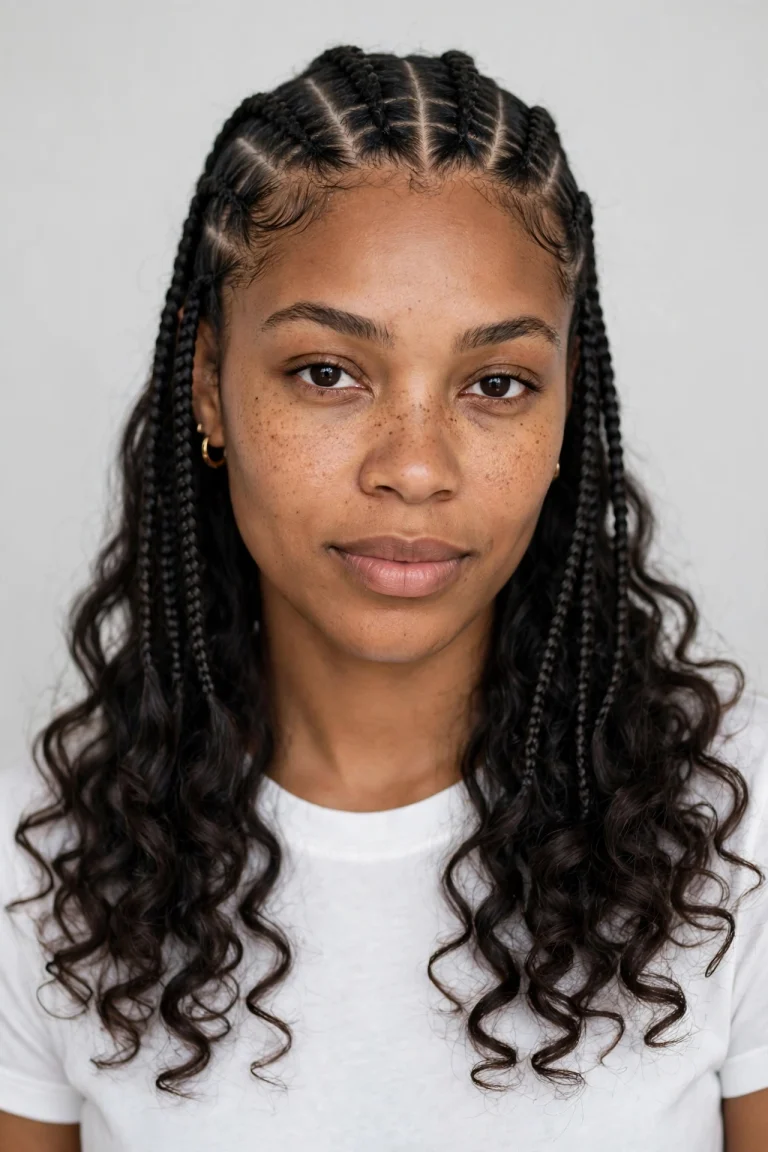
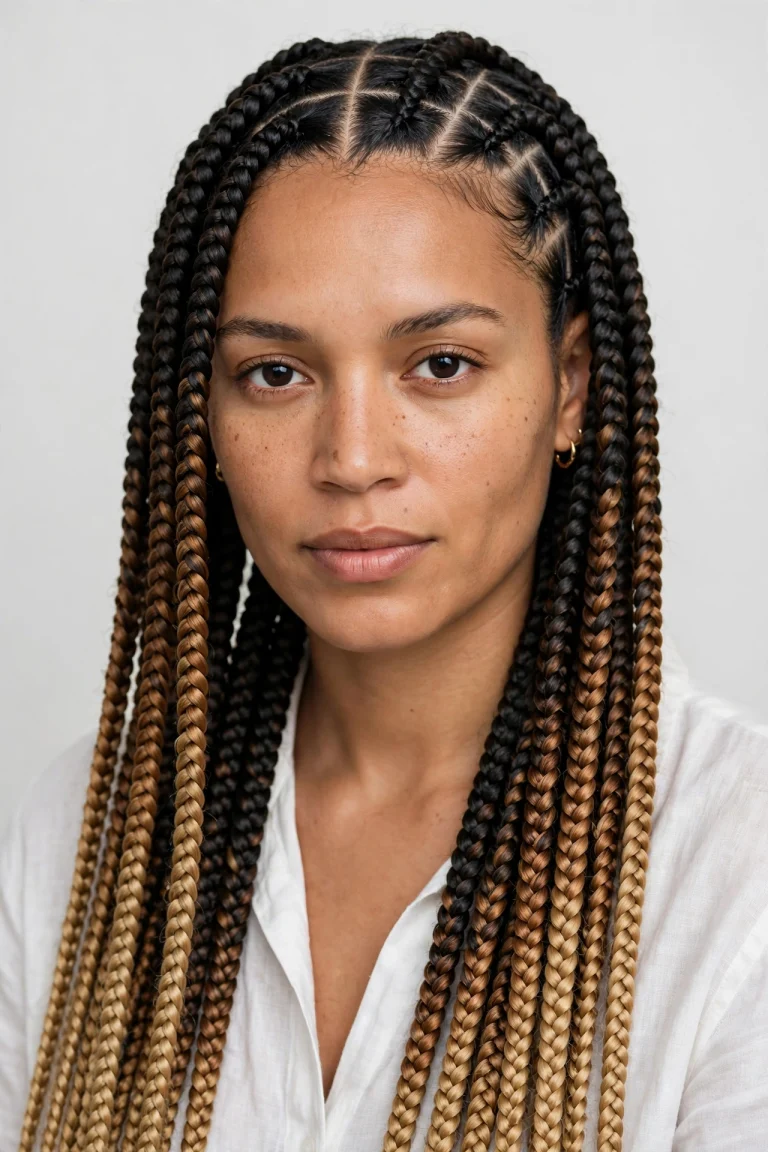
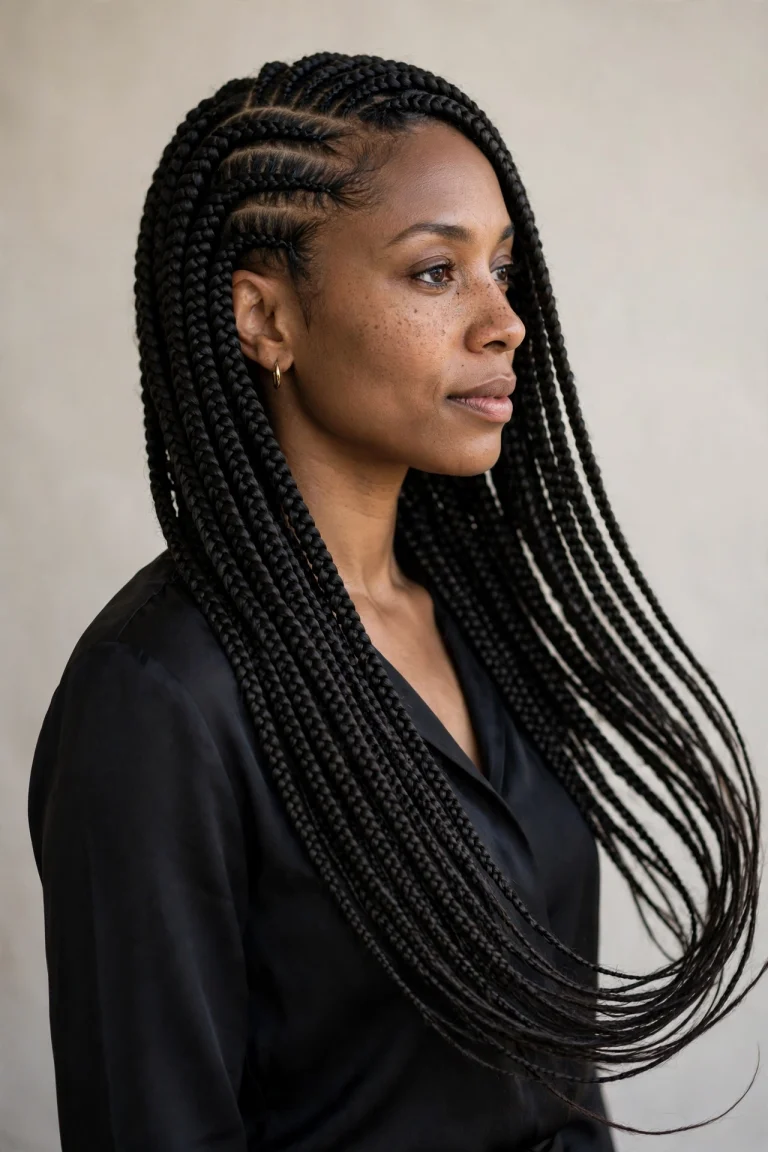
A natural hairline look is the quiet magic of knotless braids, where braids seem to grow straight from your own head. The feed-in start, soft edges, and blended front rows all work together to erase any obvious line between natural hair and extensions. These ideas focus on that seamless, realistic finish, so your braids look effortlessly like your own hair.
1. Seamless Feed-In Front Rows
Front rows are started with only natural hair, feeding extensions in so gradually that no join is visible. The seamless start makes the hairline look completely natural from every angle. This technique is the foundation of the whole natural-hairline effect.
2. Soft Baby Hair Blend at the Edges
A few fine baby hairs are left free and smoothed softly along the hairline to blend braids into the skin. The soft blend erases any hard edge where braids begin. Keep the baby hairs light and natural, never drawn on heavily.
3. Natural Hairline with a Free, Unforced Part
A part that follows the natural fall of the hair, rather than a razor-sharp line, looks far more realistic. The free part lets front braids sit where they naturally want to. This relaxed approach suits the natural-hairline goal perfectly.
4. Knotless Braids with a Wispy Front Layer
A wispy layer of shorter, finer braids at the front mimics the natural variation of a real hairline. The wispy pieces soften the forehead and make the transition invisible. They also frame the face beautifully.
5. Natural Hairline with a Slightly Irregular Front Edge
Instead of a perfectly straight front row, the edge is kept very slightly irregular, just like a natural hairline. The tiny irregularity is what makes it look real rather than installed. A skilled braider can create this effect subtly.
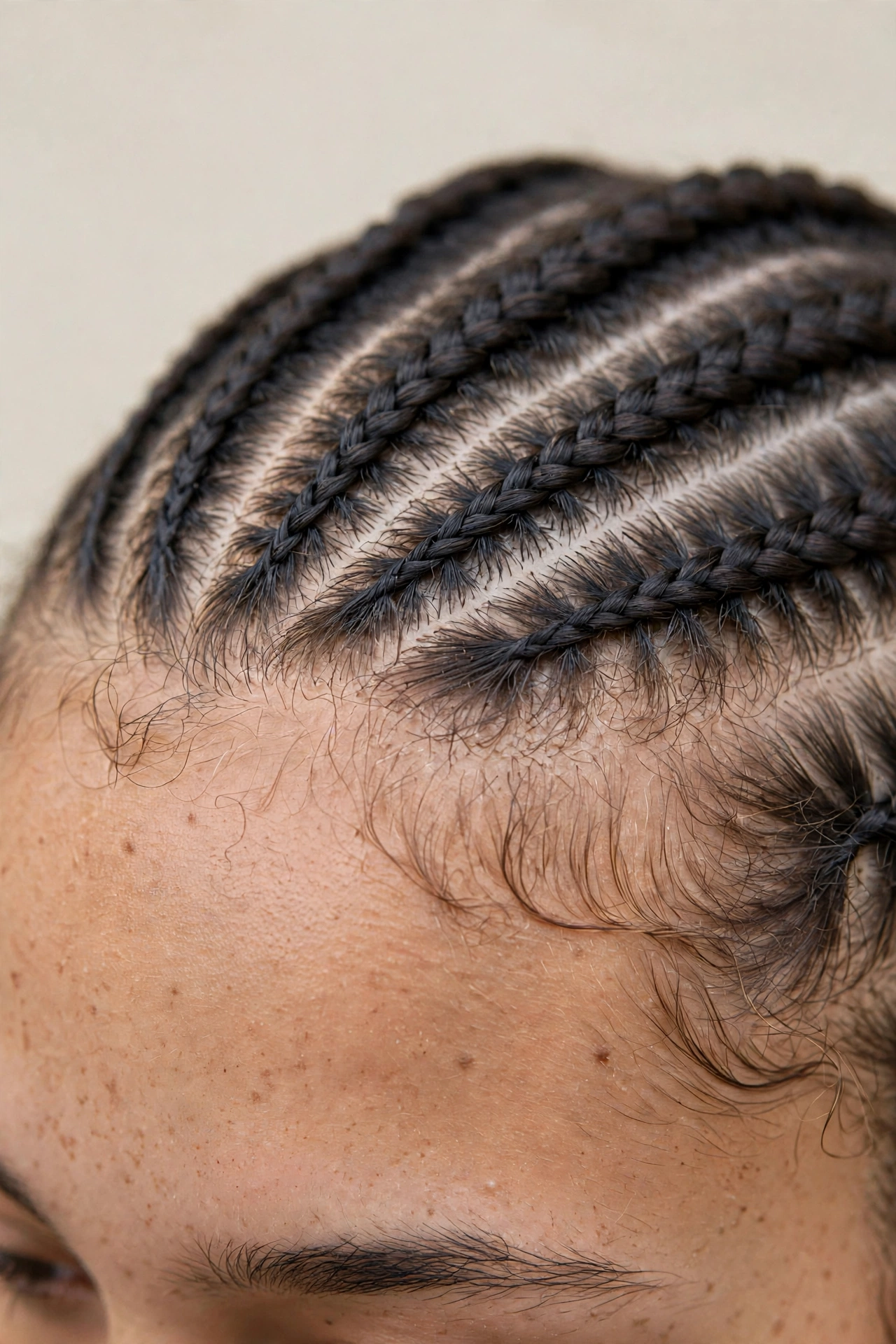
6. Knotless Braids Blended with Natural Texture
Matching extension texture closely to natural hair texture helps the hairline blend seamlessly. When textures match, the eye cannot tell where natural hair ends and extensions begin. This is especially important at the front rows.
7. Natural Hairline with a Soft Side Part
A soft side part that is not drawn too sharply gives a natural, lived-in hairline. The part looks like it formed naturally rather than being sectioned. It is a gentle, realistic choice for everyday wear.
8. Knotless Braids with a Feathered Hairline Finish
Front braids are feathered very lightly at the roots for a soft, diffused hairline edge. The feathering prevents a solid, wall-like front row. The result is airy, natural, and flattering.
9. Natural Hairline with Loose Front Strands
A few loose, unbraided strands are left at the very front to soften the hairline further. The loose strands move naturally and break up the braided edge. They are the simplest trick for instant realism.
10. Knotless Braids with a Colour-Matched Root Blend
Extensions in a shade that closely matches natural roots make the hairline blend invisibly. Even a slight colour mismatch can reveal where braids begin. Colour matching at the roots is essential for a natural look.
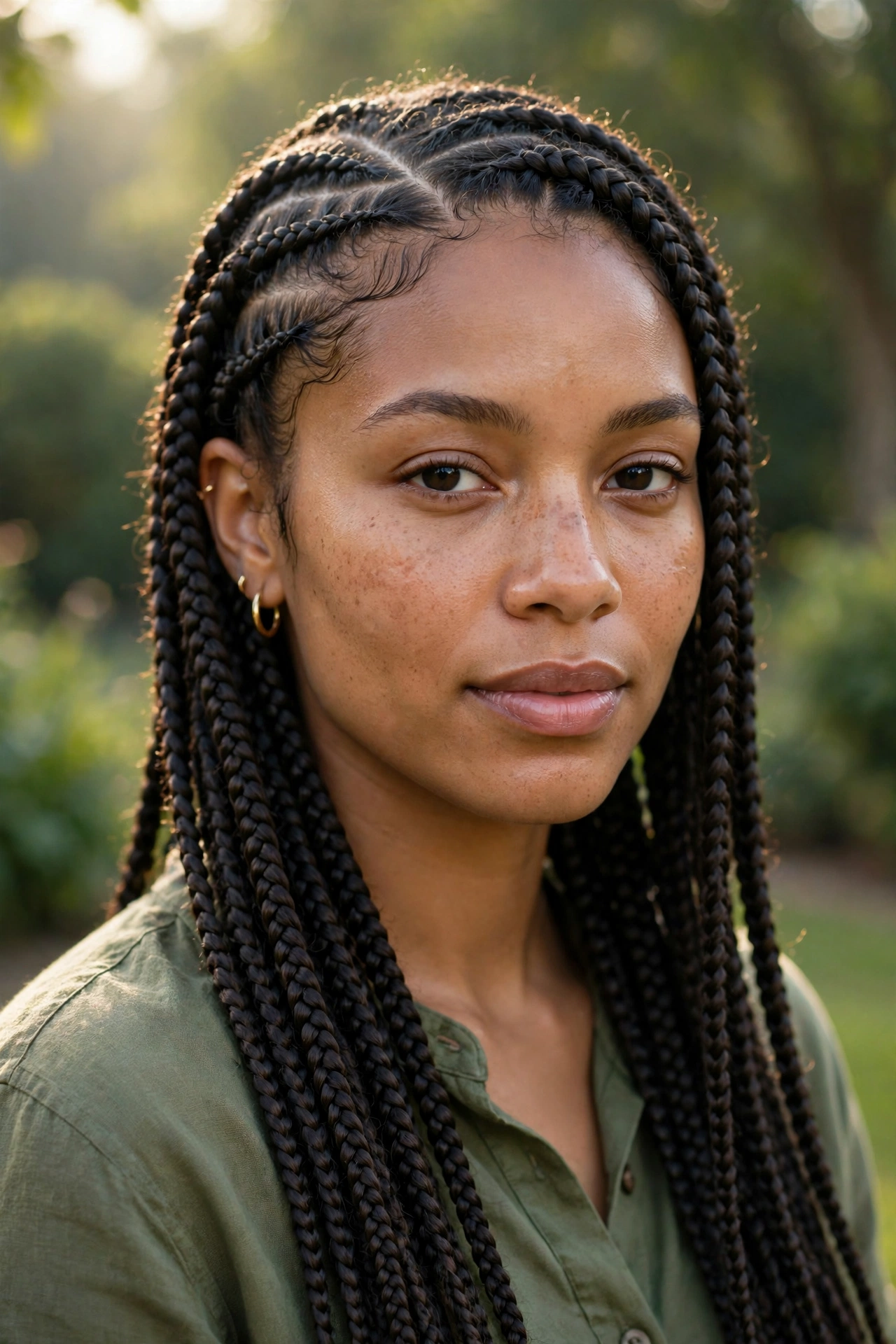
11. Natural Hairline with a Low, Relaxed Front Row
Front rows sit low and relaxed, following the natural curve of the forehead. The low placement avoids a pulled-back, exposed hairline. It also feels more comfortable than a high, tight front row.
12. Knotless Braids with a Centre Part That Fades Softly
A centre part that fades softly into the front rows, rather than cutting a hard line, looks natural and gentle. The soft fade mimics how natural hair parts on its own. It is a subtle detail with a big realistic payoff.
13. Natural Hairline with a Textured Edge Finish
A lightly textured finish at the edges, using a small amount of product, mimics natural hair texture at the hairline. The texture prevents a shiny, artificial-looking edge. Keep the product minimal for the most natural effect.
14. Knotless Braids with a Graduated Front Length
Front braids graduate gently in length, shortest near the face and longer behind, like natural layered hair. The graduation creates a soft, realistic frame. It also makes the style easier to wear loose.
15. Natural Hairline with a Scalp-Colour Part Blend
Keeping part lines clean but not overly widened prevents the scalp from showing starkly against braids. The balanced part width looks like natural hair density. This detail helps the whole hairline read as real hair.
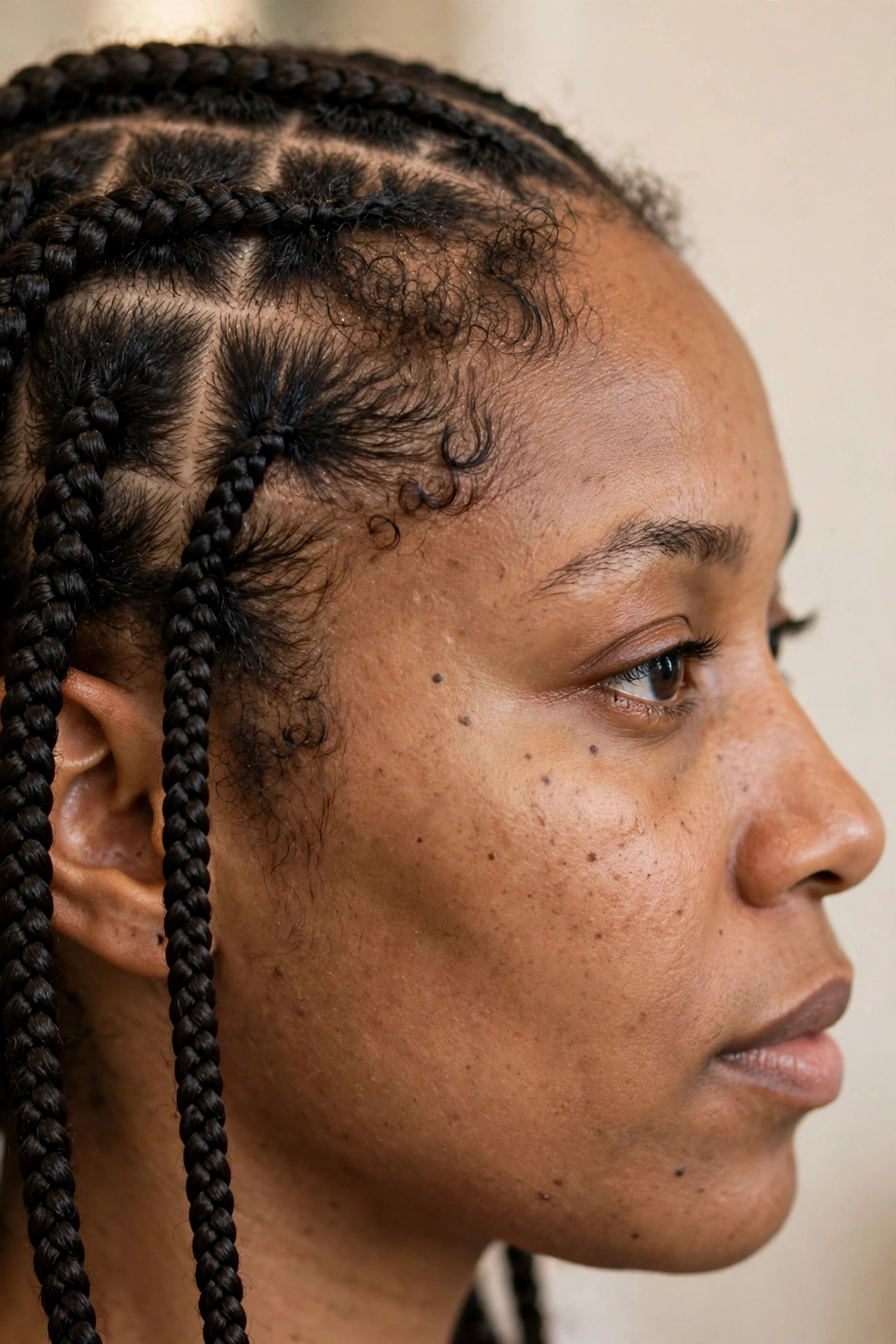
16. Knotless Braids with a Soft Temple Transition
Temple braids transition gradually from natural hair to full braids, with no abrupt change in thickness. The gradual transition is especially noticeable in profile views. It is a key detail for a convincing natural hairline.
17. Natural Hairline with a Brushed-Back Front Finish
Front braids are brushed softly back from the forehead, rather than pulled tightly, for a natural swept-back look. The brushed finish looks like hair that has simply been pushed back. It is relaxed, realistic, and comfortable.
18. Knotless Braids with a Minimal Product Hairline
Using almost no gel or edge control at the hairline keeps the finish soft and hair-like. Heavy product can create a stiff, artificial edge that betrays the install. A minimal-product hairline looks and feels natural.
19. Natural Hairline with a Face-Framing Softness
Face-framing braids are kept slightly looser and softer than the rest, so the hairline area feels gentle. The softness around the face is what makes the style look like natural hair. It also flatters most face shapes.
20. The Fully Natural Knotless Hairline
Combining a seamless feed-in, soft baby hairs, matched texture and colour, and a free part creates the fully natural knotless hairline. No single trick does it alone, but together they make braids indistinguishable from natural hair at first glance. This is the ultimate realistic braid look.
Styling Tips
- Ask your braider specifically for a natural hairline finish, with a gradual feed-in at the front rows.
- Match extension colour and texture as closely as possible to your natural hair, especially at the roots.
- Leave a few baby hairs and loose front strands free to soften the transition.
- Avoid heavy gel or edge control at the hairline, which can look stiff and artificial.
- Keep the front part soft and free, rather than razor-sharp, for a lived-in look.
- Sleep in a satin bonnet or scarf to protect the delicate front rows overnight.
- Refresh the hairline gently with your fingers, not a hard brush, to keep it soft.
- Take braids down once front rows look fuzzy, as a natural hairline depends on neat roots.
Frequently Asked Questions
What makes knotless braids look natural at the hairline?
The feed-in technique is the main reason, as extensions are added gradually instead of starting with a visible knot. Soft baby hairs, matched texture and colour, and a free part all add to the realism. Together, these details make braids look like they grow from your own scalp.
Can knotless braids really pass as natural hair?
At a normal distance, a well-installed knotless set with a natural hairline can look very much like natural hair, especially in the front rows. Up close, the braided texture is still visible along the lengths. The hairline itself, however, can look remarkably seamless.
How do I keep a natural hairline looking fresh?
Protect the front rows at night with satin, avoid heavy products, and smooth flyaways gently with your fingers. A weekly light refresh of the front braids keeps them tidy. Once roots grow out significantly, the natural effect softens and it is time to plan a take-down.
Are knotless braids better than box braids for a natural hairline?
Yes, knotless braids are generally better for a natural hairline because they have no knot at the root. Classic box braids show a small knot that makes the install more obvious at the hairline. If realism at the front is your priority, choose knotless.
Will a natural hairline style damage my edges?
No, a natural hairline knotless install is actually kinder to edges, as the front rows are braided gently and without tight knots. The key is ensuring the braider does not pull the front rows taut to achieve neatness. Comfort and naturalness go hand in hand here.