22 Men’s Fringe Haircuts for a Modern Edge

A fringe brings hair forward over the forehead, framing the face and giving a cut an instant modern edge. It can be soft and wispy, heavy and bold, or choppy and textured, and it pairs with short sides, fades, or longer backs. Here are 22 fringe ideas for men who want a fresh, face-framing cut.
1. Soft Layered Fringe with Short Sides
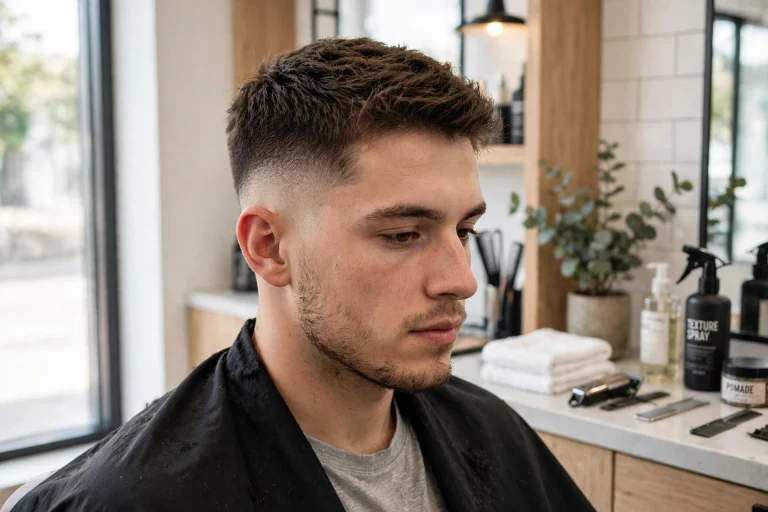
A soft layered fringe falls gently over the forehead in light, overlapping pieces, with short sides keeping the shape clean. The layers stop the fringe from looking heavy or flat. This version suits straight and slightly wavy hair and works for everyday wear.
2. Choppy Forward Fringe
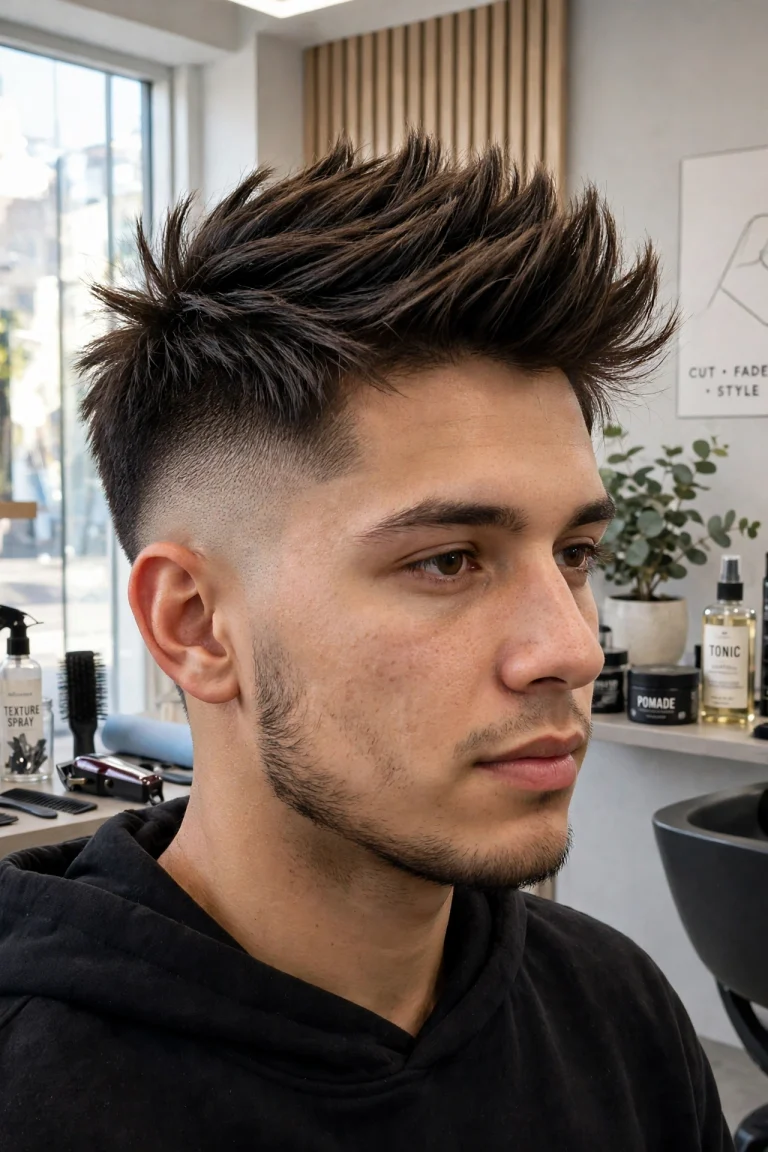
A choppy forward fringe is cut in uneven, piecey lengths that point forward over the forehead for a bold, modern texture. Style it with matte paste and your fingers to keep the pieces separated. It is ideal if you like a cut with visible movement.
3. Wispy Fringe with Tapered Back
A wispy fringe uses light, airy ends that barely brush the forehead, giving a soft, youthful frame. The tapered back keeps the overall cut neat and balanced. This version suits fine hair, since the light ends do not weigh it down.
4. Angular Fringe with Sharp Corners
An angular fringe is cut on a diagonal, with one side longer than the other, creating a sharp, graphic shape across the forehead. The angle adds drama and suits angular face shapes. Keep the rest of the cut neat so the angle stays the focal point.
5. Heavy Fringe with Volume
A heavy fringe keeps plenty of weight and fullness across the forehead, giving a bold, statement frame. It suits thick hair that can support the density without looking flat. Use a light product to keep the volume, not flatten it.

6. Micro Fringe with Clean Sides
A micro fringe sits high on the forehead, well above the eyebrows, for a striking, fashion-forward look. Clean, short sides balance the bold front and keep the cut intentional. This version suits men who like a confident, editorial style.
7. Fringe with Messy Crown
Pairing a forward fringe with a messy, tousled crown gives the cut movement from front to back, not just at the forehead. The fringe stays defined while the crown stays relaxed. Work matte product through damp hair and let it dry naturally.
8. Fringe with Slicked Sides
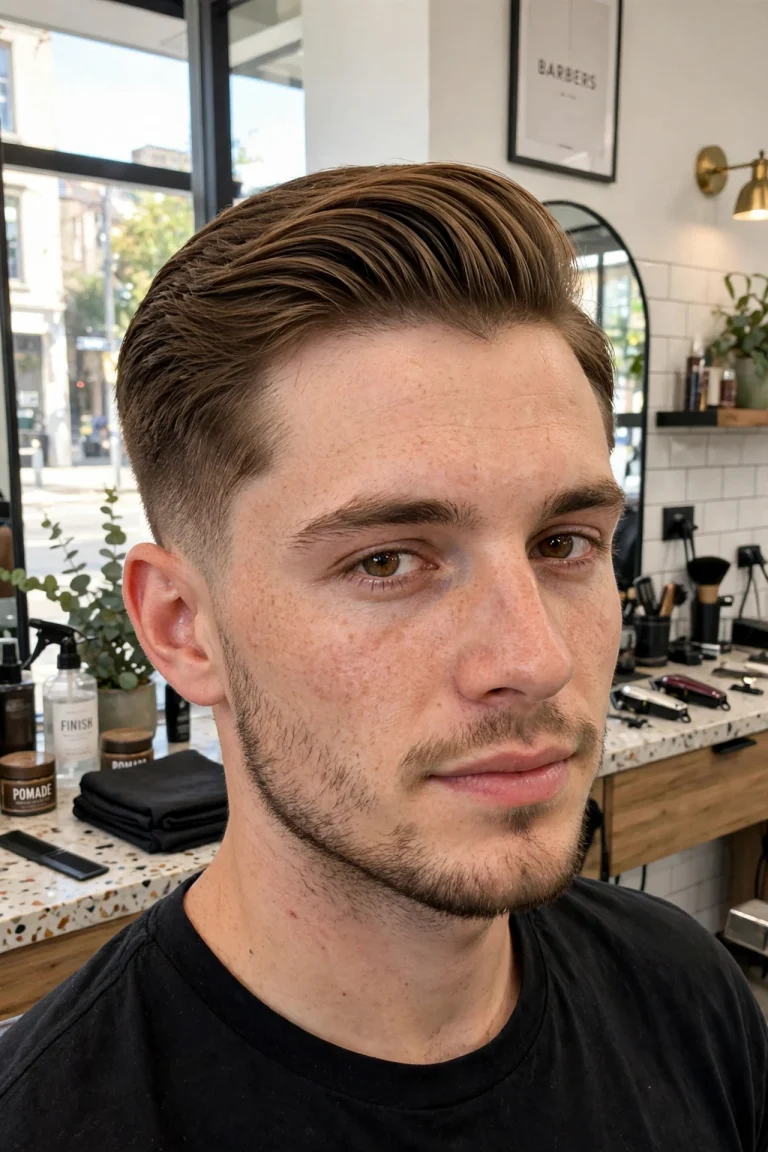
Slicking the sides down neatly while the fringe falls forward creates a clean contrast between controlled sides and a softer front. Use a little pomade on the sides and a light cream on the fringe. This version looks sharp and deliberate.
9. Fringe for Straight Hair with Even Ends
Straight hair gives a fringe a clean, even surface that is easy to shape forward. The ends can be cut straight across for a neat frame or slightly textured for softness. A small amount of styling cream keeps the fringe in place without stiffness.
10. Fringe for Wavy Hair with Natural Bend
Wavy hair gives a fringe soft, natural bends that move as you do, so the front never looks stiff. Work with your wave pattern and use a light cream to define the waves. This version looks relaxed and full of character.

11. Fringe for Thick Hair with Thinned Ends
Thick hair can make a fringe feel heavy, so thinning the ends slightly keeps it light and manageable. The fringe still has fullness but falls more naturally over the forehead. Ask your barber to thin the ends, not the roots, for the best result.
12. Fringe with Mid Fade Sides
Mid fade sides frame a forward fringe with a clean, balanced shape, sitting halfway up the sides. The fade keeps the cut modern while the fringe provides the softness at the front. This combination works well for both casual and smart settings.
13. Fringe with Skin Fade Sides
Skin fade sides give a fringe a sharp, contemporary base, with the sides blending to bare skin below the forward front. The contrast makes the fringe stand out even more. Keep the fade touched up regularly for a crisp finish.
14. Fringe with Longer Back
Keeping the back longer while the fringe frames the front gives the cut a fuller silhouette from the side. The extra length at the back balances the forward direction of the fringe. This version suits men growing their hair out gradually.
15. Fringe with Parted Front
A fringe with a soft part in the front splits the forward hair gently to one side, giving a relaxed, swept feel. The part should stay natural, not shaved, for an everyday version. It suits men who find a straight-across fringe too severe.
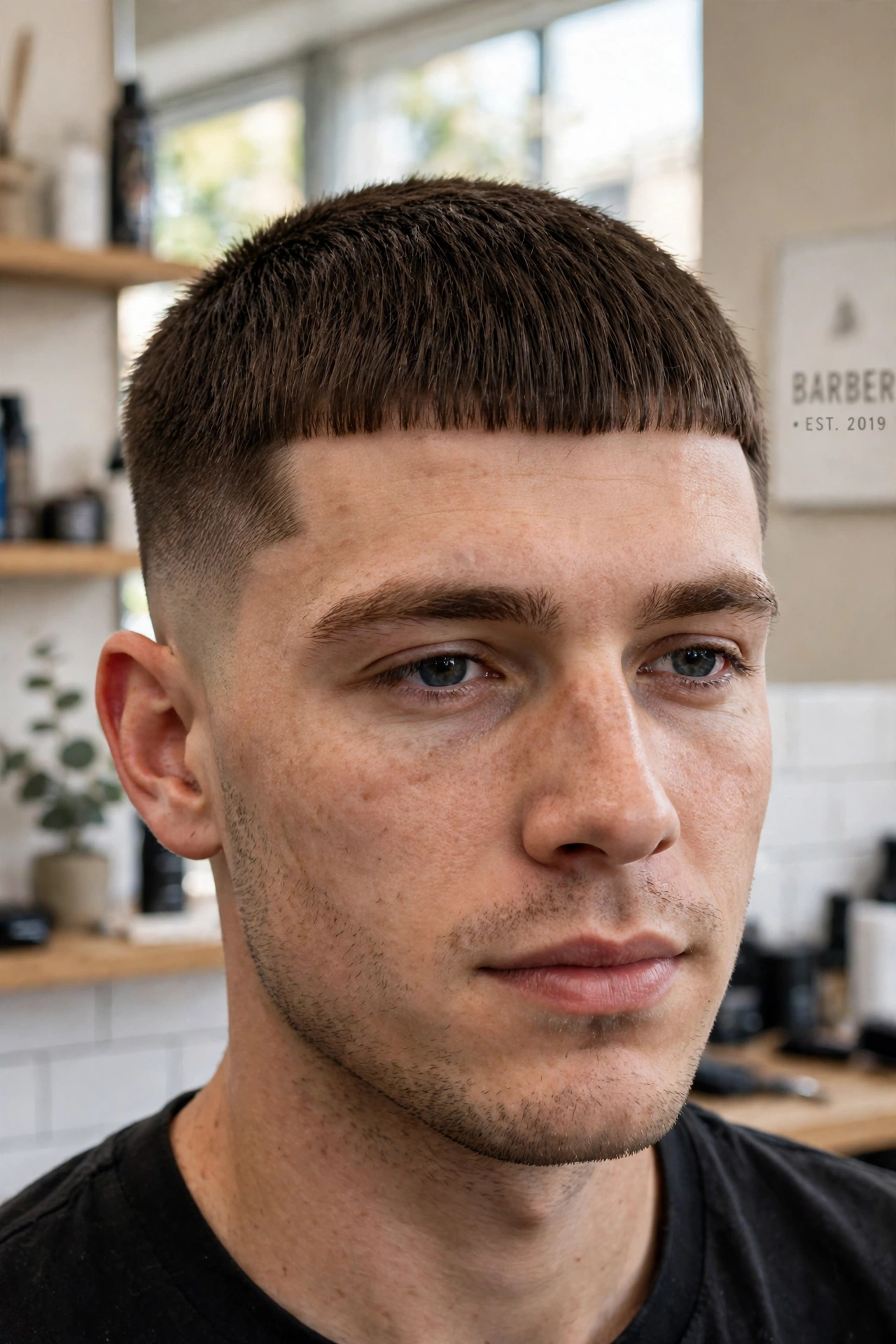
16. Fringe with Voluminous Top
Building volume through the top gives a fringe extra height and fullness, so the front has presence as well as direction. Blow-dry the top upward first, then bring the fringe forward over it. This version suits men who want a fuller overall shape.
17. Fringe for a High Forehead
A longer fringe that sits lower on the forehead can balance a high forehead, giving the face a more even proportion. Keep the fringe soft and slightly textured so it does not look like it is hiding the forehead. The rest of the cut should stay neat.
18. Fringe with Undercut Base
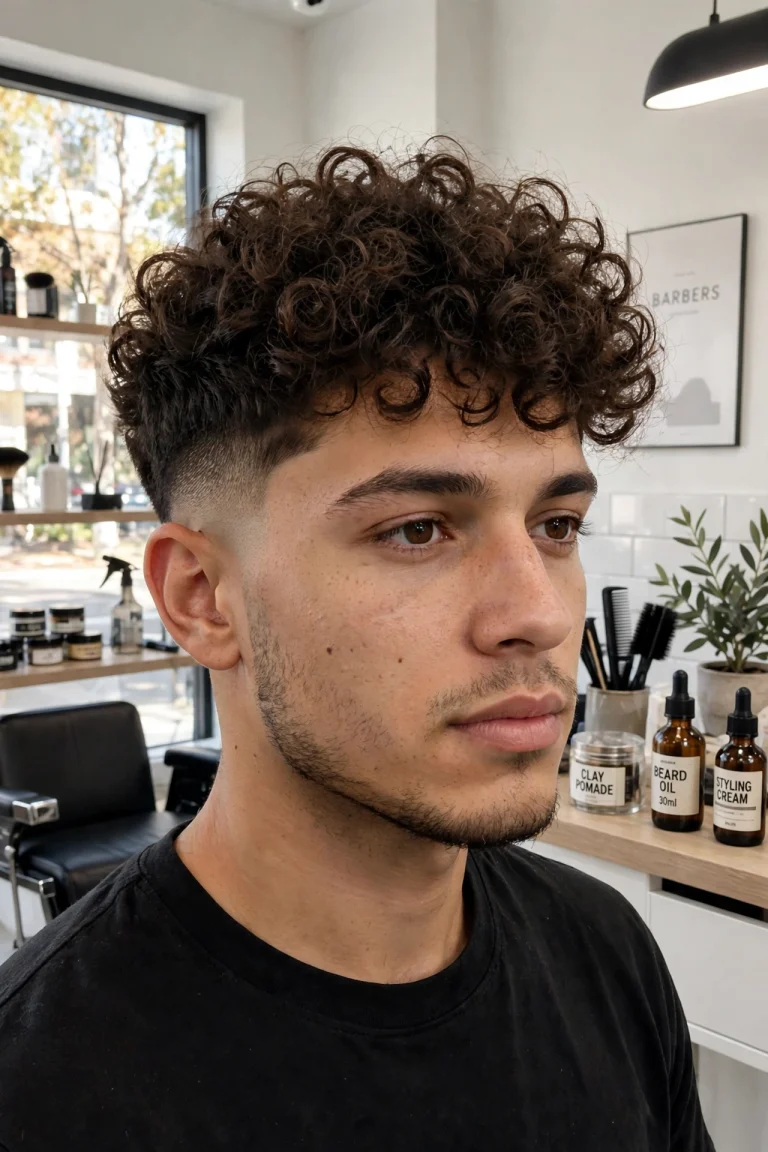
An undercut base keeps the sides at one short length, creating strong contrast with the longer fringe on top. The fringe becomes the clear focal point, with no blending to soften the transition. This bold version suits straight hair that holds a defined shape.
19. Fringe with Curved Shape
A curved fringe follows the shape of the forehead in a gentle arc, longer at the sides and slightly shorter in the centre, or vice versa. The curve softens the face and gives the fringe a sculpted feel. It suits oval and round face shapes particularly well.
20. Fringe with Textured Crown and Neat Edges
This version combines a textured crown with a neatly shaped fringe and clean edges at the temples, balancing movement with polish. The fringe stays defined while the crown adds depth. It is a versatile choice for work and weekends.
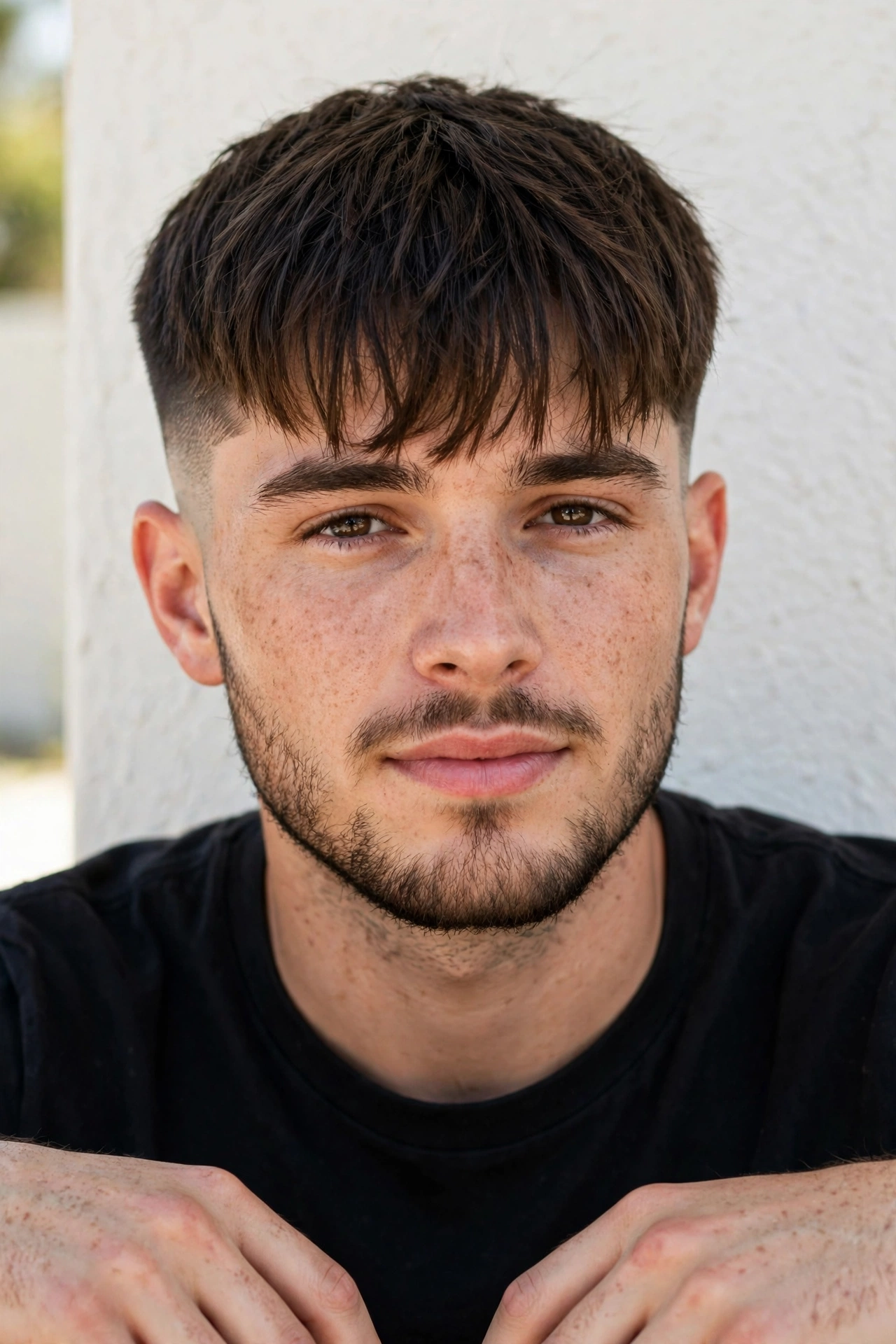
21. Fringe with Relaxed Weekend Finish
The weekend fringe skips heavy product and precise styling, letting the forward hair fall naturally with a soft, touchable texture. It keeps the modern edge but feels effortless. This is the version to wear when you want to look current without trying too hard.
22. Fringe with Defined Temple Outline
A clean temple outline sharpens a fringe cut, giving a crisp frame around the face that makes the forward front look intentional. This detail works with any fringe length and pairs well with tapered or faded sides. Ask your barber to keep the outline natural to your hairline.
Styling Tips
- Style a fringe while it is slightly damp, guiding it forward with your fingers or a brush.
- Use a light styling cream or matte paste, since heavy products can make a fringe look flat or greasy.
- Avoid combing a textured fringe flat; use your fingers to keep the pieces separated.
- Get a trim every 3 to 4 weeks to keep the fringe at the right length, before it covers your eyes.
- Blow-dry the fringe forward and slightly down for a neat shape, or let it air-dry for a softer finish.
- Keep the sides trimmed regularly so the fringe stays the focus of the cut.
- Start with a small amount of product at the front, since too much can make the fringe look heavy.
Frequently Asked Questions
What is a men’s fringe haircut?
A men’s fringe haircut keeps hair on top long enough to fall forward over the forehead, framing the face, while the sides and back are kept shorter. The fringe can be straight, choppy, wispy, or angled, and the sides can be tapered, faded, or undercut. It is a modern, versatile style that suits many hair types.
Does a fringe suit all face shapes?
A fringe can be adapted to most face shapes by adjusting its length, weight, and shape. A softer, textured fringe suits rounder faces, while a sharper, angular fringe suits more angular faces. Your barber can tailor the fringe to your forehead height and features.
How long should a fringe be?
A fringe usually sits between the hairline and the eyebrows, depending on the style you want. A micro fringe sits higher, while a heavy fringe sits lower, near or just above the eyebrows. Your barber can advise on a length that frames your face without covering your eyes.
Is a fringe hard to style?
No, most fringes are easy to style with a small amount of light product and a few minutes. The cut itself gives the fringe its shape, so you mainly need to guide it forward while it dries. Textured fringes need only your fingers, while neater fringes benefit from a brush.
How often should I trim a fringe?
A trim every 3 to 4 weeks keeps the fringe at the right length and shape. Fringes grow out faster than longer tops in terms of how they look, since even a little growth can cover the eyes. If you have a fade, a touch-up every 2 to 3 weeks keeps the sides crisp too.