25 Men’s Haircuts for Thin Hair With Fullness
Thin hair looks fuller when the cut adds lift, texture, and the illusion of density, rather than fighting the hair’s natural fineness. Shorter, layered cuts with lift at the roots usually work best, while heavy, flat styles tend to expose thinness. Here are 25 haircuts for men with thin hair that create fullness.
1. Short Textured Cut for Thin Hair
A short cut with choppy texture on top creates the illusion of density, since the layered pieces sit on top of each other. Keep the top fairly short and use matte paste to separate the pieces. This is one of the most reliable cuts for thin hair.
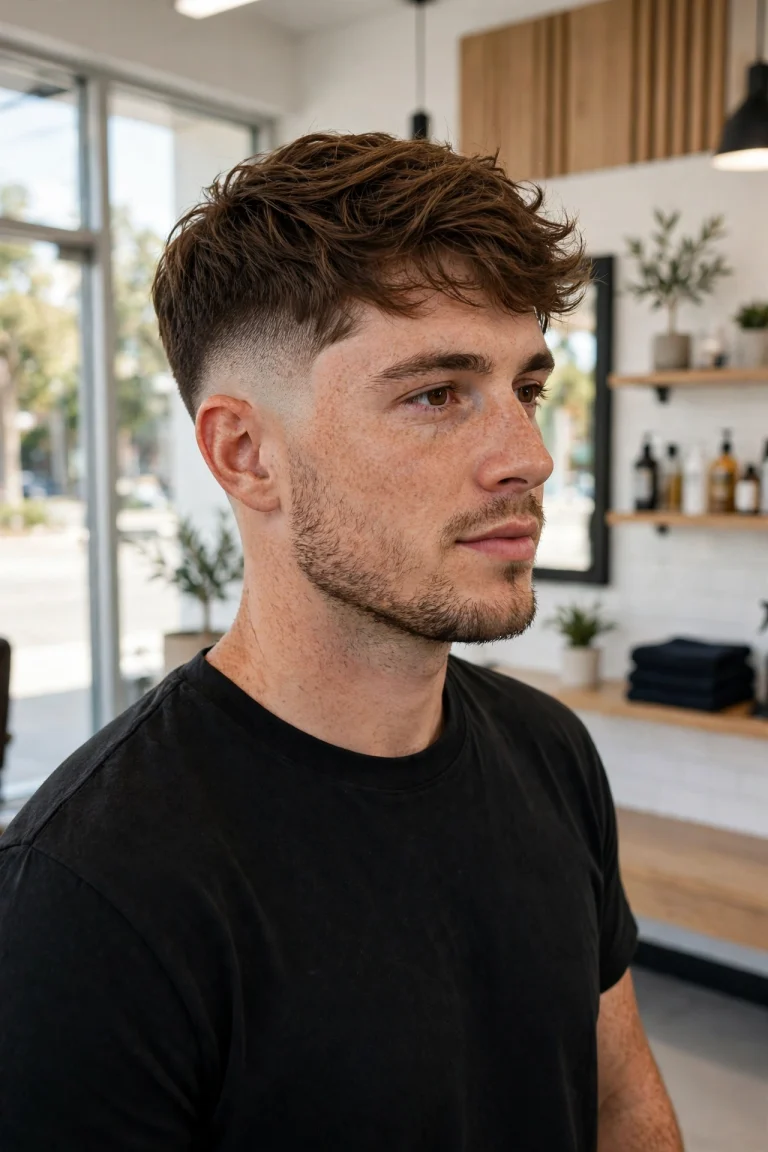
2. Textured Top with Short Sides for Thin Hair
Keeping the sides short while the top stays textured makes the top look fuller by contrast. The short sides also keep the overall shape neat and intentional. Use a light texturising product to add grip and lift.
3. Side-Swept Cut for Thin Hair
Sweeping the top to one side gives thin hair more coverage across the scalp, making it look denser. The sweep should be soft and natural, not combed flat. A light styling cream keeps the sweep in place without weight.
4. Brushed Forward Cut for Thin Hair
Brushing the top forward gives thin hair coverage at the front and a tidy, youthful shape. This direction also softens a receding hairline. Keep the top medium-short so it lies well without flopping.
5. Layered Cut for Thin Hair
Layers cut into thin hair add movement and the appearance of thickness, since shorter pieces sit over longer ones. The layers should be subtle, not choppy, for a natural full look. This version works with short and medium tops.
6. Buzz Cut with Slight Length for Thin Hair
A buzz cut with a little length left on top gives thin hair a clean, even appearance that does not try to hide its fineness. The uniform length looks intentional and masculine. It is also the easiest cut to maintain.
7. Crew Cut for Thin Hair
A crew cut keeps the top short and slightly longer at the front, giving a neat shape that suits thin hair well. The short length prevents the hair from lying flat and exposing the scalp. A small amount of matte product adds texture.
8. High and Tight for Thin Hair
A high and tight cut keeps the sides very short and the top short and neat, creating a clean, structured shape. The contrast between the short sides and the slightly longer top gives the illusion of fullness on top. It suits men who like a sharp, military-inspired cut.
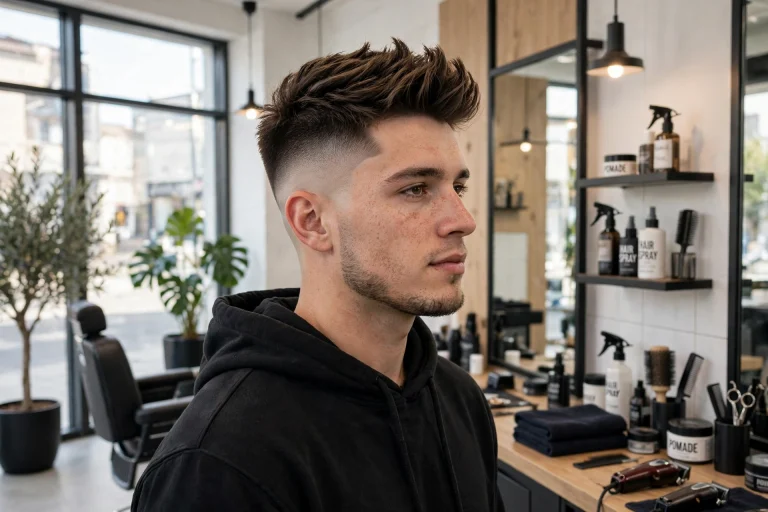
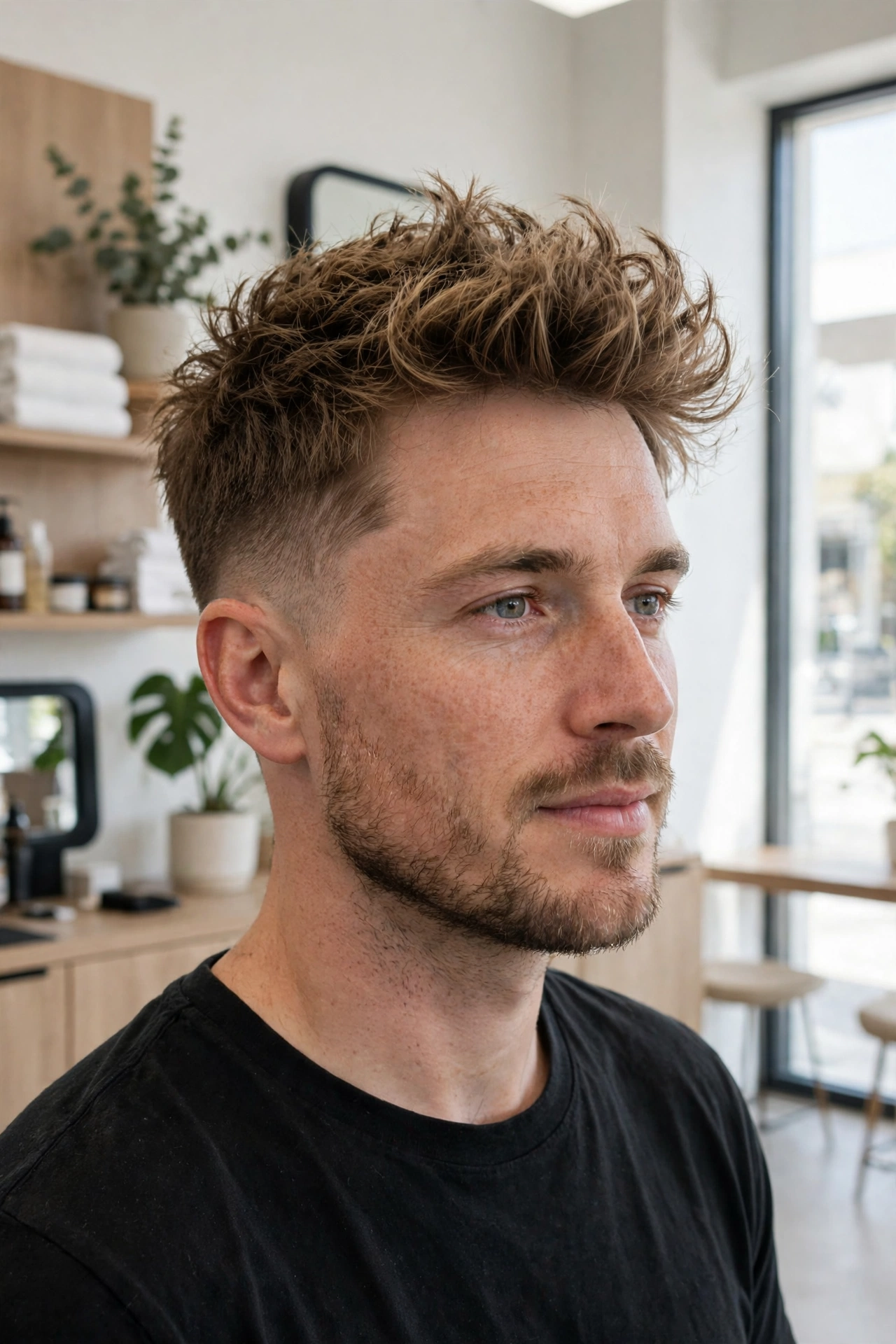
9. Spiky Textured Cut for Thin Hair
Short, soft spikes on top give thin hair lift and separation, making it look thicker and more voluminous. Keep the spikes textured rather than stiff for a modern finish. A strong-hold matte wax gives the lift this cut needs.
10. Quiff Cut for Thin Hair
A quiff lifts the front of thin hair up and away from the scalp, creating height and the illusion of density. Use a volumising powder at the roots for grip and lift. Keep the quiff modest in height for the most natural result.

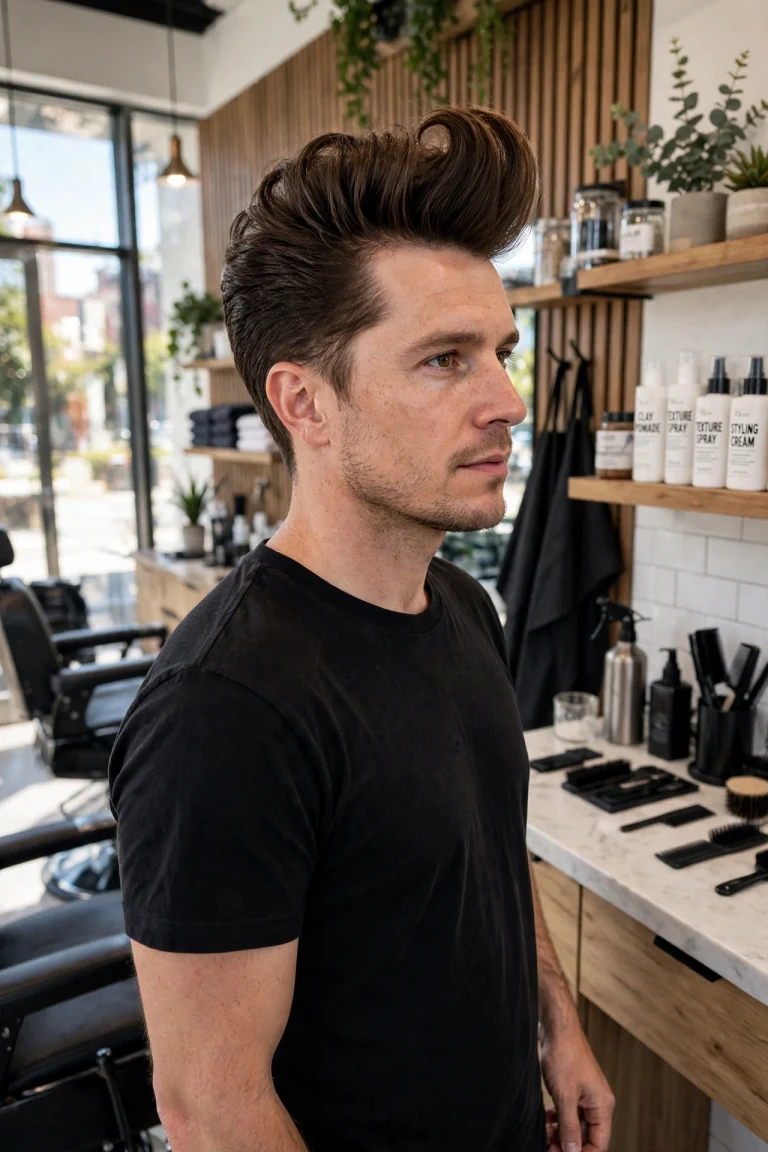
11. Pompadour Cut for Thin Hair
A modest pompadour sweeps thin hair up and back with gentle height, giving the top presence without needing thick hair. Blow-dry the front upward and use a light product to hold the shape. Avoid an overly tall pompadour, which can expose thinness at the sides.
12. Slicked Back Cut for Thin Hair
A slicked back cut with volume, rather than pulled flat, can make thin hair look neat and intentional. Blow-dry the top back with lift first, then smooth it with a light cream. Avoid heavy, greasy products that flatten thin hair.
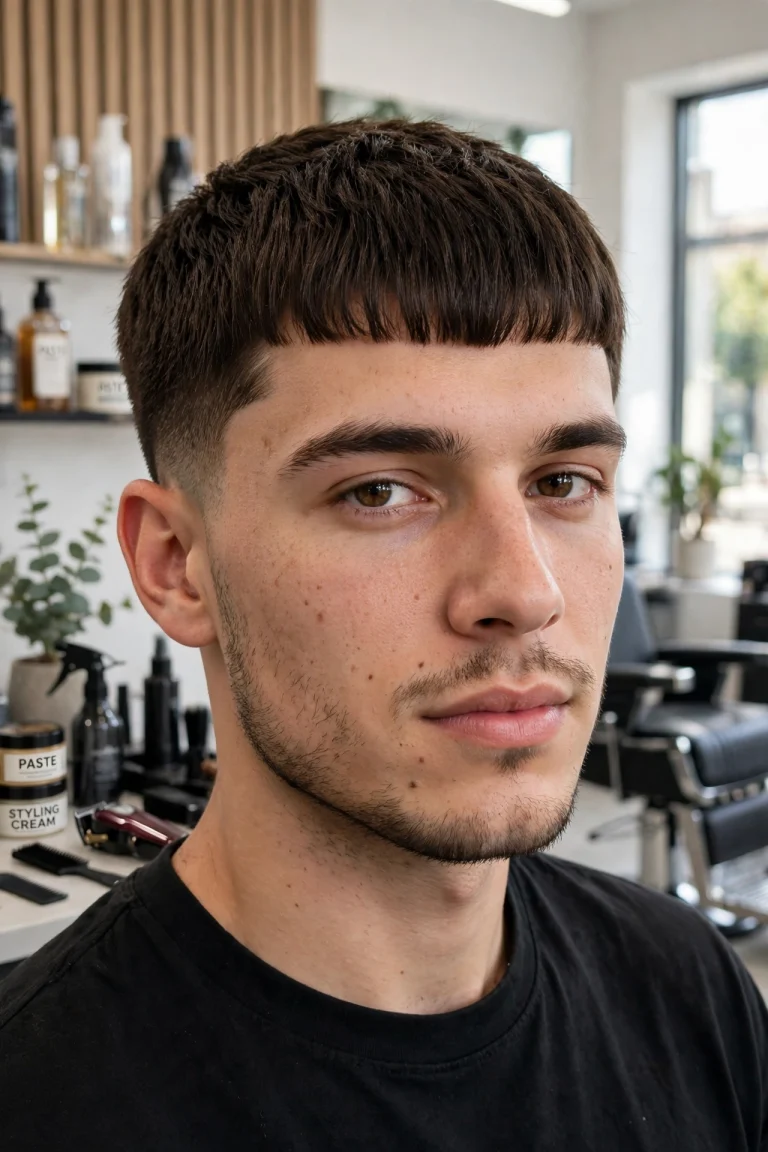
13. Fringe Cut for Thin Hair
A soft fringe falling forward over the forehead gives thin hair coverage at the front and a youthful frame. Keep the fringe light and slightly textured so it does not look heavy. This version also softens a high forehead or receding hairline.
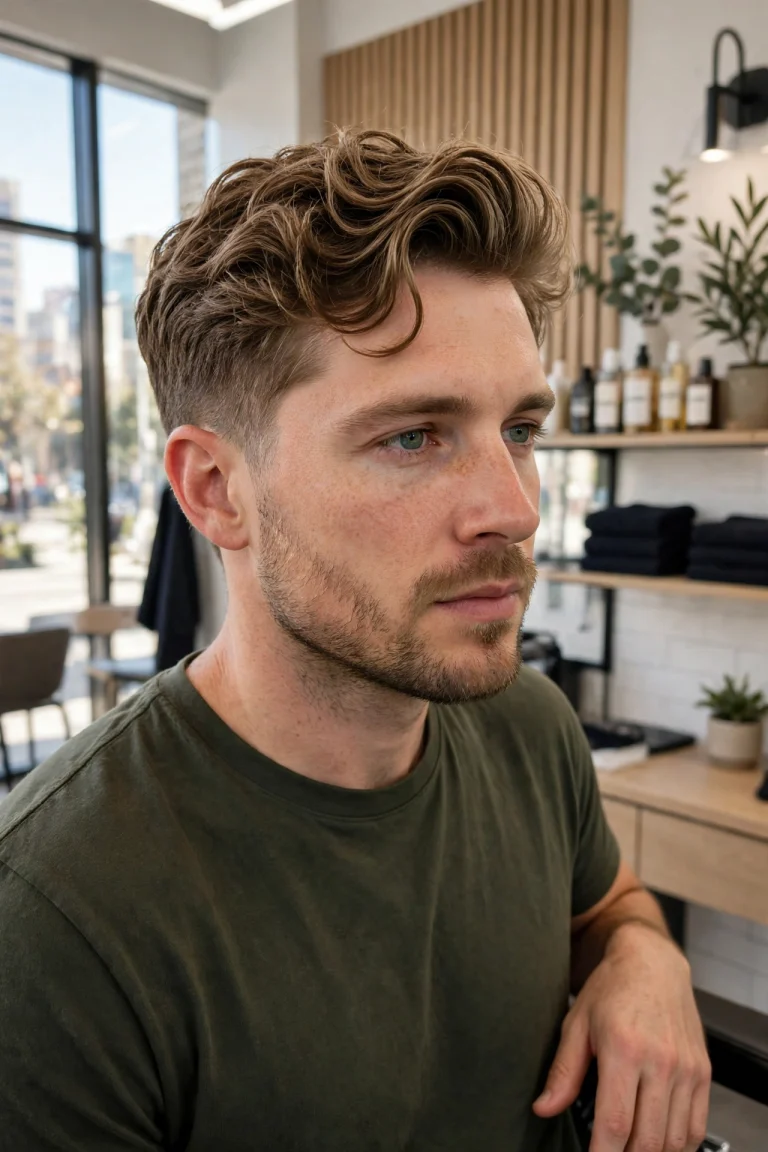
14. Wavy Cut for Thin Hair
If thin hair has a natural wave, a cut that encourages waves adds texture and the appearance of fullness. Keep the top medium-short and use a light wave-enhancing cream. The waves create movement that fine straight hair lacks.
15. Curly Cut for Thin Hair
Natural curls give thin hair built-in volume and texture, so a cut that lets curls form freely looks fuller. Keep the top a little longer so curls can shape properly, and use a curl cream to define them. Avoid cutting curls too short, which can expose the scalp.
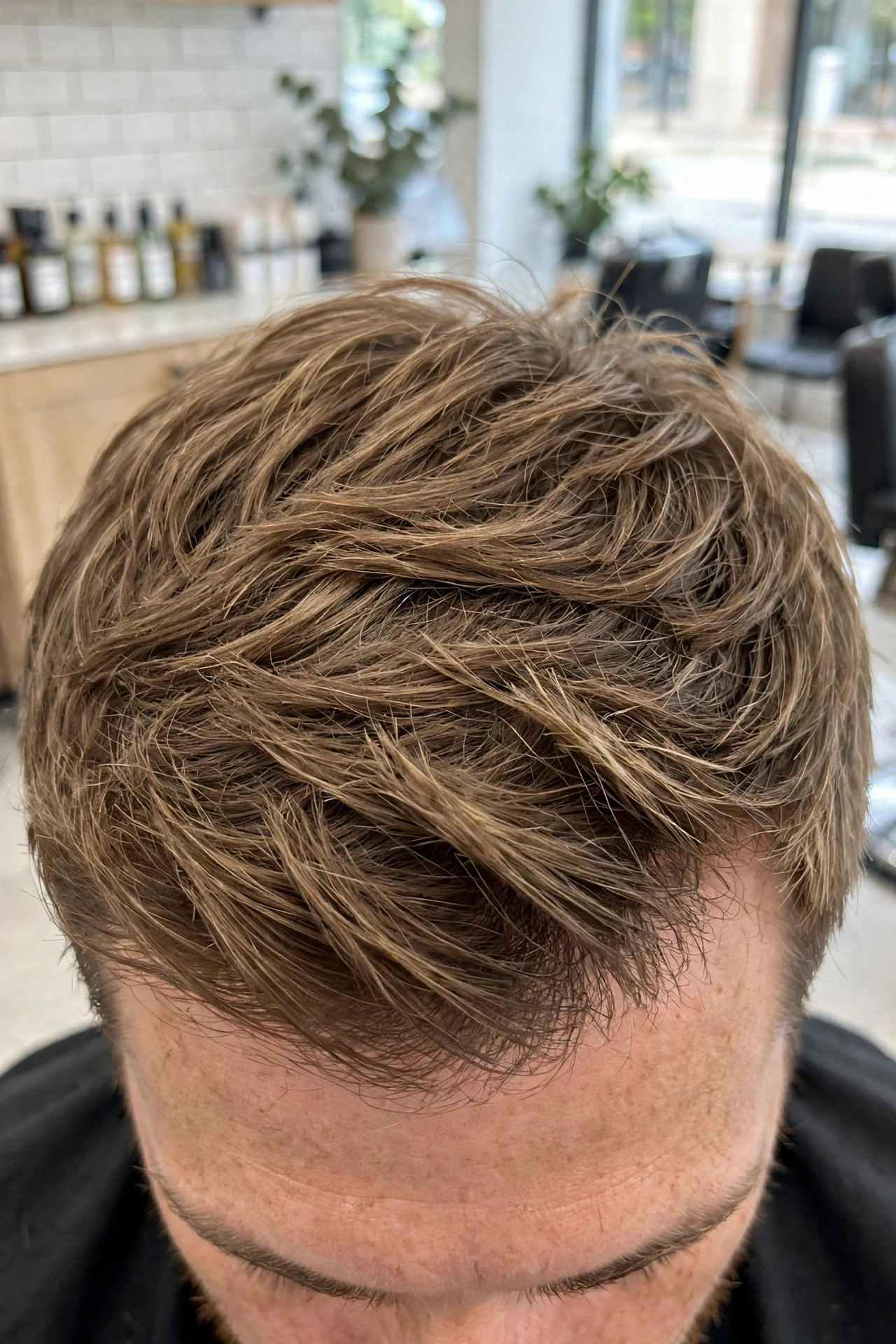
16. Messy Cut for Thin Hair
A messy, tousled top gives thin hair a lived-in fullness, with pieces lifted and separated for texture. Work matte product through damp hair and let it dry naturally. The controlled messiness hides thinness better than a flat, combed style.
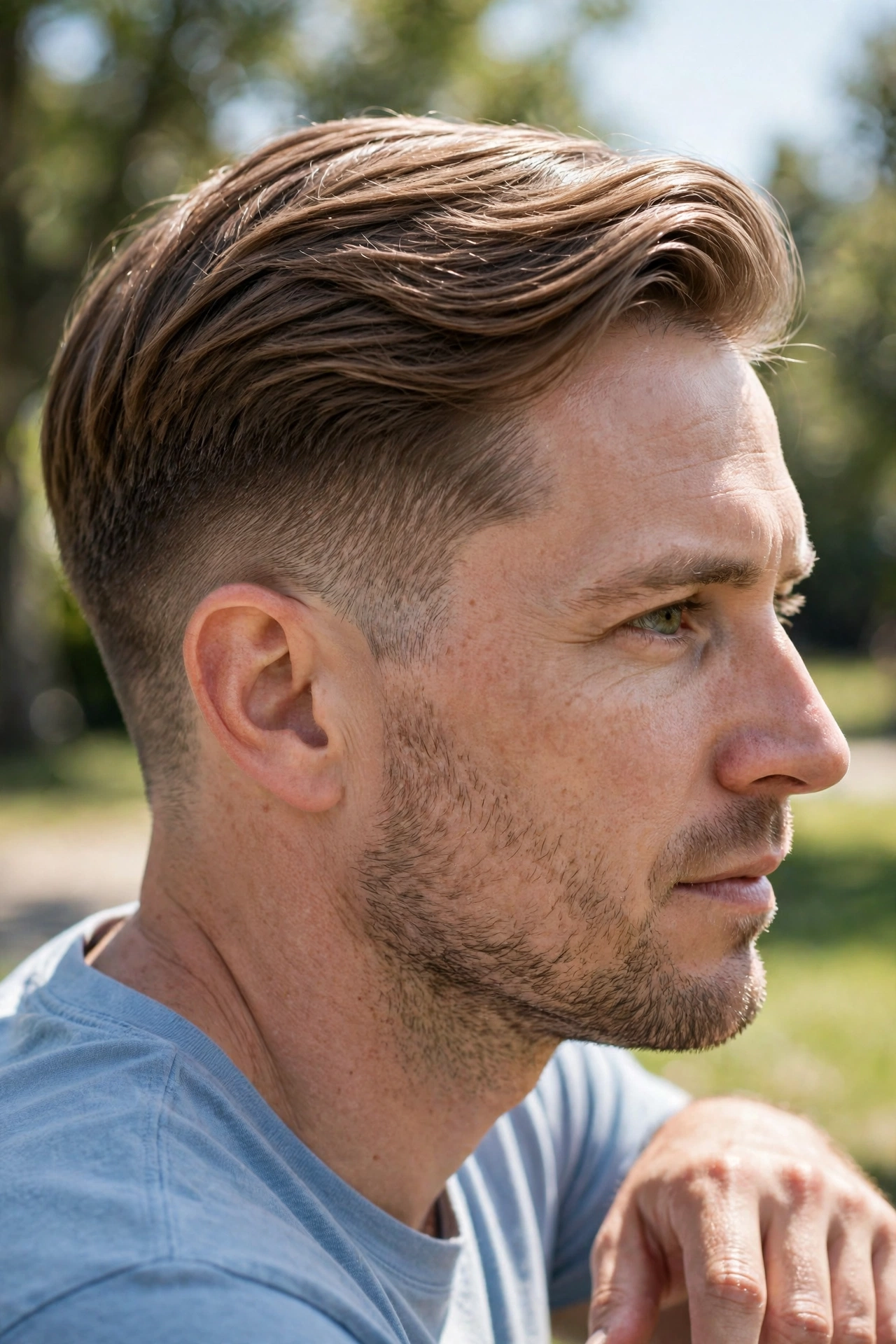
17. Tapered Cut for Thin Hair
A tapered cut keeps the sides gradually shorter toward the neckline, giving thin hair a soft, natural frame that grows out gracefully. The taper keeps the overall shape tidy without harsh contrast. It is a versatile, low-maintenance choice.
18. Fade Cut for Thin Hair
A fade on the sides gives thin hair a clean, modern base, with the top left longer to look fuller by contrast. A low or mid fade usually works best, since a very high fade can expose more scalp. Keep the top textured for maximum fullness.
19. Undercut Cut for Thin Hair
An undercut keeps the sides very short while the top stays longer, so the top looks fuller by contrast. Keep the top medium-length and textured, and use a volumising product at the roots. This bold version suits men who like a statement cut.
20. Side Part Cut for Thin Hair
A side part gives thin hair direction and coverage, with the top combed over to one side for a fuller appearance. Find your natural part and use a light product to hold the shape. A soft part looks more natural than a shaved line for thin hair.
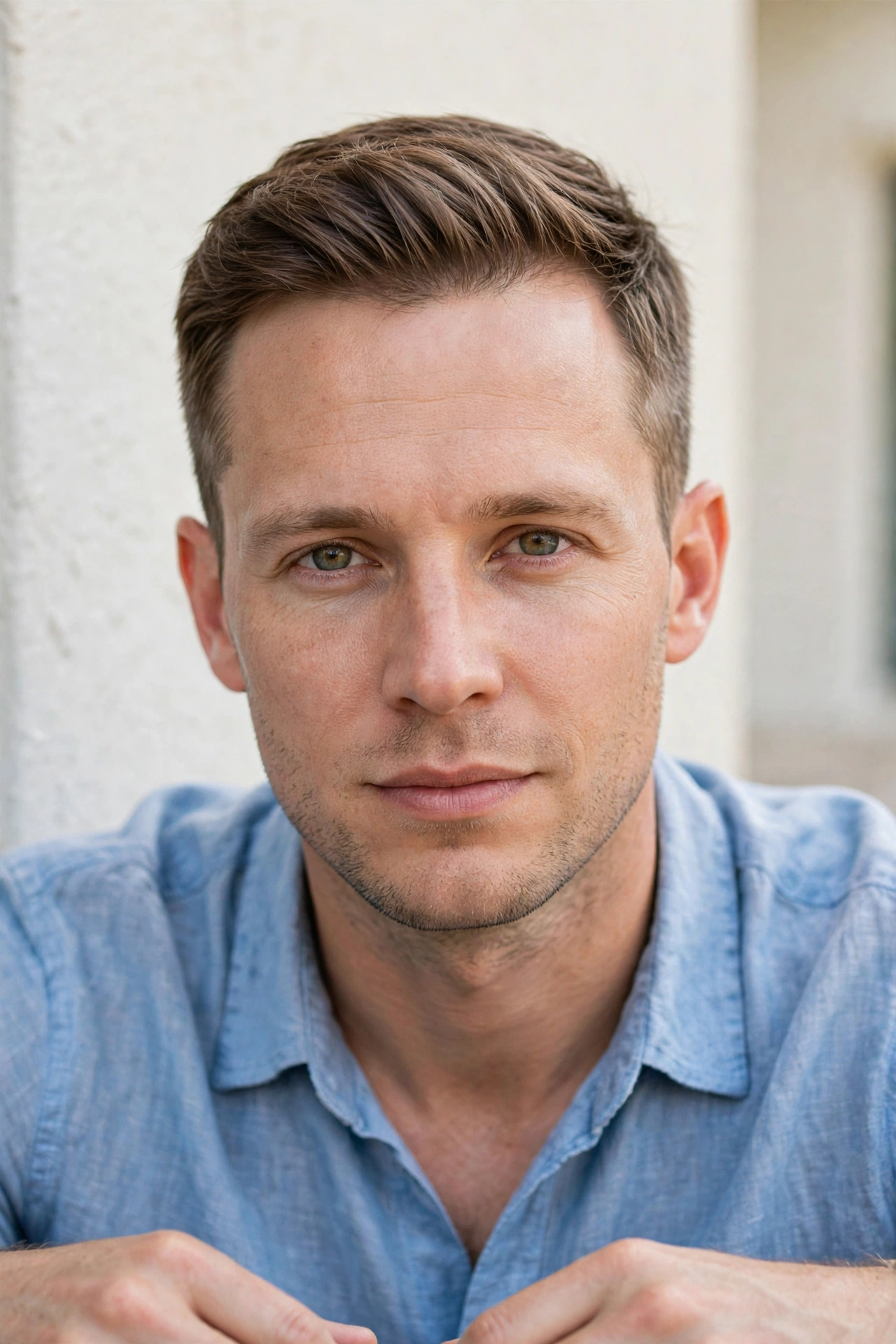
21. Voluminous Crown Cut for Thin Hair
Building volume through the crown gives thin hair height and fullness from every angle, not just the front. Blow-dry the crown upward with a brush and use a volumising powder at the roots. This version flatters men who want maximum lift.
22. Short Back and Sides with Longer Front for Thin Hair
Keeping the back and sides short while the front stays longer gives thin hair a focal point of fullness at the forehead. The longer front can be swept, lifted, or brushed forward. This classic shape is easy to style and maintain.
23. Tousled Crown Cut for Thin Hair
A tousled crown focuses texture and lift at the back of the top, giving thin hair movement from every angle. The front stays neater, so the tousled crown adds depth without looking messy overall. A quick scrunch with matte paste brings the crown to life.
24. Natural Finish Cut for Thin Hair
A natural-finish cut skips heavy styling and lets thin hair fall as it naturally wants to, with the cut itself providing shape and texture. The result is soft, touchable, and low-maintenance. This is a good starting point if you are trying a new cut for thin hair.
25. Short Layered Cut with Lifted Front for Thin Hair
This cut combines short layers with a gently lifted front, giving thin hair both texture and height in one shape. The layers create density while the lifted front adds presence. It is a versatile, everyday cut that works in almost any setting.
Styling Tips
- Use volumising powder or mousse at the roots to add lift and grip to thin hair.
- Choose matte, lightweight products, since heavy waxes and greasy pomades flatten thin hair.
- Blow-dry thin hair upward with your fingers or a brush to build volume from the roots.
- Avoid combing thin hair flat against the scalp, which exposes the scalp and reduces fullness.
- Get a trim every 3 to 4 weeks to keep the shape and texture that create the illusion of fullness.
- Keep the top shorter rather than longer, since very long thin hair tends to lie flat.
- Start with a small amount of product and add more only if needed, to avoid weighing the hair down.
Frequently Asked Questions
Q: What is the best haircut for thin hair?
A: The best cuts for thin hair are usually short to medium, layered, and textured, with lift at the roots, since they create the illusion of density. Short textured cuts, quiffs, side-swept cuts, and tapered cuts all work well. Your barber can advise on a cut that suits your hairline and face shape.
Q: Should men with thin hair grow their hair long?
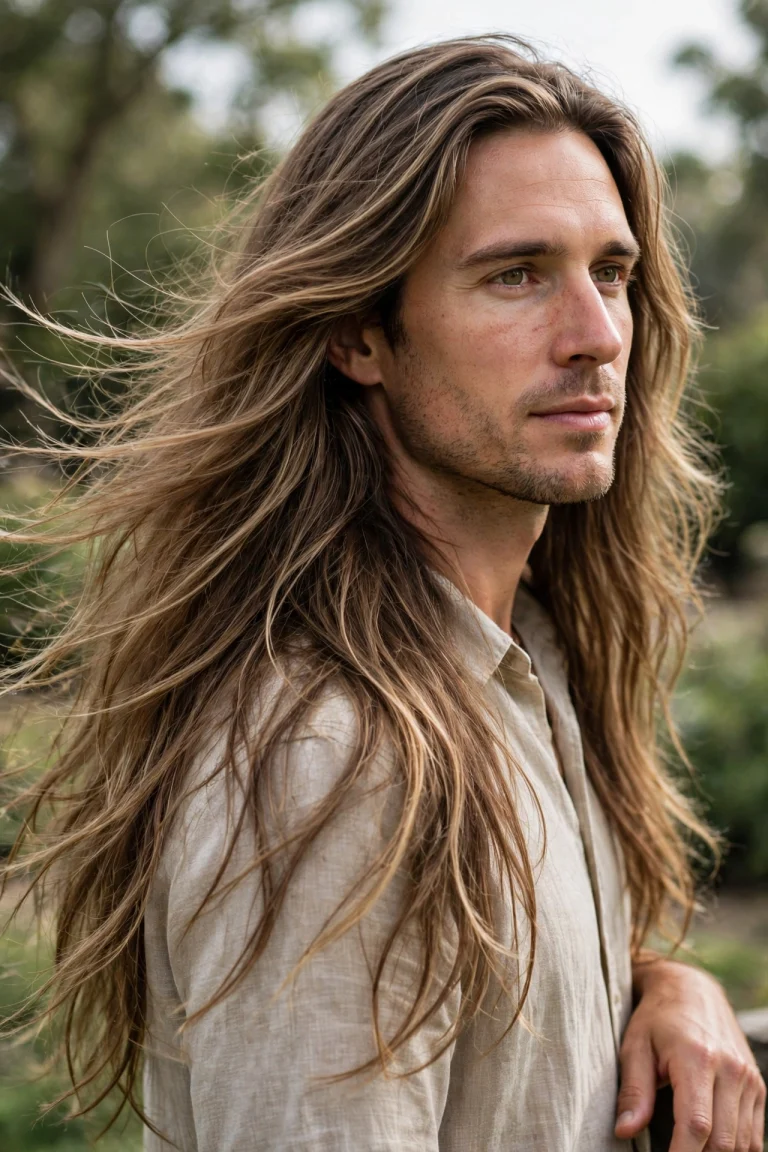
A: Very long hair tends to lie flat and expose thinness, so most men with thin hair look fuller with a short to medium cut. If you prefer longer hair, layers and volume at the roots can help, but the top should not be so long that it flops flat. A medium length with texture is usually the best compromise.
Q: What product should I use for thin hair?
A: Volumising powder, mousse, and light matte paste work best for thin hair, since they add lift and grip without weight. Avoid heavy waxes, greasy pomades, and too much product, which flatten thin hair. Apply product mainly at the roots for lift.
Q: Can a fade or undercut help thin hair look fuller?
A: Yes, short sides with a longer, textured top make the top look fuller by contrast, which is why fades and undercuts work well for thin hair. A low or mid fade usually suits thin hair best, since a very high fade can expose more scalp. Keep the top textured for maximum fullness.
Q: How often should I trim thin hair?
A: A trim every 3 to 4 weeks keeps the layers, texture, and shape that create fullness looking intentional. Thin hair loses its shape faster than thick hair when it grows out, since the layers grow flat. Regular trims keep the cut working for you.