
28 Curly Bangs Ideas With a Middle Part for Balance

A middle part can bring beautiful balance to curly bangs, letting curls fall evenly on both sides of the face. When the volume, length, and curl pattern match from left to right, the whole style feels calm, symmetrical, and flattering. These ideas use a middle part to create harmony without losing natural curl movement.
1. Symmetrical Middle-Parted Coil Fringe
A symmetrical coil fringe divides curls evenly down the middle, so both sides mirror each other. The coils fall in matching groupings, giving a tidy, balanced frame. Define coils while damp to keep the symmetry clear as they dry.
2. Middle-Parted Curls with Even Cheekbone Length
Even cheekbone length on both sides keeps a middle-parted fringe looking balanced and intentional. The curls meet the cheekbones at the same point, framing the face evenly. This length is flattering and easy to grow out.
3. Balanced Middle-Parted Spiral Fringe
Balanced spirals fall in matching twists on each side of the middle part. The spiral pattern gives movement while the even distribution keeps the style calm. Shape spirals while damp so they dry in matching pairs.
4. Middle-Parted Curls with Mirrored Volume
Mirrored volume means the fullness on the left matches the fullness on the right, with no heavier side. Lift roots evenly while drying to achieve this balance. The result feels harmonious from every angle.
5. Middle-Parted Fringe with Equal Fullness Both Sides
Equal fullness is achieved by distributing curl clumps evenly across the forehead before drying. Avoid pushing more hair to one side, even if your curls naturally favour it. A quick check in the mirror while damp helps correct unevenness.
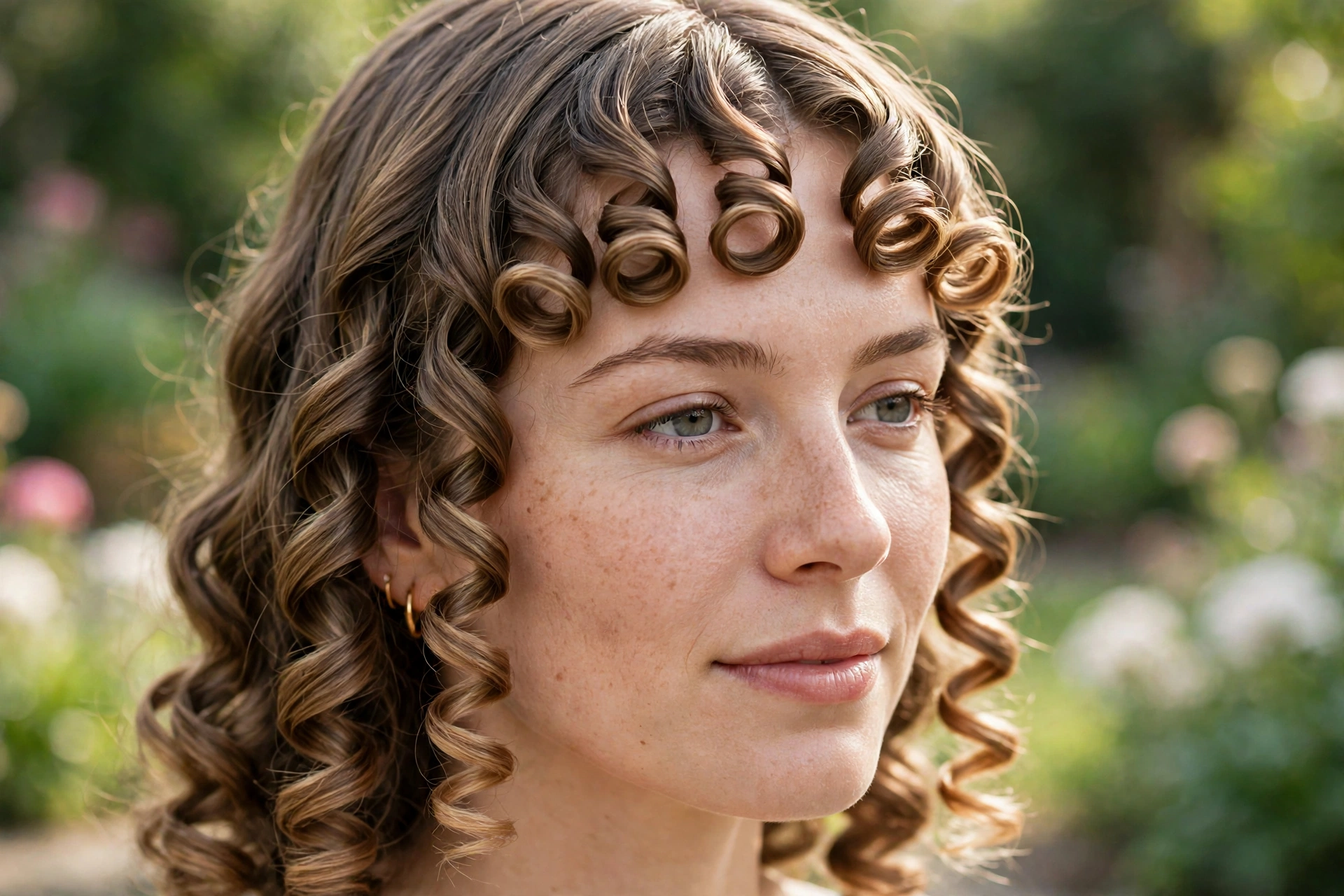
6. Middle-Parted Soft Coil Frame
A soft coil frame uses gentle, rounded coils to outline the face evenly from the middle part outward. The coils soften the forehead without covering it heavily. This is a gentle, wearable take on a middle-parted fringe.
7. Middle-Parted Curls with a Balanced Crown
A balanced crown lifts evenly at the top, so the middle part does not collapse or lean to one side. Clip or diffuse roots symmetrically while drying. The crown gives the fringe height and a stable, even shape.
8. Middle-Parted Ringlet Fringe with Symmetrical Fall
Symmetrical ringlets fall in matching lengths and shapes on both sides of the part. The ringlet pattern looks polished and deliberate. Coil small sections evenly while damp for the most uniform result.
9. Middle-Parted Curls with Brow-Skimming Balance
Brow-skimming curls sit at the same height on both sides, giving a neat, even brow line. This length opens the eyes while keeping the fringe present. Trim dry, in small amounts, to keep both sides level.
10. Middle-Parted Fringe for Oval Balance
A middle-parted fringe can enhance oval balance by framing the face evenly without adding width. Keep the sides close to the face and the volume controlled. The style feels proportionate and naturally flattering.

11. Middle-Parted Curls with Weighted Ends for Evenness
Slightly weighted ends help curls on both sides hang at matching lengths instead of springing up unevenly. A little extra cream on the ends encourages this even fall. This is helpful for curl patterns that shrink differently across the forehead.
12. Middle-Parted Fringe with Layered Symmetry
Layered symmetry cuts matching layers into both sides of the fringe, so curls stack evenly. The layers give movement without disturbing the balance. This cut grows out gracefully, keeping its even shape longer.
13. Middle-Parted Curls with a Gentle Forehead Opening
A gentle forehead opening lets the middle part breathe, with curls parting softly rather than forming a hard line. The opening keeps the face looking open and relaxed. Let curls group naturally instead of forcing a sharp division.
14. Middle-Parted Fringe with Temple-Softening Curls
Temple-softening curls fall lightly over the temples on both sides, balancing the width of the forehead. The soft coverage makes the face appear more rounded and harmonious. Keep these pieces light so they do not weigh the fringe down.
15. Middle-Parted Curls with Chin-Length Balance Pieces
Chin-length pieces on both sides anchor a middle-parted fringe and give it a balanced, finished outline. They blend the fringe into the lengths evenly. This is a good option if you want fringe softness with longer overall hair.

16. Middle-Parted Fringe with Rounded Symmetry
Rounded symmetry shapes the fringe into a gentle curve that mirrors itself across the middle part. The outline follows the head shape evenly on both sides. This soft, rounded finish feels classic and calm.
17. Middle-Parted Curls with Evenly Lifted Roots
Evenly lifted roots give a middle-parted fringe height that matches on both sides. Lift each side the same amount while drying, using clips or a diffuser. Uneven root lift is often what makes a middle part look off-balance.
18. Middle-Parted Fringe with Jaw-Balancing Length
Jaw-balancing length extends the outer fringe pieces to the jaw on both sides, balancing a wider forehead or narrower chin. The longer sides create a pleasing, even frame. This length also blends well into longer hair.
19. Middle-Parted Curls with a Calm Symmetrical Shape
A calm symmetrical shape avoids drama in favour of even, gentle curls that sit quietly around the face. The fringe feels refined and easy to wear every day. Keep definition soft rather than sharply separated.
20. Middle-Parted Fringe with Light Tapered Ends
Light tapered ends thin the fringe tips slightly, so both sides taper evenly and blend smoothly. The taper prevents a blunt, heavy line across the forehead. It also helps the fringe grow out without losing balance.

21. Middle-Parted Curls with Shoulder-Balancing Length
Shoulder-balancing length lets the outer curls reach the shoulders evenly, giving the whole style a grounded, symmetrical silhouette. The fringe and lengths work as one balanced shape. This suits longer curly hair especially well.
22. Middle-Parted Fringe with Soft Part-Line Definition
Soft part-line definition keeps the middle part visible but gentle, with curls grouping naturally on either side. Avoid a harsh, scraped line, which can look severe with curls. A soft line keeps the balance feeling natural.
23. Middle-Parted Curls with Balanced Bounce
Balanced bounce means curls spring with the same energy on both sides of the part. Use the same amount of product and the same drying method on each side. The fringe moves evenly when you turn your head.
24. Middle-Parted Fringe for a Harmonious Face Frame
A harmonious face frame uses the middle part to divide attention evenly, so no single feature dominates. The curls frame both cheeks and temples equally. This is a versatile, flattering everyday choice.
25. Middle-Parted Curls with Even Shrinkage Control
Even shrinkage control accounts for curls springing up at different rates across the forehead. Cut and style dry where possible, checking both sides as they settle. The fringe lands at matching lengths once fully dry.
26. Middle-Parted Fringe with Symmetrical Spring
Symmetrical spring gives each side of the fringe the same lift and curl energy. Scrunch both sides equally while damp to encourage matching springs. The result is lively yet perfectly balanced.
27. Middle-Parted Curls with a Balanced Everyday Shape
A balanced everyday shape is simple, even, and repeatable, with curls falling neatly on both sides each morning. It needs only a quick refresh to restore symmetry. This is the most practical middle-parted option for daily wear.
28. Middle-Parted Fringe with Mirrored Curl Clumps
Mirrored curl clumps are formed by grouping curls into similar-sized clumps on each side of the part. The matching clumps give a tidy, intentional finish. Keep clumps together while drying for the clearest mirror effect.
Styling Tips
- Find your natural middle part while hair is damp, then let curls group on either side without forcing a sharp line.
- Apply the same amount of product to each side so volume and definition stay even.
- Lift roots symmetrically while drying, using clips or a diffuser on both sides equally.
- Check the fringe in the mirror while damp and redistribute curl clumps if one side looks heavier.
- Cut or trim a middle-parted curly fringe dry, so shrinkage differences are visible.
- Refresh by misting both sides evenly and reshaping curls with your fingers.
- Avoid pulling one side behind the ear habitually, which trains curls to favour that side.
- Sleep on satin and avoid pressing one side flat overnight, to preserve symmetry.
Frequently Asked Questions
Does a middle part suit curly bangs?
Yes, a middle part can suit curly bangs very well, especially when volume and length are balanced on both sides. It creates symmetry and opens the face evenly. The key is letting curls group naturally rather than forcing a rigid line.
How do I keep both sides even?
Apply product evenly, dry both sides the same way, and check the shape while damp. Curls often shrink differently, so dry trimming helps match lengths. Small adjustments with your fingers during drying usually fix minor unevenness.
Will a middle part make my forehead look wider?
Not if the fringe keeps soft curls near the temples and a gentle, open shape. Temple-softening pieces and rounded symmetry help balance forehead width. A stylist can adjust fullness to suit your face proportions.
Can I change from another parting to a middle part?
Yes, though curls may need time to learn the new fall. Start the middle part on damp hair and train it over several wash days. Clipping roots lightly while drying can help the new part settle.
How often should I trim a middle-parted curly fringe?
A light trim every six to eight weeks keeps both sides level and the shape balanced. Because curls grow unevenly, small regular trims work better than waiting until the fringe feels very overgrown.