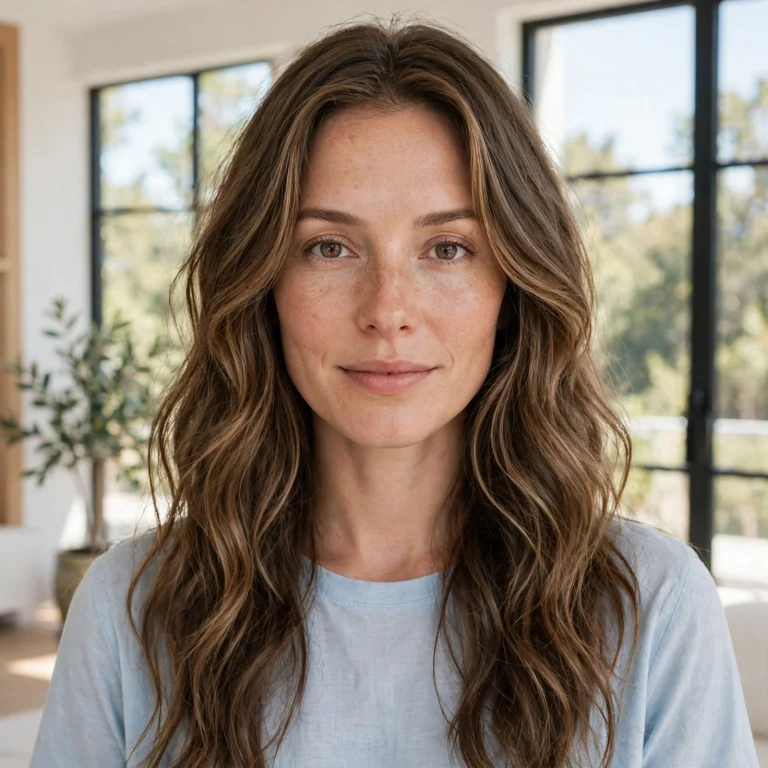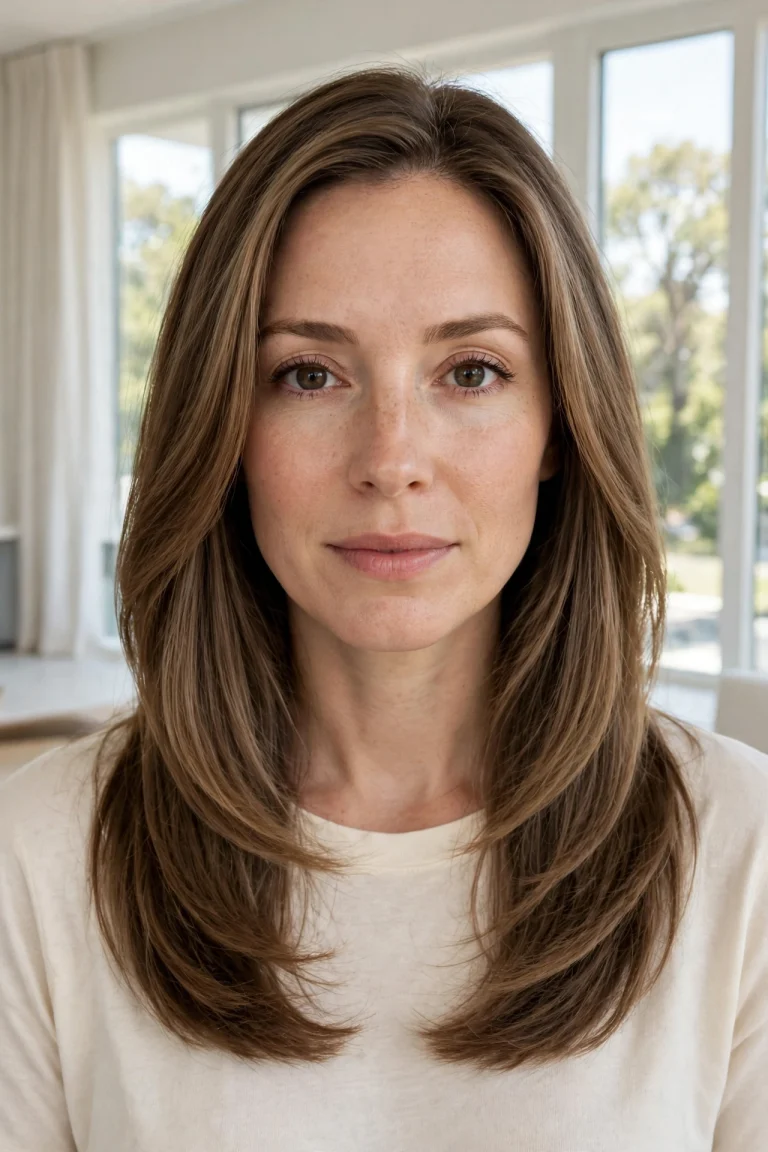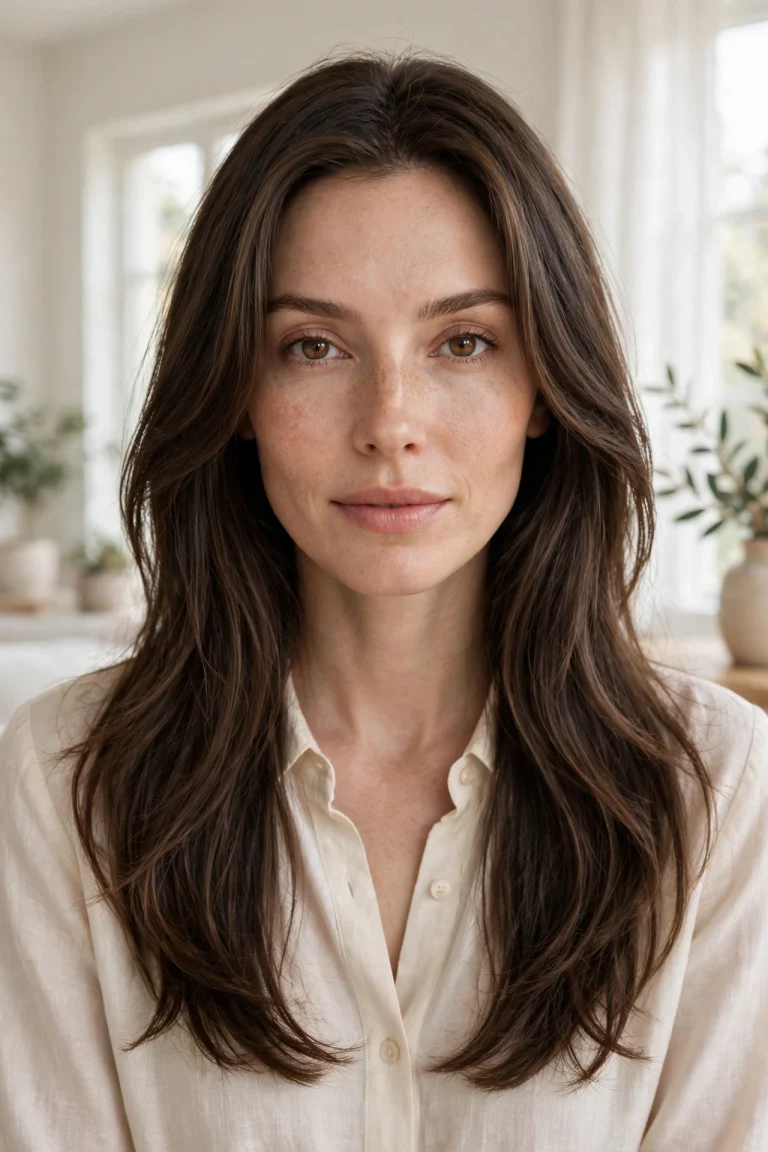
25 90s Layered Haircuts for Bouncy Blowout Volume
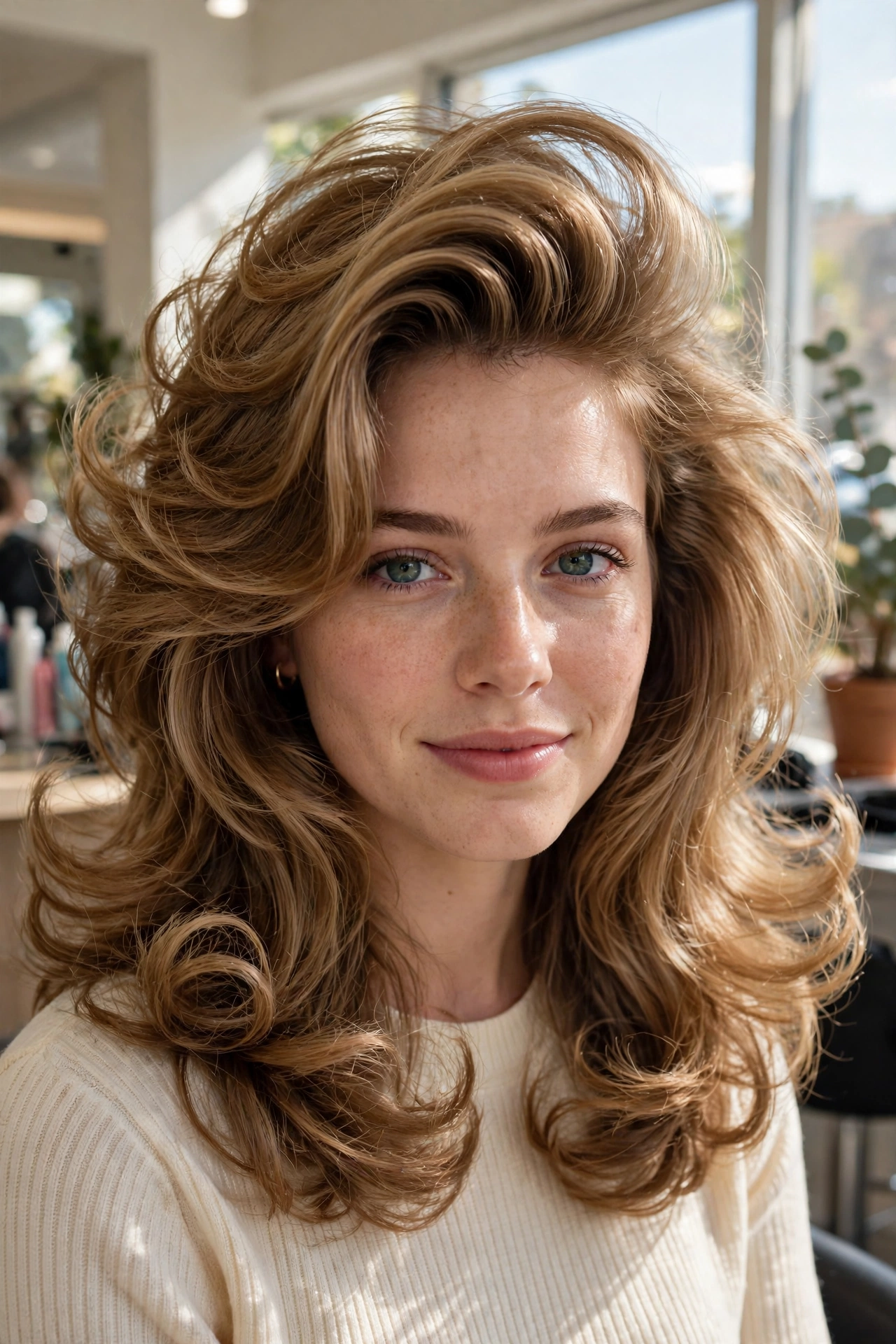
The 90s layered haircut is back, and it brought its blowout with it. Think supermodel volume, flipped ends, face-framing layers that bounce with every step, and hair that looks like it was just styled even when it was not. The modern version keeps the big, bouncy energy but updates the finish, so it reads as fresh and current rather than costume. These 25 ideas show how 90s layers adapt to every length, texture, and styling routine, all with the volume the decade was famous for.
1. Classic 90s Supermodel Layers
The classic version is the supermodel cut itself: long layers through the lengths, shorter face-framing pieces, and a blowout so bouncy it seems to move on its own. The layers are cut to flip outward at the ends, and the crown is layered for lift that holds all day. It is the most glamorous version of the cut, and it remains the reference point every other 90s variation is measured against.
2. 90s Layers With the Rachel Cut
The Rachel, the most famous 90s haircut of all, is a 90s layered cut with shorter, choppier layers around the face and a flipped, feathered finish. The modern version softens the choppiness and keeps the layers longer, so the cut reads as a tribute rather than a replica. Ask for the face-framing pieces to start at the cheekbones and the layers to flip outward, and the reference will be unmistakable without being a costume.
3. 90s Layers for Long Hair
Long hair takes 90s layers beautifully, with the layering starting below the shoulders so the length stays dramatic while the ends gain bounce. The longest layers flip outward in a soft cascade, and the crown layers give the roots lift that long hair usually lacks. It is the version for anyone who wants 90s volume without sacrificing a single inch of length.
4. 90s Layers for Medium Hair
Medium hair is the sweet spot for 90s layers, since the length is short enough for the blowout to hold its bounce all day and long enough for the flipped ends to show. The layers start at the jaw or cheekbones and graduate down to the collarbone, creating a full, swinging shape. It is the easiest length to style at home, and the volume lasts from morning to evening.
5. 90s Layers for a Bouncy Blowout
The bouncy blowout is the finish that defines the 90s layered cut, and it is worth learning the technique properly. Dry the hair in sections with a large round brush, rolling each section under and away from the face, and let each section cool on the brush before you release it. The layers will hold their curve for hours, and the ends will flip outward exactly the way the decade intended.
6. 90s Layers With Curtain Bangs
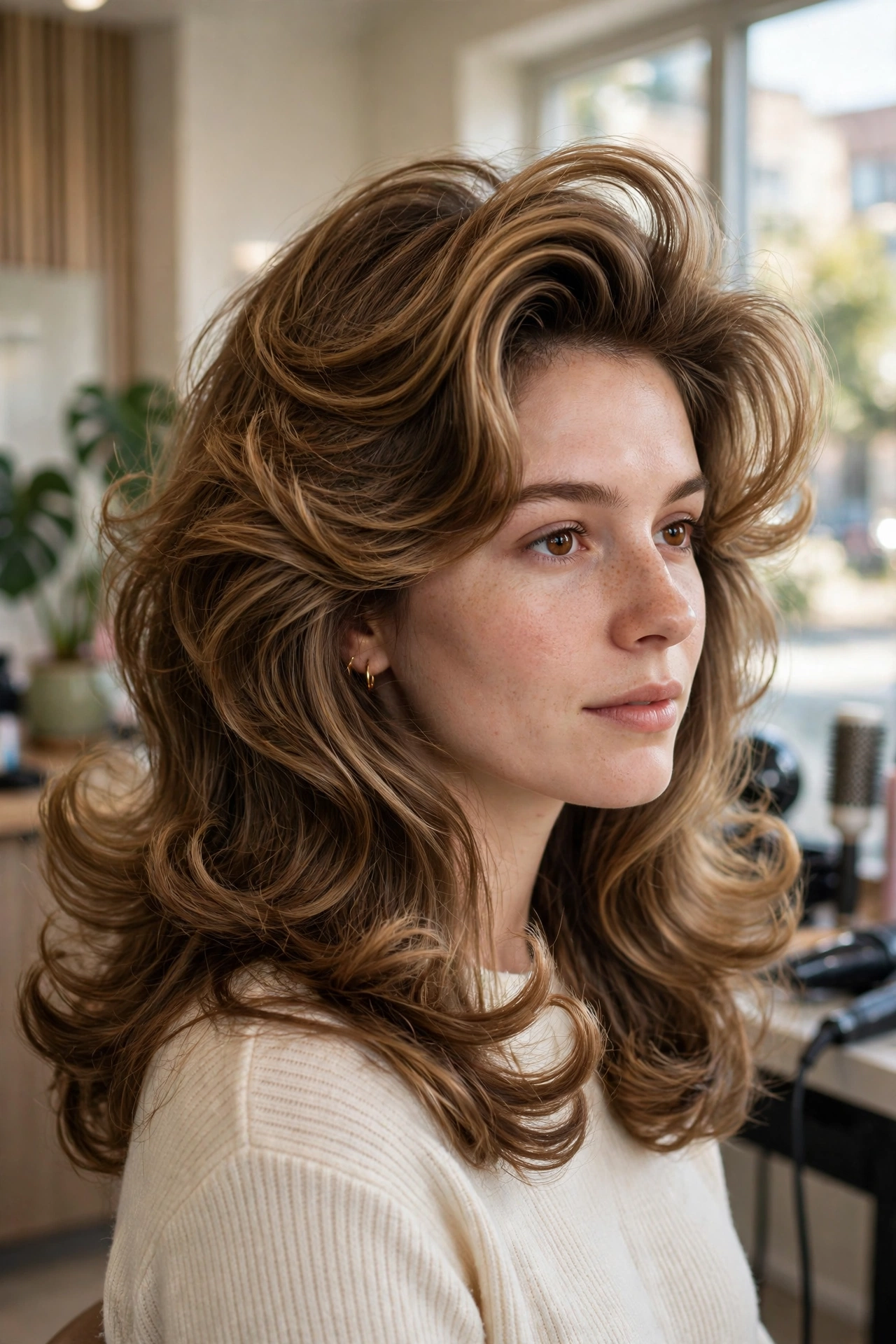
Curtain bangs are the natural fringe for 90s layers, since the bangs are simply the shortest face-framing layer parted in the middle. The fringe sweeps into the cheekbone layers, so the whole front of the hair moves as one bouncy, face-framing shape. Blow-dry the bangs with a round brush, rolling them away from the face, and they will hold their sweep all day.
7. 90s Layers With a Middle Part
A middle part shows 90s layers at their most symmetrical, with the face-framing pieces falling evenly on both sides and the crown volume sitting centered. The part keeps the blowout balanced, and the flipped ends mirror each other beautifully. It is the most polished way to wear the cut, and it suits anyone who likes a clean, intentional silhouette with big volume.
8. 90s Layers With a Deep Side Part
A deep side part gives 90s layers old-Hollywood drama, sweeping the face-framing layers across the forehead and piling volume on one side. The heavy side reads glamorous and full, while the lighter side stays sleek behind the ear. It is the version for evenings and photographs, when the cut’s volume deserves a stage.
9. 90s Layers for Thick Hair
Thick hair holds a 90s blowout better than any other type, since the density gives the layers something to stand on and the volume lasts for days. The layering removes weight from the interior so the hair does not sit heavy, while the surface layers keep their bounce. Ask your stylist to thin through the interior rather than the ends, so the flipped finish stays full and the ends stay healthy.
10. 90s Layers for Fine Hair
Fine hair gets 90s volume from layers cut slightly blunter, so each layer stacks on the next and builds a cushion of fullness. Keep the layering concentrated around the face and crown, and use a volumizing mousse at the roots before blow-drying. The result is hair that looks far denser than it is, with bounce that fine hair rarely achieves on its own.
11. 90s Layers With Velcro Rollers
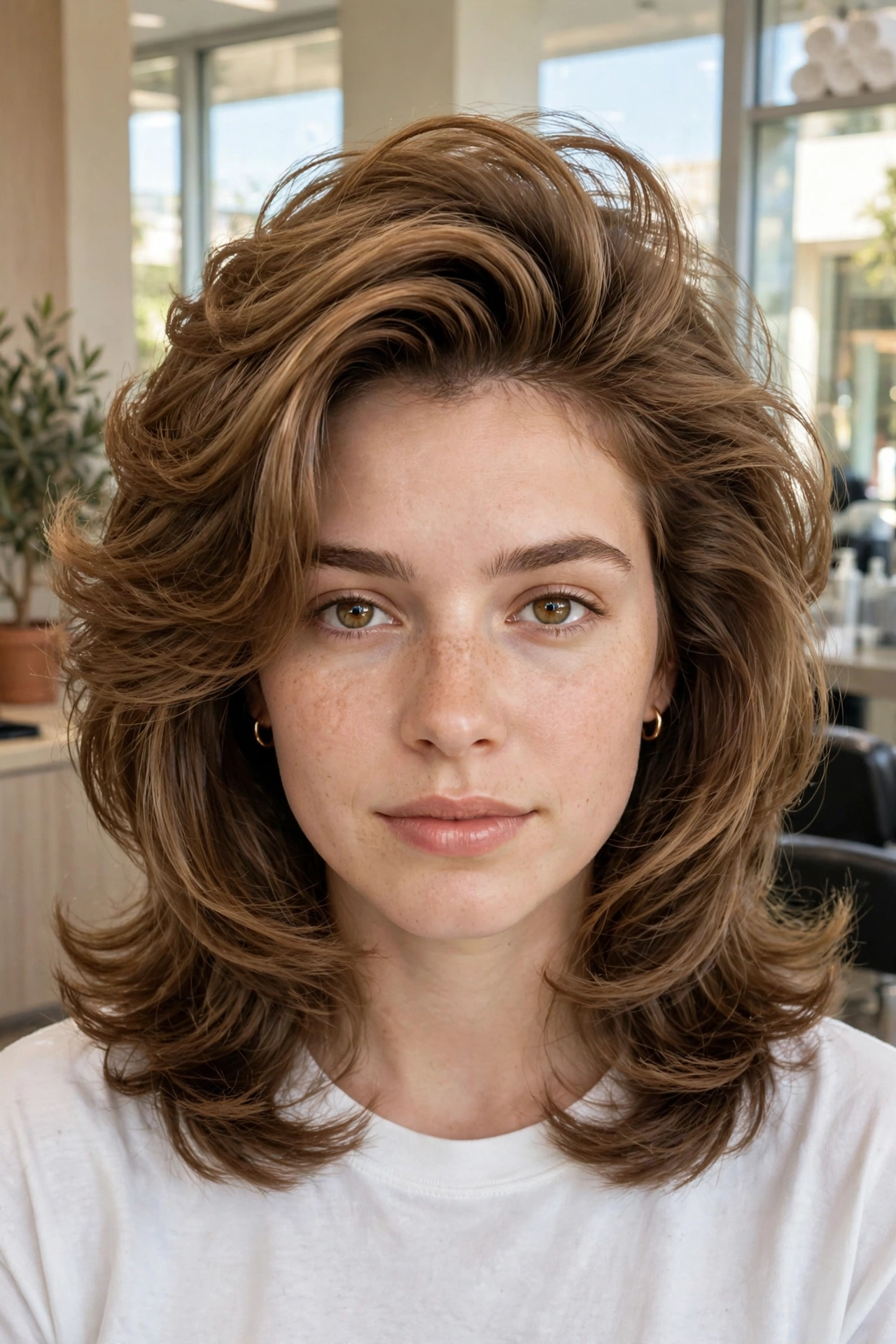
Velcro rollers are the 90s styling secret that never actually went away, and they are the easiest way to get lasting blowout volume at home. Roll the top sections up and away from the face after blow-drying, let them cool completely, and release them for volume that holds for hours. The rollers give the layers their curve without any additional heat, which keeps the hair healthier.
12. 90s Layers With a Round Brush Blow-Dry
The round brush is the essential tool for 90s layers, and the technique matters more than the tool itself. Work in sections, roll each one under and away from the face, and hold the brush in place for a few seconds with the dryer’s heat before switching to the cool shot. The cool shot sets the curve, and the layers will keep their bounce long after you put the brush down.
13. 90s Layers for Wavy Hair
Wavy hair takes 90s layers as an invitation to be bigger, since the layers release wave pattern that one-length hair pulls flat. The waves combine with the flipped ends to create a full, tousled shape that looks styled without any heat. Scrunch with mousse, diffuse upside down for volume, and the cut will do the rest.
14. 90s Layers for Curly Hair
Curly hair with 90s layers needs a curl-aware cut, with the layers shaped dry or curl by curl so the volume sits where it should. The face-framing pieces spring up around the face, and the longer layers underneath keep the shape from going triangular. Ask for the layers to be cut long and soft, so the curls keep their length while gaining the 90s shape.
15. 90s Layers With Flipped Ends
Flipped ends are the signature detail of the 90s layered cut, with the ends of each layer turning outward instead of curling under. The flip is created with a round brush or a large-barrel iron, rolling the ends outward and away from the face, and it gives the whole cut its playful, confident energy. Keep the flip soft rather than severe, and the finish reads as modern rather than retro.
16. 90s Layers With a High-Shine Gloss
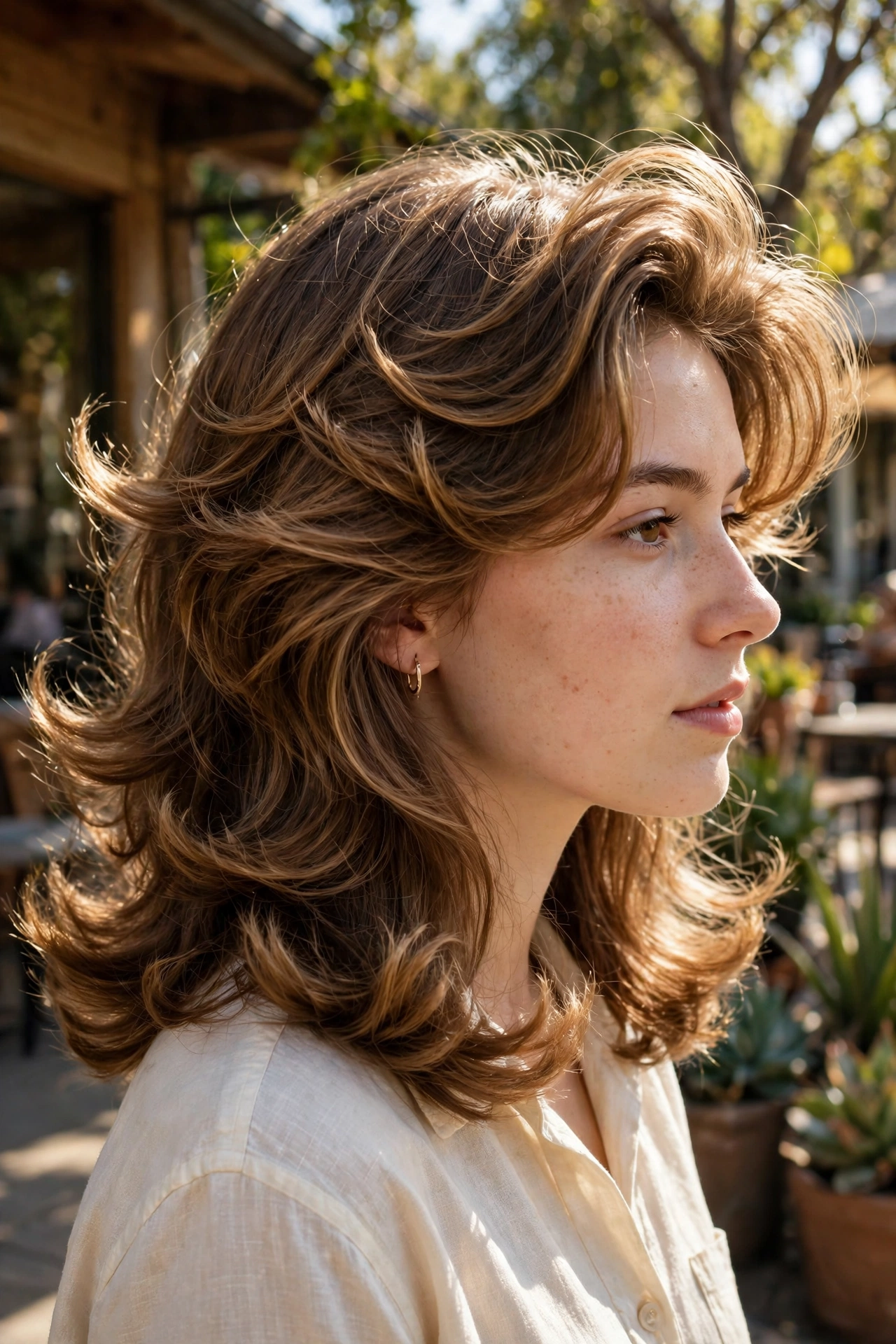
A high-shine gloss makes 90s layers look expensive, since the bouncy, curved sections catch the light one after another as the hair moves. The gloss smooths the cuticle and adds reflection, so the volume reads as healthy rather than frizzy. Book it with your color appointment, and the blowout will gleam like a salon finish every time you style it.
17. 90s Layers for a Round Face
A round face flatters 90s layers when the face-framing pieces start below the cheekbones and the crown has height, since the longer front pieces draw the eye downward. Keep the volume at the crown rather than at the sides, and let the flipped ends fall past the jaw. Avoid a shortest layer that ends at the widest part of the cheeks, since that emphasizes width.
18. 90s Layers for a Square Face
A square face needs 90s layers that soften the jaw, so ask for the face-framing pieces to curve inward at jaw level and the ends to flip softly outward below it. The inward curve breaks up the strong jawline, while the crown volume draws attention upward. The cut keeps its signature bounce without adding hard angles where the face already has them.
19. 90s Layers With Highlights
Highlights make 90s layers visible, since the lighter pieces catch the light exactly where each layer turns and flips. Keep the brightness around the face and through the top layers, with the under-lengths a shade deeper, so the dimension follows the layering. Balayage suits the cut best, because the soft grow-out matches the blowout’s effortless feel.
20. 90s Layers for Second-Day Hair
Second-day 90s layers revive in minutes, since the cut’s shape is already built into the hair and only the front pieces need refreshing. Re-curl the face-framing layers with a large-barrel iron, mist the roots with dry shampoo, and flip the hair forward and back once. The volume returns almost instantly, and the layers look freshly blown out without a full restyle.
21. 90s Layers With a Voluminous Crown
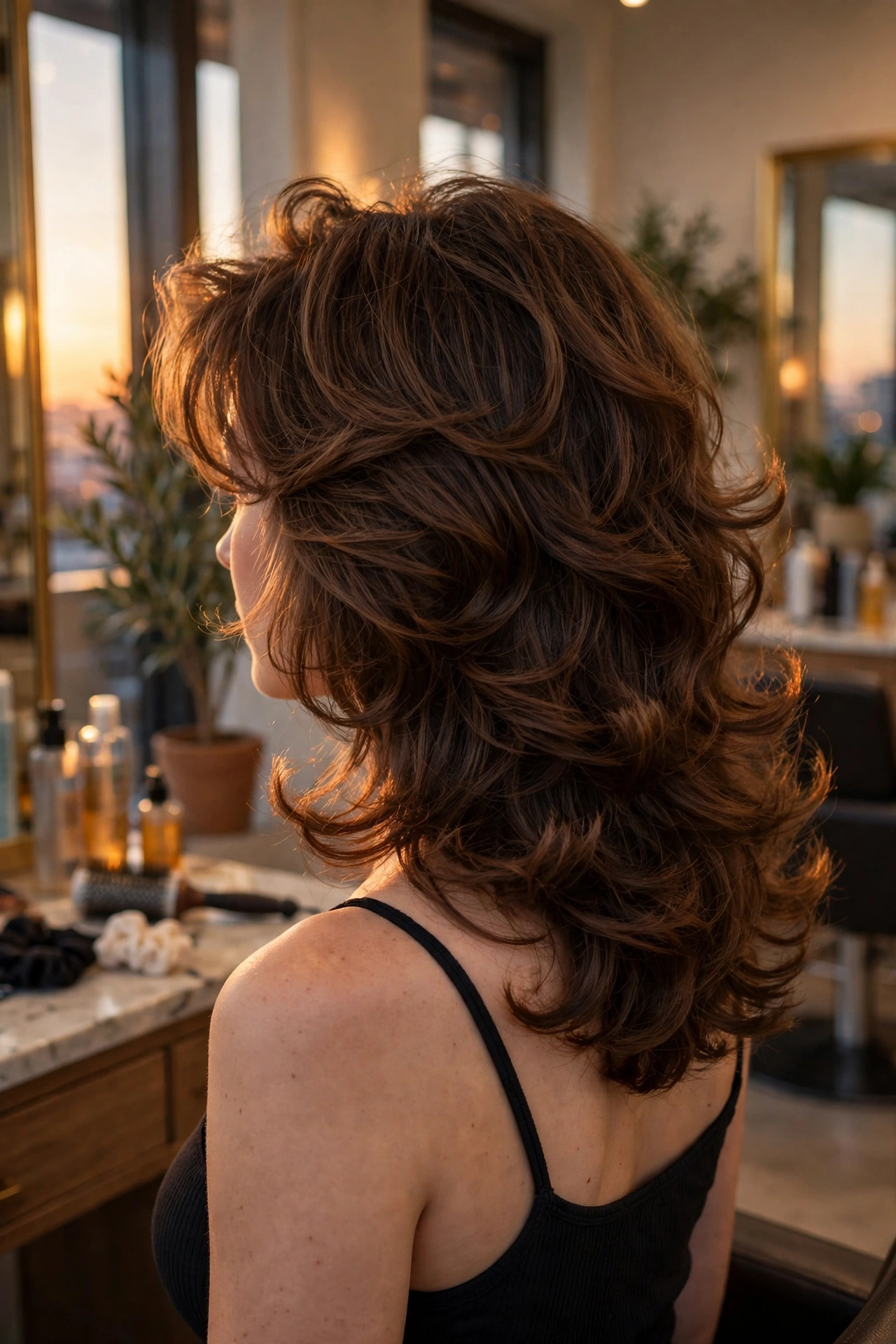
A voluminous crown is the heart of the 90s layered cut, and it is built with layering, mousse, and the right drying technique. Ask for the crown layers to be cut short enough to stand away from the head, apply volumizing mousse at the roots, and dry the crown sections with a round brush, lifting straight up. The crown height is what separates a 90s blowout from an ordinary layered cut.
22. 90s Layers for a Wedding Guest
90s layers style up beautifully for a wedding, since the bouncy blowout holds through a long day of photographs and dancing. Set the face-framing pieces in large, soft curls, pin one side back, and let the lengths fall in voluminous waves. The cut does the work of an updo without any pins in the back, and the front stays interesting in every photograph.
23. Modern 90s Layers, Not a Costume
The modern 90s layered cut updates the decade’s energy with softer edges, longer face-framing pieces, and a less severe flip, so it reads as current rather than retro. The volume stays, the bounce stays, and the face-framing stays, but the finish is smoother and the layers blend more gently. It is the difference between a tribute and a time capsule, and it is what makes the cut wearable in 2026.
24. 90s Layers With Long Curtain Pieces
Long curtain pieces, falling past the jaw and blending into the layers, give the 90s cut a softer, more modern front. The pieces part in the middle and sweep to the sides, framing the face without the commitment of a true fringe. They grow out gracefully, since they simply become the next layer down, and they suit anyone who wants the 90s feeling without the 90s fringe.
25. 90s Layers for Everyday Volume
The everyday version of the 90s layered cut keeps the volume but simplifies the styling, with a quick round-brush blow-dry or a few minutes with rollers. The layers are cut to hold their shape with minimal effort, so the hair looks bouncy even on days when you only have ten minutes. It is the cut for anyone who wants to feel like a supermodel on a Tuesday, with no occasion required.
Styling Tips
- Blow-dry in sections with a large round brush, rolling each section under and away from the face, and let it cool on the brush before releasing.
- Use a volumizing mousse at the roots before drying, since the 90s blowout’s volume comes from lift at the crown, not from teasing.
- Set the top sections in velcro rollers after blow-drying and let them cool completely for volume that holds for hours.
- Finish with a light shine spray rather than heavy serum, since heavy products pull the flipped ends flat.
- Refresh second-day layers with a large-barrel iron on the face-framing pieces only, which revives the whole shape in minutes.
- Trim every eight to ten weeks to keep the layer graduation crisp, since grown-out layers blend together and the bounce disappears.
- Sleep on a silk pillowcase to preserve the blowout overnight, since friction flattens the flipped ends faster than anything else.
Frequently Asked Questions
Q: What is the difference between 90s layers and butterfly layers? A: Both use face-framing layers and volume, but 90s layers are cut to flip outward with a bouncy blowout finish, while butterfly layers separate into two distinct lengths with a winged silhouette. The 90s cut emphasizes the blowout and the flipped ends, while the butterfly emphasizes the contrast between short crown layers and long under-lengths. They are cousins, not twins, and the styling finish is what tells them apart.
Q: Does a 90s layered cut work on thin or fine hair? A: Yes, with the layers cut slightly blunter so they stack and build fullness, and the layering concentrated around the face and crown. A volumizing mousse at the roots and a round-brush blow-dry do the rest, and the hair looks far denser than it is. Heavy thinning or razor work should be avoided, since it makes fine hair look wispy instead of bouncy.
Q: How do I get the 90s blowout to last all day? A: The secret is cooling: every section must cool completely in its curled shape before you touch it, whether on a round brush or in a velcro roller. The cool shot on the dryer sets the curve, and a light-hold hairspray misted from a distance locks it in without stiffness. Avoid touching the hair while it cools, since warm hair reshapes itself the moment you handle it.
Q: Will 90s layers look dated or like a costume? A: Not the modern version. The updated cut keeps the volume and bounce but softens the edges, lengthens the face-framing pieces, and uses a smoother finish, so it reads as current. The costume risk comes from an overly severe flip and very short, choppy layers, so ask your stylist for the modern, softer interpretation and the cut will feel fresh.
Q: How often should 90s layers be trimmed? A: Every eight to ten weeks is ideal, since the cut depends on a crisp graduation between the layers and the flipped ends. As the layers grow, they blend together, the ends lose their flip, and the crown volume collapses. A trim that reshapes the face-framing pieces and the crown layers is often enough to restore the full bounce.