25 Bixie Haircuts for Bold Texture and Easy Styling

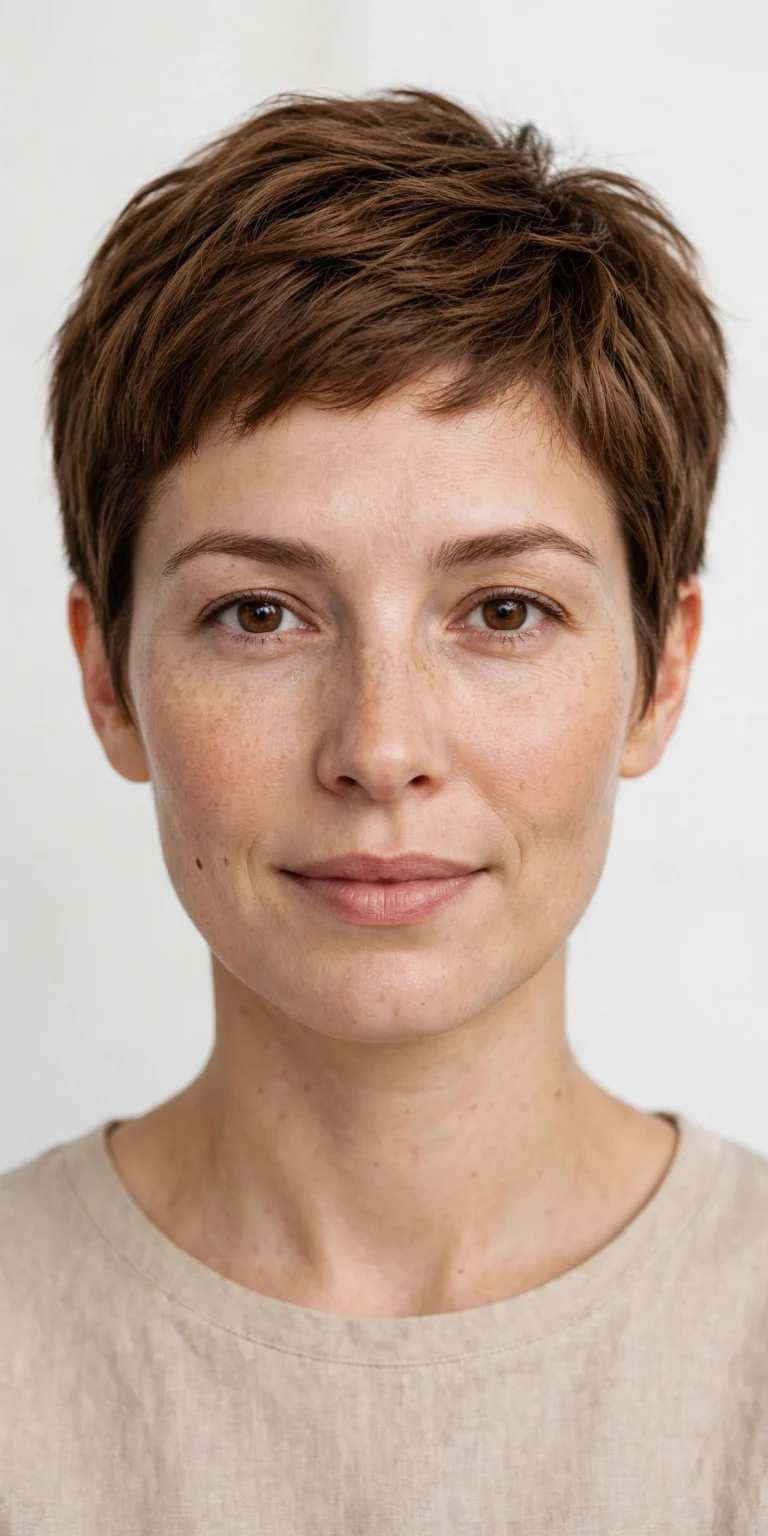
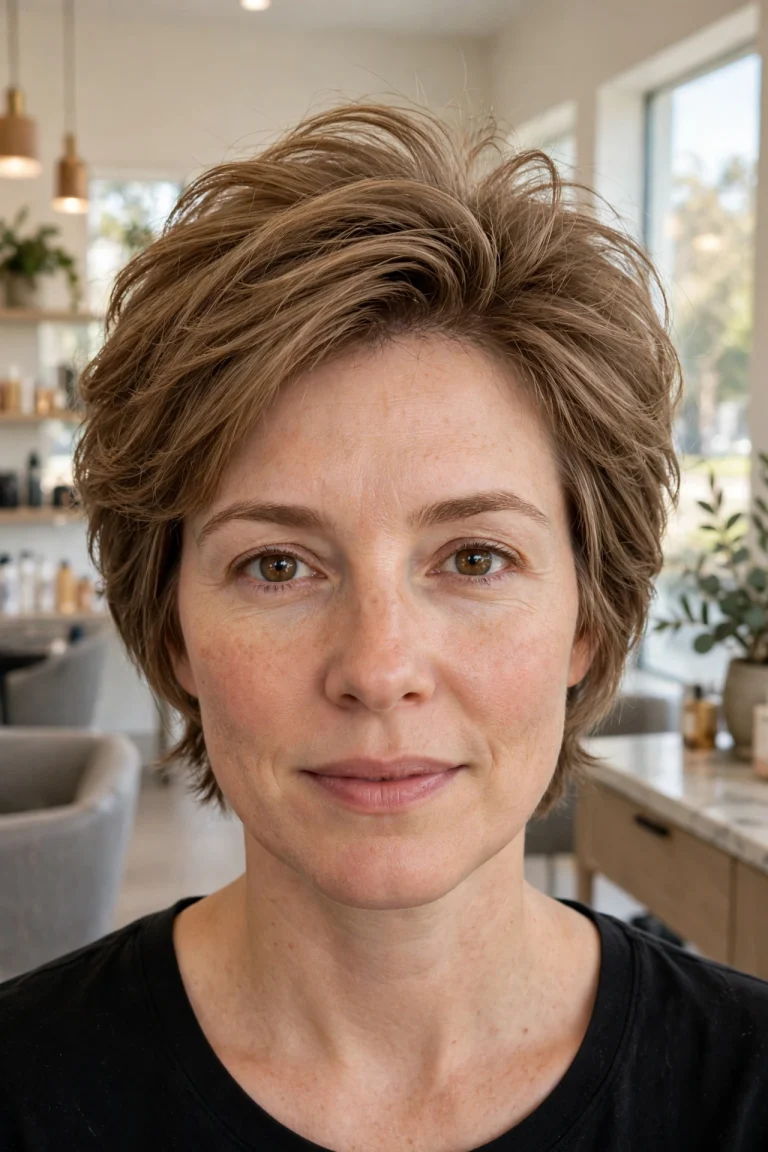
The bixie is the haircut for anyone torn between a bob and a pixie, because it refuses to choose. It keeps the bob’s length around the ears and nape and borrows the pixie’s choppy texture, tapered sides, and fearless shortness on top. These 25 bixie variations show how one hybrid cut can be soft or edgy, polished or undone, and always easier to style than it looks.
1. Classic Bixie With Choppy Layers
The classic bixie is cut with a bob’s outline and a pixie’s interior, so the silhouette reads short and neat while the surface is full of choppy movement. The layers are cut with point-cutting rather than blunt lines, which keeps the edges soft and piecey instead of heavy. It is the version to ask for first, because every other bixie is a variation on this balance of length and texture.
2. Bixie With Micro Bangs
Micro bangs give the bixie a bold, fashion-forward edge, sitting high on the forehead and drawing attention straight to the eyes. Keep the fringe short and slightly uneven rather than ruler-straight, so it matches the choppy texture of the rest of the cut. The combination is striking and confident, and it suits anyone who likes their haircut to make the first impression.
3. Bixie With Curtain Bangs
Curtain bangs soften the bixie considerably, parting in the middle and blending into the longer pieces around the ears. The fringe frames the face gently while the back stays short and textured, so the cut reads feminine and approachable rather than severe. It is a good bridge version if you love the bixie shape but are not ready for a very short fringe.
4. Textured Bixie for Thick Hair
Thick hair needs a bixie with serious internal texture, or the cut will sit heavy and boxy around the head. Ask your stylist to remove weight through the interior with thinning shears or deep point-cutting, keeping the outline neat while the inside stays airy. The result moves freely, holds its shape without constant styling, and never puffs up into a triangle.
5. Bixie for Fine Hair
Fine hair gets its best volume from a bixie cut with blunt, stacked layers at the crown, since the short length physically cannot lie flat. Keep the layers clean and slightly stacked at the back, and avoid over-thinning, which makes fine hair look sparse. A dab of texturising powder at the roots finishes the lift, and the cut looks fuller than the same hair ever did at bob length.
6. Bixie With an Undercut Nape
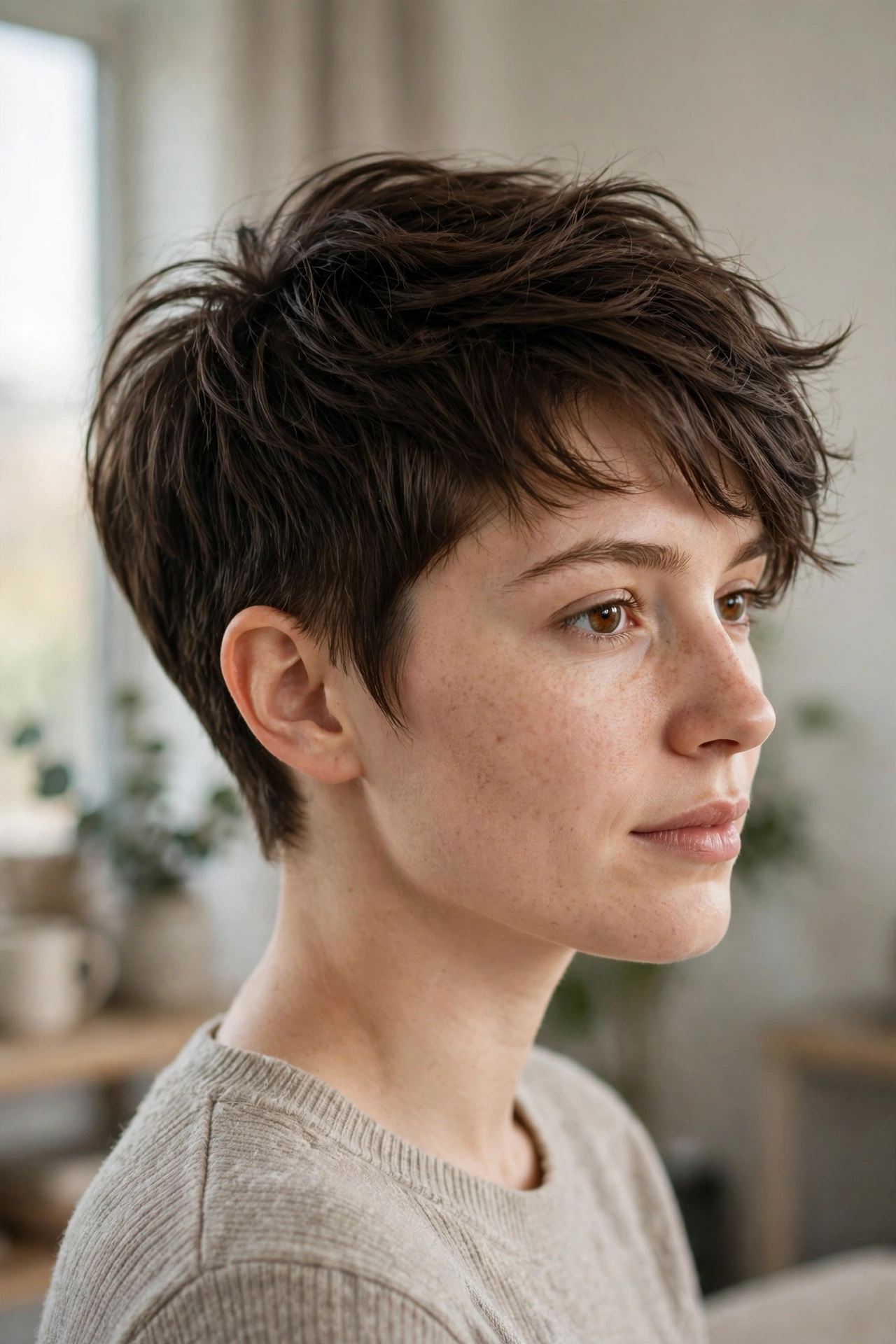
An undercut nape gives the bixie a hidden edge, with the hair at the nape clipped short while the top layers fall over it. The undercut keeps the neck cool and the silhouette crisp, and it grows out gracefully because the top layers simply cover more of it over time. Show it off by tucking the hair behind the ears, or keep it hidden for a more conventional look at work.
7. Bixie With Tapered Sides
Tapered sides are the pixie half of the bixie at its most visible, with the hair graduating neatly from longer on top to short above the ears. The taper keeps the cut looking sharp and intentional as it grows, and it suits anyone who likes a clean, groomed finish. Pair it with longer pieces on top for contrast, and the cut reads polished rather than shaggy.
8. Bixie With Long Top Layers
Long top layers make the bixie more versatile, since the top can be swept to the side, pushed back, or worn forward as a fringe. The length on top contrasts with the short back and sides, giving the cut a modern, androgynous energy. It is the version for anyone who wants short hair but still wants options in the morning.
9. Shaggy Bixie With Wispy Ends
A shaggy bixie leans into texture, with wispy, feathered ends throughout and no clean lines anywhere. The ends are point-cut aggressively so the whole cut looks lived-in from the moment you leave the salon, and it only gets better as it grows out. This is the lowest-maintenance bixie, because messiness is the style, and a little salt spray is all the styling it needs.
10. Sleek Polished Bixie
A sleek bixie proves the cut can be formal, with the layers smoothed down and the outline kept crisp and glossy. Blow-dry the hair flat with a paddle brush, finish with a shine serum, and tuck the sides neatly behind the ears. The result is elegant and architectural, and it suits tailored clothes and statement earrings beautifully.
11. Curly Bixie
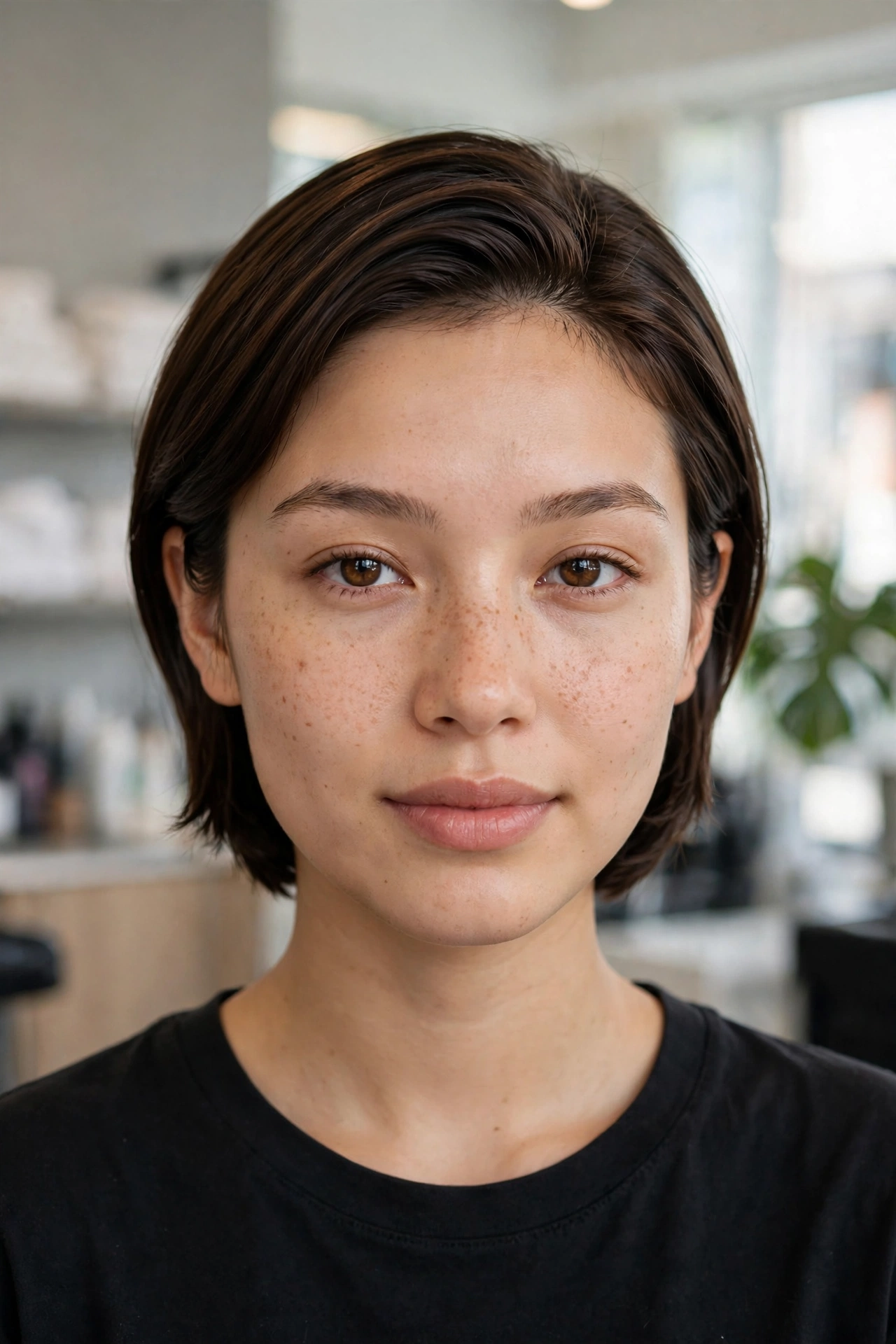
A curly bixie needs to be cut curl by curl, dry, so each curl lands where it will actually live once it springs up. The shape keeps the curls close at the sides and fuller on top, like a pixie silhouette with a bob’s softness around the ears. The cut celebrates natural texture instead of fighting it, and wash-and-go styling is genuinely realistic with this version.
12. Wavy Bixie With Undone Texture
Wavy hair gives the bixie an effortless, tousled finish that straight hair has to work for. The waves break up the layering naturally, so the cut looks textured even with no styling at all, and a little sea-salt spray is enough to define it. Let the waves fall where they want, and resist the urge to over-smooth, since the undone quality is the whole appeal.
13. Bixie With a Deep Side Part
A deep side part gives the bixie instant glamour, sweeping the top layers across the forehead and piling volume on one side. The heavy side falls in a soft wave over one eye, while the short side stays neat and tucked, and the asymmetry makes the cut look deliberately styled. It is the version to choose for evenings, since it reads dressy without any hot tools.
14. Bixie With Blonde Highlights
Blonde highlights make bixie texture visible, because the lighter pieces catch the light on every choppy edge. Keep the highlights fine and scattered through the top layers rather than in solid blocks, so the dimension reads as sunlight rather than stripes. The colour lifts the whole cut, and it is especially flattering on anyone whose natural colour is medium brown or darker.
15. Bixie With Copper Colour
Copper colour and bixie texture are a natural pairing, since the warm shade shows off every layer and edge in the cut. The richness of copper makes the choppy pieces glow, and the short length means the colour stays vibrant with less upkeep than long copper hair. Ask for a shade with dimension rather than flat all-over colour, so the texture keeps its depth.
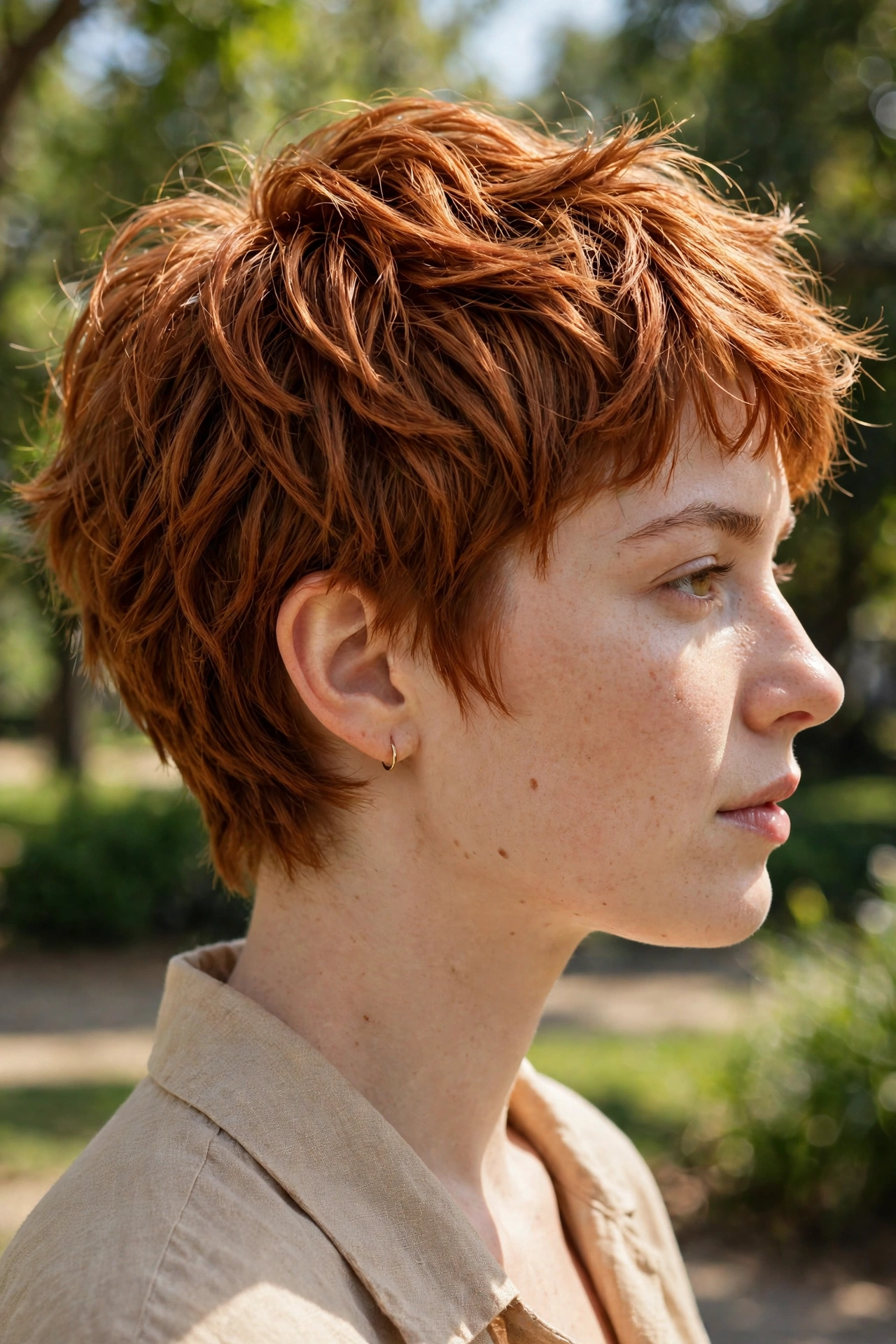
16. Bixie With Dark Roots and Lived-In Colour
Dark roots with lived-in colour suit the bixie’s low-maintenance spirit, since the grow-out is part of the look rather than a problem. The shadow at the roots adds depth to the short layers, and the lighter lengths on top keep the cut from looking flat. It is the colour choice for anyone who wants to stretch salon visits to ten or twelve weeks without the cut looking neglected.
17. Bixie for Round Faces
A bixie flatters a round face when the top layers carry height and the sides stay close to the head. Crown volume elongates the face, while short, neat sides avoid adding width at the cheeks, and a side-swept fringe breaks up the roundness. Avoid a bixie that is uniformly puffy all around, since that mirrors the face shape instead of balancing it.
18. Bixie for Oval Faces
Oval faces suit almost every bixie variation, since the proportions are balanced and the cut can play with texture freely. The classic choppy bixie with a short fringe works beautifully, and you can experiment with micro bangs or an undercut without worrying about overwhelming the face. It is the face shape that gets to treat the bixie as a playground.
19. Bixie for Heart-Shaped Faces
A heart-shaped face benefits from a bixie with fullness around the ears and jaw, which balances a wider forehead and narrower chin. Keep the top layers soft rather than towering, and let the pieces around the ears fall slightly forward to fill in beside the jaw. A curtain fringe also helps, since it softens the forehead and draws the eye down to the cheekbones.
20. Bixie for Square Faces
A square face needs a bixie with softness around the jaw, so ask for wispy, feathered pieces at the sides rather than blunt, horizontal edges. Texture and asymmetry break up the strong jawline, while a side-swept fringe softens the forehead. The cut keeps its bold character without adding hard lines where the face already has them.

21. Edgy Bixie With a Shaved Side
A shaved side is the bixie’s boldest statement, with one side clipped close while the rest of the cut keeps its bob length and texture. The contrast is dramatic and modern, and the shaved section can carry a design or a contrasting colour if you want to go further. It grows out more noticeably than other versions, so commit to trims every three to four weeks to keep the line sharp.
22. Soft Feminine Bixie
A soft feminine bixie keeps the pixie shortness but rounds every edge, with longer pieces around the ears, a gentle fringe, and no harsh lines. The layers are blended rather than choppy, and the finish is smooth and touchable rather than piecey. It is the version for anyone who wants short hair that still reads soft and romantic, and it pairs beautifully with delicate jewellery.
23. Bixie With a Middle Part
A middle part gives the bixie symmetry and polish, with the top layers falling evenly on both sides and the fringe split down the centre. The balanced shape suits oval and heart-shaped faces, and it shows off the cut’s outline most clearly. Keep the part soft rather than razor-sharp, so the style stays relaxed rather than severe.
24. Bixie for Growing Out a Pixie
The bixie is the ideal bridge when growing out a pixie, because it uses the pixie’s short back and sides and simply lets the top and front grow toward bob length. Instead of the awkward in-between months, you get a deliberate style at every stage, and the cut looks intentional throughout. Ask your stylist to shape the growing sections rather than trimming them back, and the bixie will carry you gracefully to bob length.
25. Bixie With Statement Earrings Styling
A bixie is the haircut that shows off earrings best, since the ears are exposed and the neck is clean. Style the cut tucked behind the ears on at least one side, keep the texture piecey rather than covering the ears, and let the jewellery do the talking. It is a styling choice as much as a cut detail, and it turns the bixie into a frame for whatever you are wearing.
Styling Tips
- Work a pea-sized amount of texturising cream through damp hair and let it air-dry, since the bixie’s texture does most of the styling itself.
- Use a small amount of pomade on the ends only, pinching pieces apart to define the choppy layers without weighing the cut down.
- Blow-dry with a small round brush at the crown for lift, keeping the sides flat so the silhouette stays neat.
- Refresh second-day bixie hair with a spritz of water and a little salt spray, scrunching the top layers back into shape.
- Keep the fringe trimmed between appointments if it falls in your eyes, since a bixie fringe grows out faster than the rest of the cut.
- Avoid heavy conditioners at the roots, which flatten the short layers; apply conditioner from the mid-lengths down only.
- Book trims every four to six weeks, since the bixie’s shape depends on the contrast between the short back and the longer top.
Frequently Asked Questions
Q: What is the difference between a bixie and a pixie? A: A bixie is longer than a pixie, keeping bob length around the ears and nape while borrowing the pixie’s choppy texture and tapered sides. A pixie is cropped close all over, while a bixie leaves enough length to tuck behind the ears, sweep to the side, or wear as a fringe. The bixie is the hybrid: the pixie’s boldness with the bob’s versatility.
Q: Does a bixie suit all face shapes? A: Almost, with adjustments. Round faces need height on top and neat sides; heart-shaped faces need fullness around the ears and jaw; square faces need soft, wispy edges rather than blunt lines. Oval faces can wear nearly every variation. The key is telling your stylist your face shape and letting them adjust the volume placement, not the overall length.
Q: Is a bixie hard to style every day? A: No, it is one of the easiest short cuts to live with. Most bixies need only a little texturising cream on damp hair and a few minutes of air-drying, and the choppy texture hides imperfection. The trade-off is maintenance: the shape needs a trim every four to six weeks, which is more often than a bob, because the short back grows out visibly.
Q: Will a bixie work on curly hair? A: Yes, but it must be cut dry and curl by curl, so each curl lands at its natural spring length. A curly bixie keeps the sides close and the top fuller, and wash-and-go styling works beautifully. Avoid a stylist who wants to cut it wet and straight, since the curls will spring up much shorter than expected and the shape will be uneven.
Q: How long does it take to grow out a bixie? A: Growing a bixie to bob length typically takes four to six months, and the bixie itself is the graceful bridge, since the top and front simply grow while the back is kept neat. Regular shaping appointments every six to eight weeks keep the growing stages looking deliberate. Once the front reaches chin length, you are effectively at a bob, and the pixie phase is behind you.